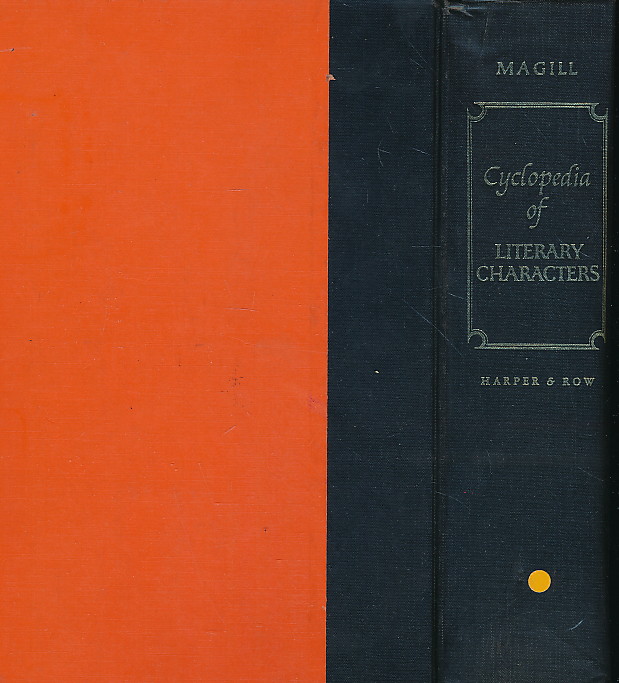
Cyclopedia of Literary Characters presents and individual identification and description of each of more that 16,000 characters appearing in some 1,300 novels, dramas, and epics drawn from world literature. Major characters receive a substantial analysis and critical evaluation with regard to psychological motivation, development, possible flaws, and all the identifying elements that make the characters compelling and timeless. Lesser figures in the literary works receive less space but they too are analyzed. Identification and relationships are given for even the most minor characters.
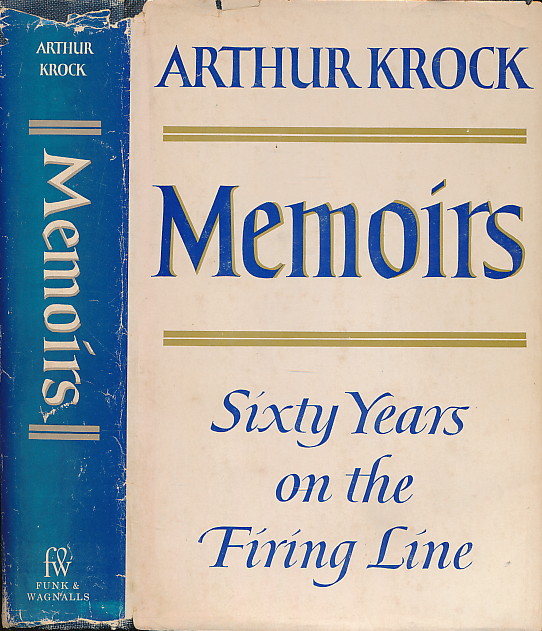
Arthur Bernard Krock (November 16, 1886 – April 12, 1974) was a Pulitzer Prize winning American journalist. In a career spanning several decades covering the tenure of eleven United States presidents he became known as the Dean of Washington newsmen.
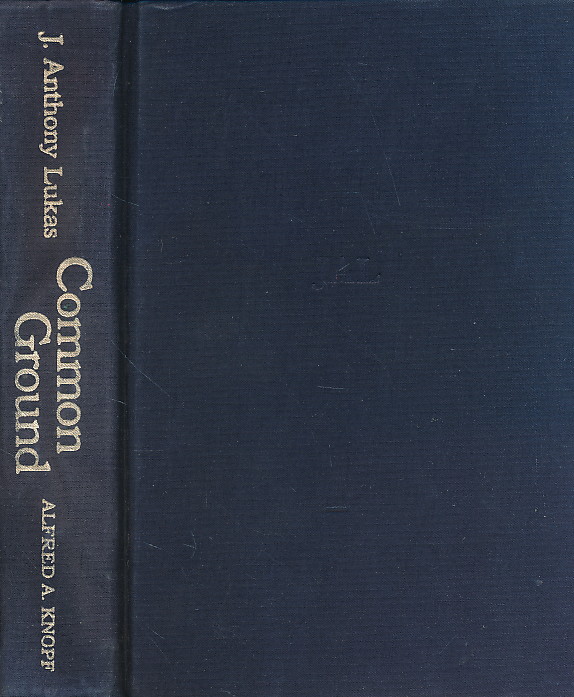
Winner of the Pulitzer Prize, the National Book Critics Circle Award, the Robert F. Kennedy Book Award, and the American Book Award, the bestselling Common Ground is much more than the story of the busing crisis in Boston as told through the experiences of three families. As Studs Terkel remarked, it’s gripping, indelible…a truth about all large American cities. An epic of American city life…a story of such hypnotic specificity that we re-experience all the shades of hope and anger, pity and fear that living anywhere in late 20th-century America has inevitably provoked. —Christopher Lehmann-Haupt, The New York Times
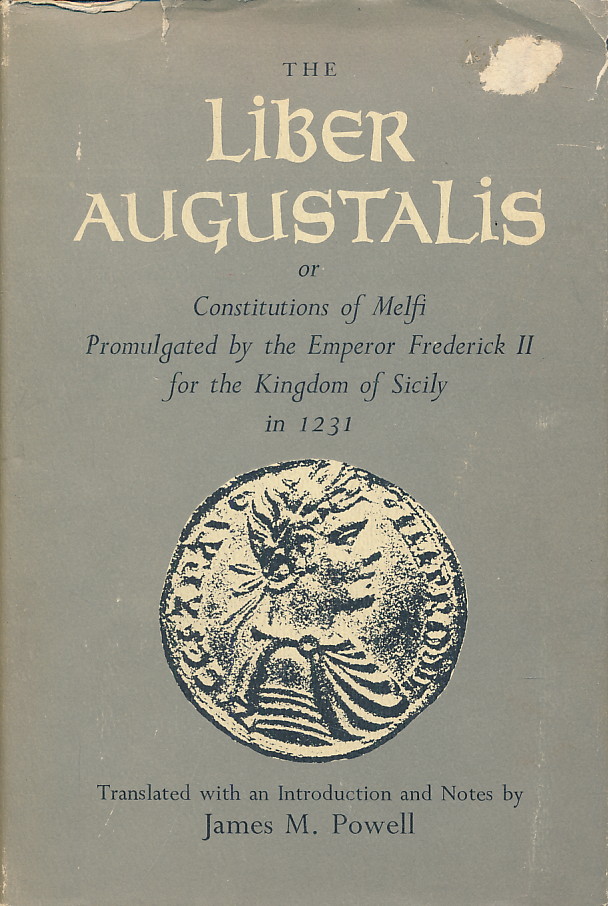
The Liber Augustalis was born of no grand design but of the demands of government. This body of law marked a moment of triumph in the long and frustrating struggle by which Frederick attempted to establish his royal authority in the Kingdom of Sicily. Frederick had smashed rebellions by the Muslim population and by the nobility, while he systematically negotiated with the clergy over disputed domains. It was as a victorious king and emperor that he ordered the compilation of the Liber Augustalis—a cornerstone of royal authority—in part a summing up of the previous legal efforts of the monarchy, in part a significant move beyond the limitations of previous legislation. The Liber Augusta/is blended many disparate influences into a common body of law. The existing legal traditions—Lombard, Byzantine, and Norman—the Canon law of the Church, and the learning of the Bolognese scholars, especially Master Petrus Della Vigna, provided sources on which Frederick could draw, but the laws represent the viewpoint of the monarchy rather than those of the powerful groups within the kingdom—Church, nobility, and towns whose interests were often counter to those of the king. Ultimately events proved that the greatest danger to Frederick’s rule lay not in the kingdom itself but in the determination of the papacy and the Roman curia to prevent Sicily from becoming the seat of empire in Italy. In 1231, however, when Frederick was formulating his imperial policy, the first priority lay in establishing the strongest posture for monarchy. Translated with sn Introduction and Notes by James M. Powell.

One Hundred Merrie and Delightsome Stories (2 volumes) Les cent Nouvelles Douglas, Robert B. Published by Charles Carrington N.D. Publisher’s marbled boards and spine, gilt spine titles in red label, brown endpapers, gilt top page edges, deckle edges many uncut. Limited edition, one of 1250 copies for subscribers, this copy is number 31. No date, c. 1900-1910. English translation of 1899 French edition, great illustrations throughout. Purported a collection of short stories narrated by various persons at the court of Philippe le Bon, and collected together by Antoine de la Sale, the nouvelles are, according to the authority on French Literature—Professor George Saintsbury “undoubtedly the first work of literary prose in French … The short prose tale of a comic character is the one French literary product the pre-eminence and perfection of which it is impossible to dispute, and the prose tale first appears to advantage in the Cent Nouvelles Nouvelles.” The stories give a curious glimpses of life in the 15th century, providing a genuine view of the social condition of the nobility and the middle classes. M. Lenient, a French critic, says: “Generally the incidents and personages belong to the bourgeoisée; there is nothing chivalric, nothing wonderful; no dreamy lovers, romantic dames, fairies, or enchanters. Noble dames, bourgeois, nuns, knights, merchants, monks, and peasants mutually dupe each other. The lord deceives the miller’s wife by imposing on her simplicity, and the miller retaliates in much the same manner. The shepherd marries the knight’s sister, and the nobleman is not over scandalized. The vices of the monks are depicted in half a score tales, and the seducers are punished with a severity not always in proportion to the offence.” For four centuries 10 of the stories were credited to Louis XI. Modern scholars have since ascribed them to either Philippe le Bel or Comte de Charolais. In all, some thirty-two noblemen or squires contributed the stories, with some 14 or 15 taken from Giovanni Boccaccio, and as many more from Gian Francesco Poggio Bracciolini or other Italian writers, or French fabliaux, but about 70 of them appear to be original.
Making Sense Out of Sex: A New Look at Being a Man Hardcover – January 1, 1975 by Stephen Whelan, Elizabeth M.; Whelan (Author)
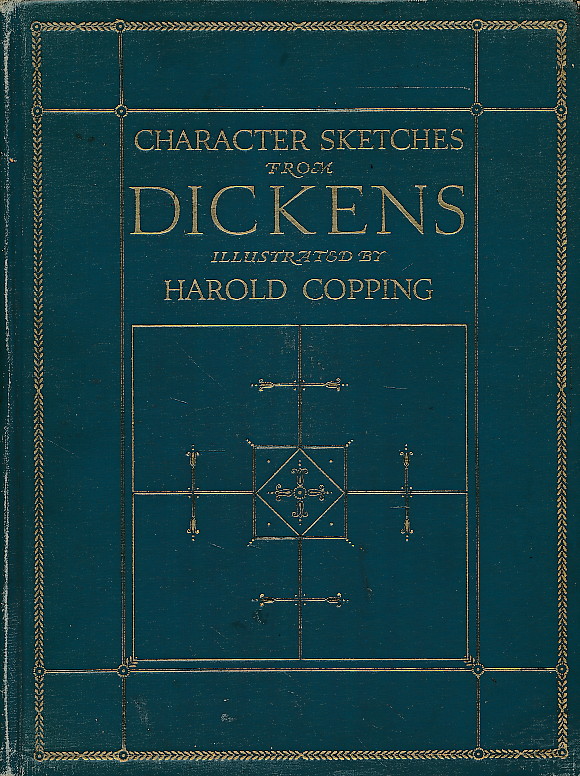
Character Sketches from Dickens. Compiled with Foreword by B.W. Matz. With Introduction by Kate Perugini (C. Dicken's Daughter). Illustrated by Harold Copping. (COPPING, HAROLD) DICKENS: Published by London, Raphael Tuck & Sons Ltd. 1924 (1st.ed.)
Francois Villon Lewis, D. B. Wyndham (Dominic Bevan Wyndham) (1891-1969) Published by New York, Coward McCann, Inc. : Hartford, E. V. Mitchell, Inc., 1928.
François Villon, a documented survey by D. B. Wyndham Lewis, with a preface by Hilaire Belloc. Hardcover – Special Edition, January 1, 1928 by D. B. Wyndham; Hilaire Belloc (pref.) Lewis (Author)
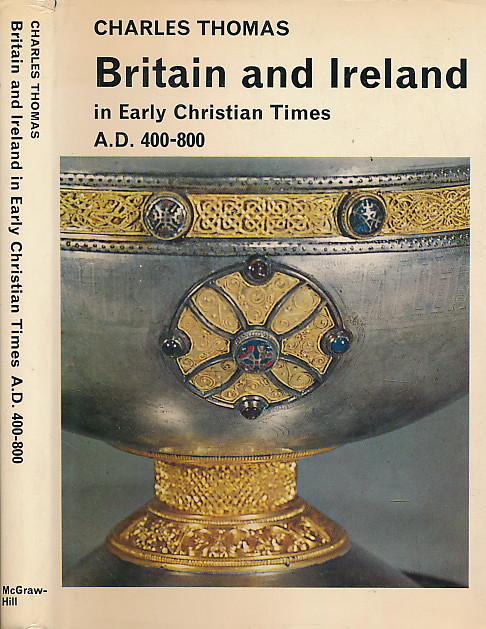
Britain and Ireland in early Christian times, AD 400-800 (Library of medieval civilization) Thomas, Charles
This classic study of art, life, and thought in France and the Netherlands during the fourteenth and fifteenth centuries ranks as one of the most perceptive analyses of the medieval period. A brilliantly creative work that established the reputation of Dutch historian John Huizinga (1872-1945), the book argues that the era of diminishing chivalry reflected the spirit of an age and that its figures and events were neither a prelude to the Renaissance nor harbingers of a coming culture, but a consummation of the old. Among other topics, the author examines the violent tenor of medieval life, the idea of chivalry, the conventions of love, religious life, the vision of death, the symbolism that pervaded medieval life, and aesthetic sentiment. We view the late Middle Ages through the psychology and thought of artists, theologians, poets, court chroniclers, princes, and statesmen of the period, witnessing the splendor and simplicity of medieval life, its courtesy and cruelty, its idyllic vision of life, despair and mysticism, religious, artistic, and practical life, and much more. Long regarded as a landmark of historical scholarship, The Waning of the Middle Ages is also a remarkable work of literature. Of its author, the New York Times said, Professor Huizinga has dressed his imposing and variegated assemblage of facts in the colorful garments characteristic of novels, and he parades them from his first page to the last in a vivid style. An international success following its original publication in 1919 and subsequently translated into several languages, The Waning of the Middle Ages will not only serve as an invaluable reference for students and scholars of medieval history but will also appeal to general readers and anyone fascinated by life during the Middle Ages.
Dr. Wolfgang Kohler, a founder of Gestalt theory & former Pres. of the Amer. Psychological Assoc., laid the cornerstone of modern cognitive psychology. His pioneering experiments with apes are considered classics. What was not known is that while researching animal behavior on Tenerife, Dr. Kohler may have also been engaged as a wartime spy for Germany in World War I. The author presents his three-year odyssey to determine the true facts in a narrative that is absolutely spellbinding. What we find is a fascinating tale that is rich in history, politics, intrigue, & betrayal — a true-life detective story of the first magnitude. synopsis may belong to another edition of this title.
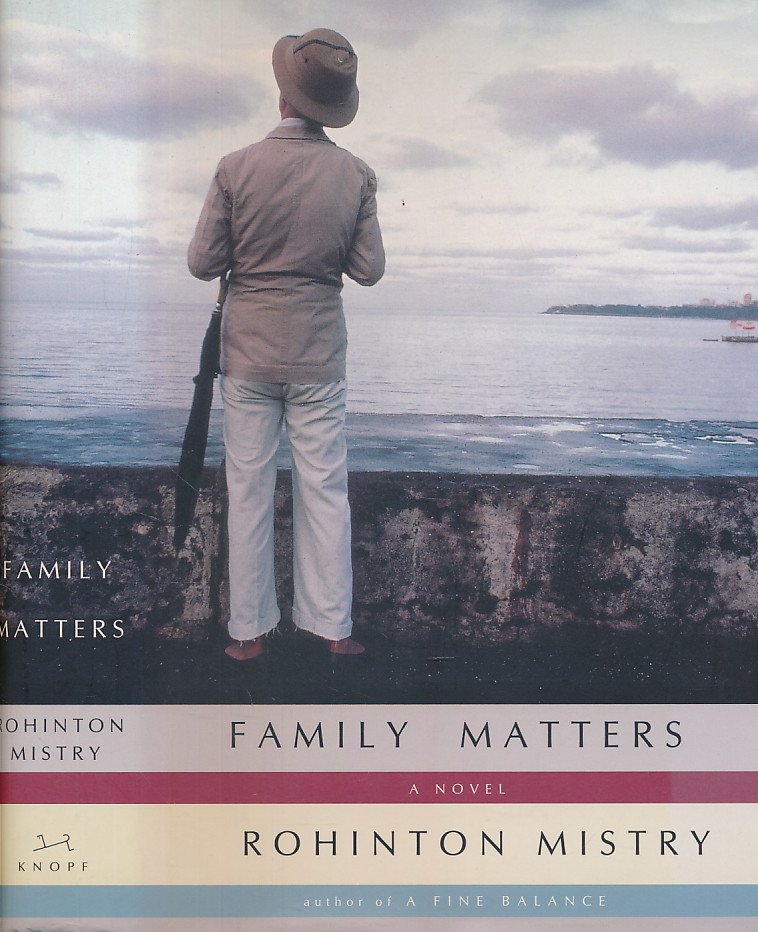
Set in Bombay in the mid-1990s, Family Matters tells a story of familial love and obligation, of personal and political corruption, of the demands of tradition and the possibilities for compassion. Nariman Vakeel, the patriarch of a small discordant family, is beset by Parkinson’s and haunted by memories of his past. He lives with his two middle-aged stepchildren, Coomy, bitter and domineering, and her brother, Jal, mild-mannered and acquiescent. But the burden of the illness worsens the already strained family relationships. Soon, their sweet-tempered half-sister, Roxana, is forced to assume sole responsibility for her bedridden father. And Roxana’s husband, besieged by financial worries, devises a scheme of deception involving his eccentric employer at a sporting goods store, setting in motion a series of events that leads to the narrative’s moving outcome. Family Matters has all the richness, the gentle humour, and the narrative sweep that have earned Mistry the highest of accolades around the world.
Insignium Armorum, Emblematum, Hieroglyphicorum et Symbolorum; Discours Ou Traicte Des Devises; The Art of Making Devises Abraham Fraunce, Adrian D’ Amboise