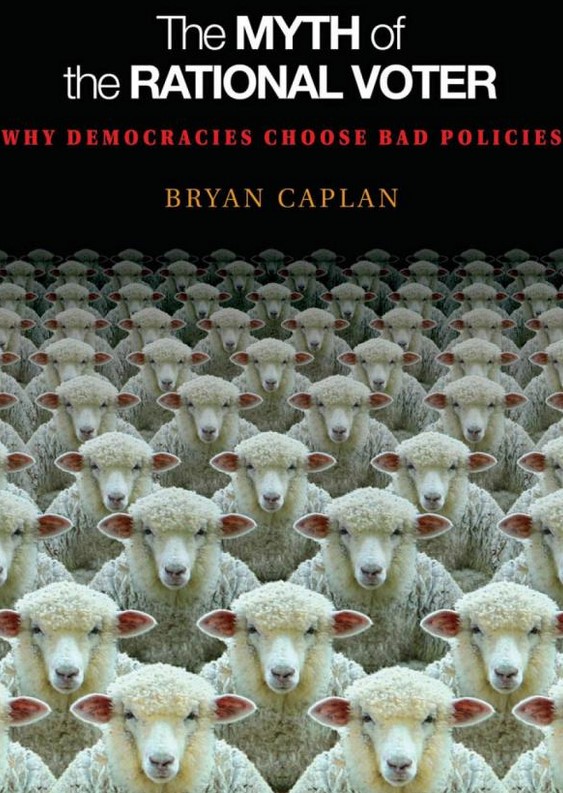
Hardcover with Dust Sleeve. Why Democracies Choose Bad Policies. The greatest obstacle to sound economic policy is not entrenched special interests or rampant lobbying, but the popular misconceptions, irrational beliefs, and personal biases held by ordinary voters. This is economist Bryan Caplan’s sobering assessment in this provocative and eye-opening book. Caplan argues that voters continually elect politicians who either share their biases or else pretend to, resulting in bad policies winning again and again by popular demand. Boldly calling into question our most basic assumptions about American politics, Caplan contends that democracy fails precisely because it does what voters want. Through an analysis of Americans’ voting behavior and opinions on a range of economic issues, he makes the convincing case that noneconomists suffer from four prevailing biases: they underestimate the wisdom of the market mechanism, distrust foreigners, undervalue the benefits of conserving labor, and pessimistically believe the economy is going from bad to worse. Caplan lays out several bold ways to make democratic government work better–for example, urging economic educators to focus on correcting popular misconceptions and recommending that democracies do less and let markets take up the slack. The Myth of the Rational Voter takes an unflinching look at how people who vote under the influence of false beliefs ultimately end up with government that delivers lousy results. With the upcoming presidential election season drawing nearer, this thought-provoking book is sure to spark a long-overdue reappraisal of our elective system.
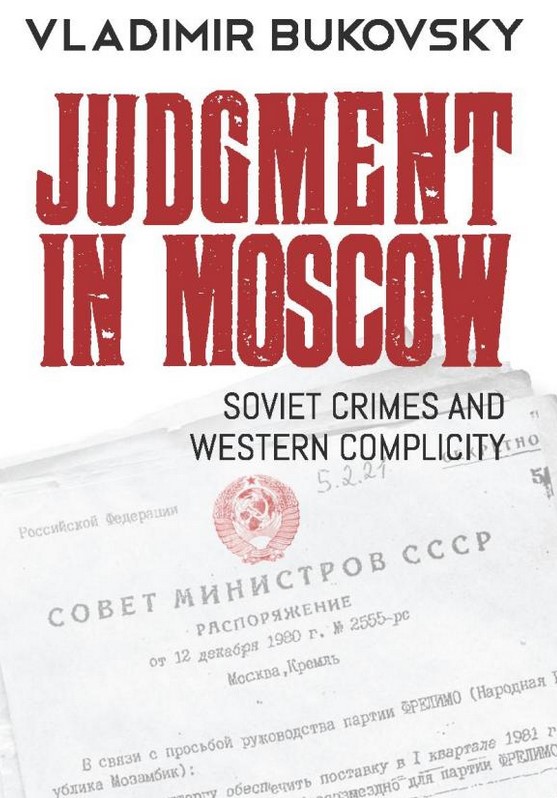
Soviet Crimes and Western Complicity. Paperback. Bukovsky’s Judgment in Moscow, called stunning by Richard Pipes and a massive and major contribution by Robert Conquest, has been published for the first time in English. Margaret Thatcher gave a grant to support the writing of the book, and the initial publication in Russia was paid for by Aleksander Solzhenitsyn. The book has an introduction by Edward Lucas and an afterword by David Satter. After the collapse of the Soviet Union, legendary Soviet dissident Vladimir Bukovsky had the opportunity to steal thousands of classified documents from the Soviet archives. Judgment in Moscow is about the secrets exposed by those documents. It reveals the inner workings of the Soviet regime and the complicity of many in the West with that regime. Judgment in Moscow was an international bestseller published in nine languages, but has only now been published in English for the first time. It was previously at Random House, but Bukovsky refused to rewrite parts of the book which accused prominent Westerners of behind-the-scenes dealings with the Soviets.
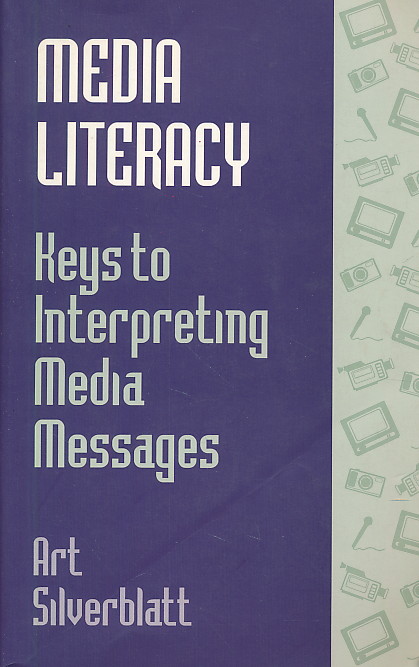
Media Literacy: Keys to Interpreting Media Messages by Silverblatt, Art (1995) Paperback
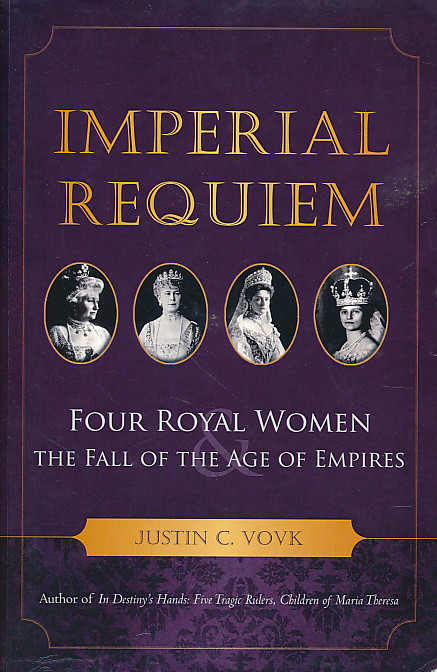
Imperial Requiem Four Royal Women and the Fall of the Age of Empires by Justin C. Vovk Synopsis Augusta Victoria, Mary, Alexandra, and Zita were four women who were born to rule. In Imperial Requiem, Justin C. Vovk narrates the epic story of four women who were married to the reigning monarchs of Europes last empires during the late nineteenth and early twentieth centuries. Using a diverse array of primary and secondary sources, letters, diary entries, and interviews with descendants, Vovk provides an in-depth look into the lives of four extraordinary women who stayed faithfully at their husbands sides throughout the cataclysm of the First World War and the tumultuous years that followed. At the centers of these four great monarchies were Augusta Victoria, Germanys revered empress whose unwavering commitment to her bombastic husband made her a national icon; Mary, whose Cinderella story and immense personal strength made her the soul of the British monarchy through some of its greatest crises; Alexandra, the ill-fated tsarina who helped topple the Russian monarchy through her ineffective rule; and Zita, the resolute empress of Austria whose story of loss and exile captivated the worlds attention for seven decades. Imperial Requiem shares the fascinating story of four princesses who married for love, graced imperial thrones, and watched as their beloved worlds were torn apart by war, revolution, heartache, and loss.
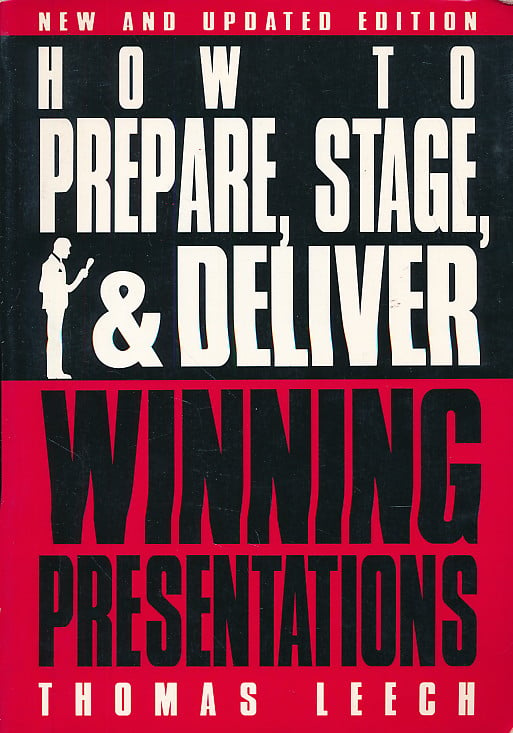
How to Prepare, Stage, and Deliver Winning Presentations Paperback – March 15, 1993 by Thomas Leech (Author)
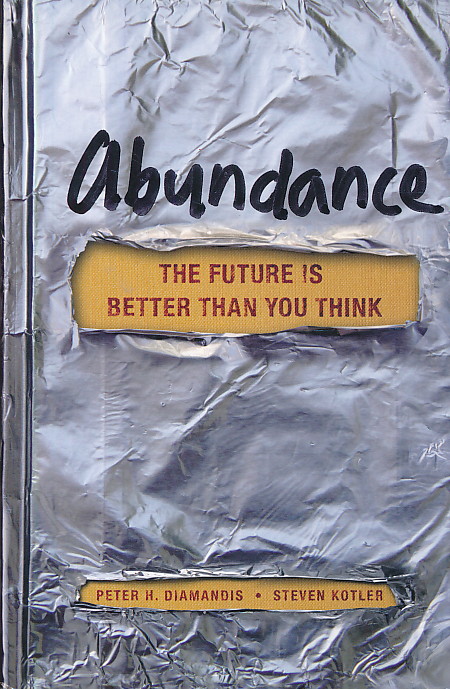
Abundance: The Future Is Better Than You Think (Exponential Technology Series) Paperback – September 23, 2014 The New York Times bestselling “manifesto for the future that is grounded in practical solutions addressing the world’s most pressing concerns: overpopulation, food, water, energy, education, health care and freedom” (The Wall Street Journal). Since the dawn of humanity, a privileged few have lived in stark contrast to the hardscrabble majority. Conventional wisdom says this gap cannot be closed. But it is closing—and fast. In Abundance, space entrepreneur turned innovation pioneer Peter H. Diamandis and award-winning science writer Steven Kotler document how progress in artificial intelligence, robotics, digital manufacturing synthetic biology, and other exponentially growing technologies will enable us to make greater gains in the next two decades than we have in the previous 200 years. We will soon have the ability to meet and exceed the basic needs of every person on the planet. Abundance for all is within our grasp. Breaking down human needs by category—water, food, energy, healthcare, education, freedom—Diamandis and Kotler introduce us to innovators and industry captains making tremendous strides in each area. “Not only is Abundance a riveting page-turner…but it’s a book that gives us a future worth fighting for” (The Christian Science Monitor).
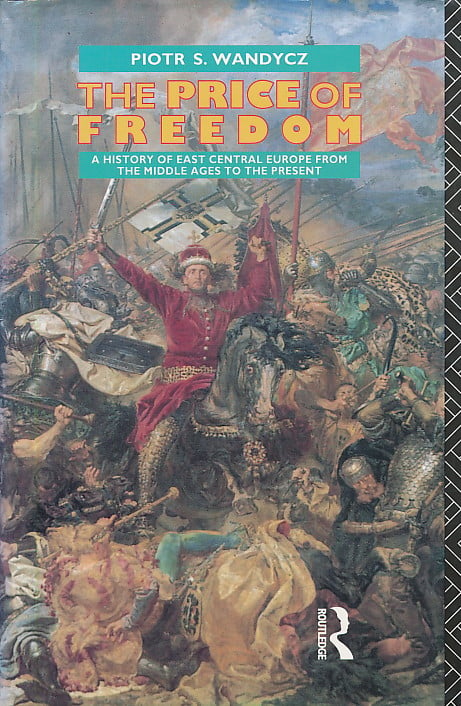
Routledge, 1992, First edition. A history of East Central Europe from the Middle Ages to the present. Black clothbound without a dustjacket in fine condition. Exterior is as new. Interior is clean and very tight, appears unread. 330 pp., 9.5 X 6.25..
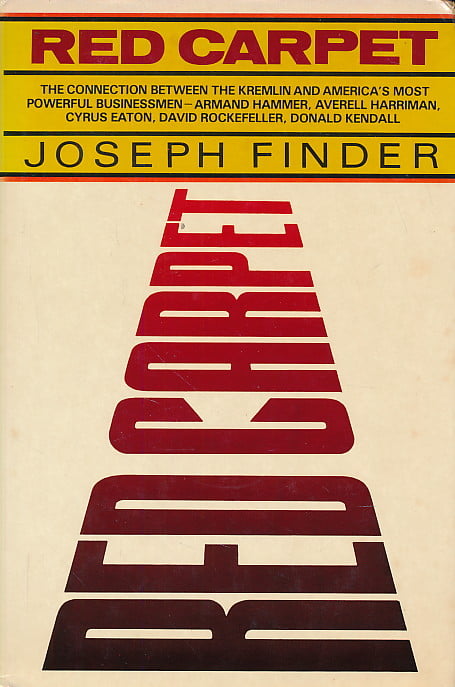
Describes the relationship between powerful American businessmen and the Russian government and traces the history of U.S.-Russian trade relations.
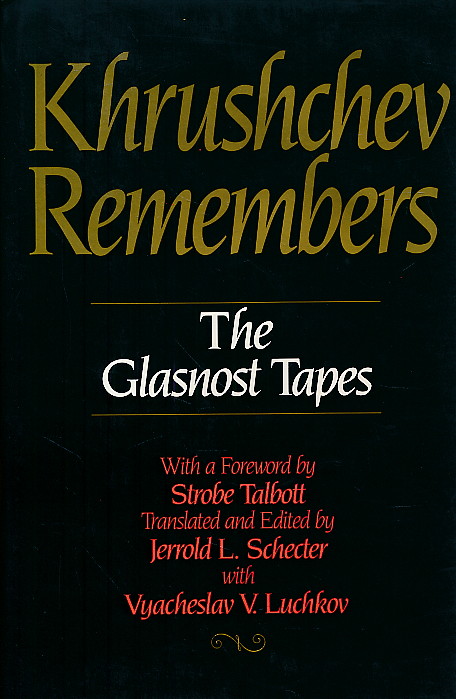
Khrushchev Remembers: The Glasnost Tapes, by Nikita Khrushchev (Author), Jerrold L. Schecter (Editor, Translator), Vyacheslav V. Luchkov (Editor, Translator), & 1 more When the tapes dictated by Nikita Khrushchev in retirement first made their way to the West, there were key gaps in the narrative. Khrushchev himself had authorized the deletions, for apparent political reasons. Two decades would pass before those gaps could be filled. This new volume includes the revelations that Stalin confirmed the very significant contribution of Julius and Ethel Rosenberg to the Soviet atomic bomb project; that in the midst of the Cuban missile crisis, Fidel Castro urged Khrushchev to launch a nuclear attack on the United States; Khrushchev wanted to return the Japan islands in the Kuril chain seized by the USSR at the end of World War II, and thereby restore normal relations between the two countries. The new tapes also provide information on the 1939 Molotov-Ribbentrop pact and its secret protocol giving Lithuania, Estonia, and Latvia to the Soviet Union; the background on the publication of Alexander Solzhenitsyn’s One Day in the Life of Ivan Denisovich and Leonid Brezhnev’s subsequent suppression of the author and his works; revealing asides on Brezhnev and his allies; and Khrushchev’s thoughts and doubts on the Soviet invasion of Czechoslovakia and the crushing of the Prague Spring. The book also offers an insight into the present turbulent and shifting situation in the Soviet Union and Eastern Europe.
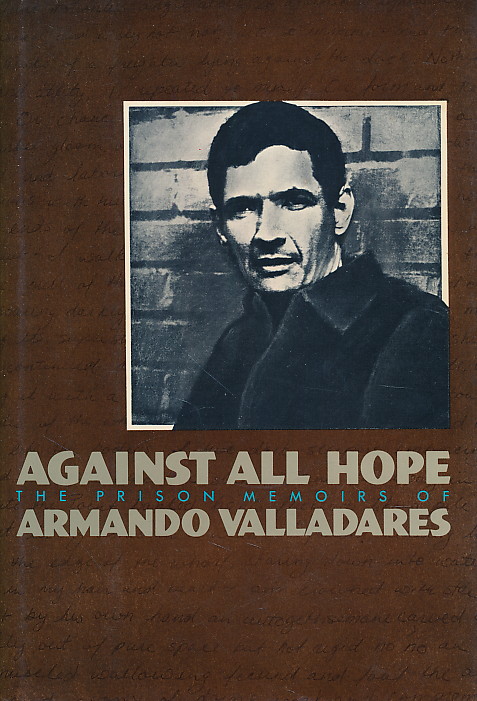
The author recounts his twenty-two year imprisonment for opposing the government of Fidel Castro and describes the treatment of Cuban political prisoners.

When the Wall Came Down: Reactions to German Unification 1st Edition, Kindle Edition by Harold James (Editor), Marla Stone (Editor) The great rapidity of events in 1989-90, the collapse of Communism in eastern Europe, together with German reunification, took both participants and observers by surprise. When the Wall Came Down provides a wide-ranging compendium of responses in Germany and other countries – USA, Britain, USSR, France, Czechoslovakia, Israel, Poland, Italy and Japan. Following the editors’ introduction which raises the issues implicit in the unification process, the essays examine the various components of the debate: modern Germany’s relationship with its past, the role of German intellectuals in public life, the implications of German unity for the process of increased European political and economic integration, prospects for peace and stability in Central Europe, and the future of the nation-state. Present a diverse range of views and countries, When the Wall Came Down provides an extensive analysis of the German Question at this crucial time.
The Day the Bubble Burst: A Social History of the Wall Street Crash of 1929 Hardcover – January 1, 1979 by Gordon Thomas (Author), Max Morgan-Witts (Author)
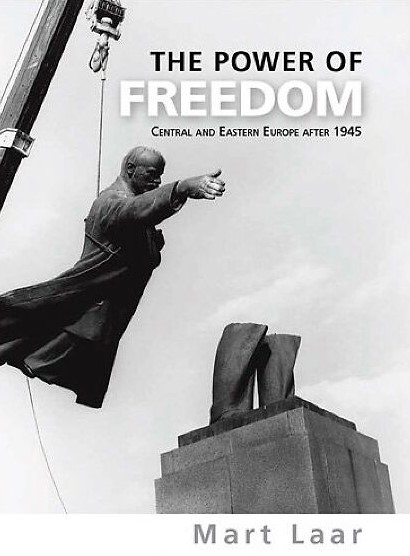
Central and Eastern Europe after 1945. Mart Laar was the Prime Minister of Estonia for two terms, from 1992 to 1994 and from 1999 to 2002. His role in the successful democratic transformation of Estonia made him an internationally recognized expert in “democratic transition”. “The Power of Freedom” tells the gripping story of the journey of Central and Eastern European countries “back to Europe”. It maps the history of Communism in Central and Eastern Europe in times when Europe was divided by the Iron Curtain. On the western side people enjoyed freedom, democracy, the rule of law and successful market-based economies, while those on the other side suffered at hand of violent totalitarian regimes and the socialist planned economy. These regimes destroyed economies and provoked an environmental disaster. The book offers a detailed analysis of the transition to democracy and successful integration into Euro-Atlantic structures. It looks at past achievements, current political, social and economic developments, as well as the challenges ahead – and concludes that the transition has been a true success story. Mart Laar also provides several examples of how the reunification of Europe brought stability and prosperity to Central and Eastern European countries through sound economic policies and democratic political engagement.
Select Documents Illustrative of the History of the United States 1776-1861 Hardcover – January 1, 1898 by William MacDonald (ed.) (Author)
Basil of Antioch, a young and skilled artisan freed from slavery, braves the perils of Christian persecution, the sorcery of the infamous Simon the Magician, and even the ire of Roman Emperor Nero, while diverted by the charms of two beautiful women, one good and one evil… How does he come in touch with THE SILVER CHALICE? This is the great and moving epic of the Cup of the Last Supper from which Jesus drank on the eve of his betrayal and the artist who made it…
Parks of Italy. The Protected Areas System. Italiano – English. Condition of Book: Excellent (New)
Second Edition. An authoritative introduction to Global Political Economy.The book covers all bases: contemporary theory, introductions to particular issue areas, and an extended debate on globalization that reflects a variety of perspectives. The book is accompanied by an Online Resource Centre. Student resources: Timeline Web links Glossary Instructor resources: Tables and figures from the book to download 2 in-depth case studies
Discusses the effects of the apathy and ignorance of the American people on United States foreign policy, relations with other nations, and use of foreign aid funds.
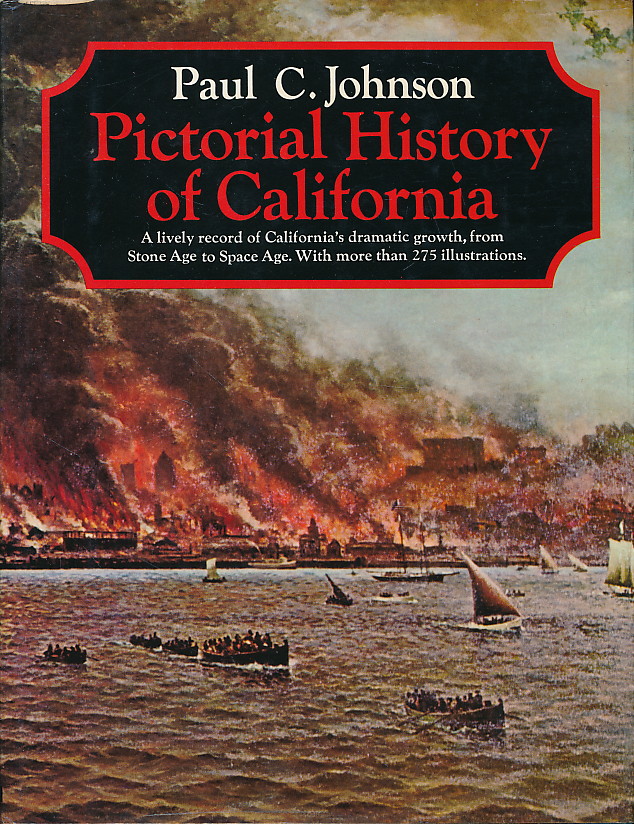
Hardcover, Dust Jacket, Condition Good (spotted on the top and bottom edges of pages, as well as on the side, but perfect on the inside). A Lively Record of California s dramatic growth from Stone age to Space age, with more than 275 illustrations.
The young Soviet Jewish activist and “refusenik” Anatoly B. Shcharansky (now known as Natan Shcharansky), gained his freedom in February 1986 after nine years in Soviet prisons and labour camps. This dramatic biography of one of the authentic heroes of our time tells a remarkable story of a fearless young man who risked his life to help others. Included in the book are the many messages Shcharansky and his friends compiled inside Russia to alert the world to their plight, material from his trial, and Shcharansky’s letters from prison to his friends and family.
Old Tippecanoe: William Henry Harrison and His Time William Henry Harrison, ninth President of the United States, has been sadly neglected. Freeman Cleaves, after years of scholarly study, has cleared away the misconceptions which obscured Harrison’s fame, and gives us a warm account of a truly great hero. Harrison’s victory over the Indians at the Battle of Tippecanoe, and his battle for the Presidency in 1840, with its campaign slogan of Tippecanoe and Tyler too, are well known, but they are only two episodes in a colorful life. Freeman Cleaves has done a careful, impartial, and worthy biography of a great American soldier and gentleman, of a hero lovingly referred to by his devoted followers as Old Tippecanoe. Every one interested in the epic story of America will do well to read it.