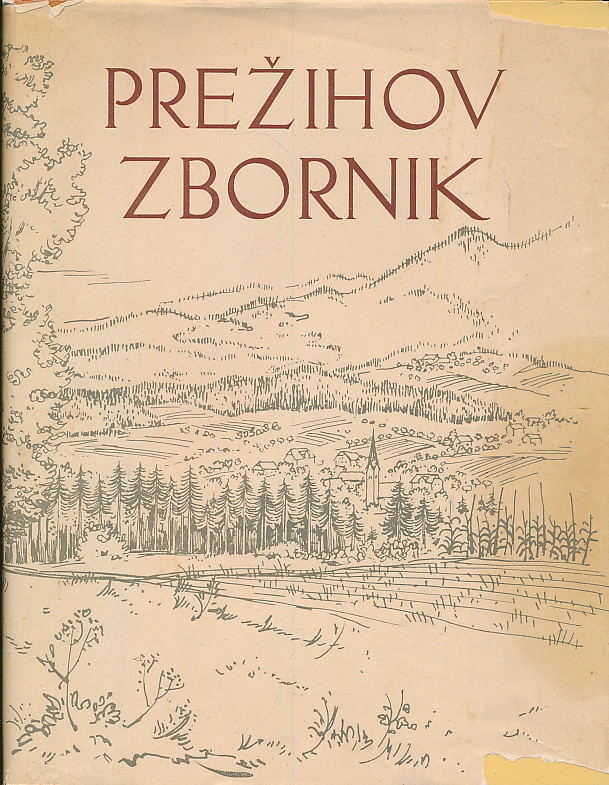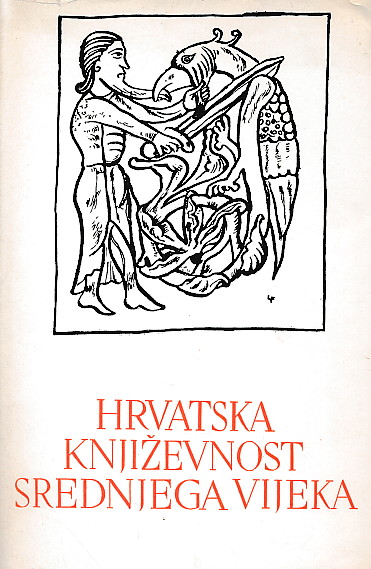
Pet stoljeća hrvatske književnosti (PSHK) najveći je nakladnički projekt ostvaren u povijesti hrvatske književnosti. Njegovo značenje bilo je i mnogo više od toga, jer je riječ o pothvatu koji je označio prekretnicu u odnosu prema vlastitoj književnoj baštini, književnim vrijednostima iz starije i novije književnosti i, naposljetku, pretpostavljao je i drukčiji odnos prema vlastitom jeziku. Naime, uz standardiziranu štokavštinu, bila su ravnopravno zastupljena djela pisana čakavštinom i kajkavštinom. Ediciju je potaknula Matica hrvatska uoči 120. godišnjice svoga osnutka, a sunakladnika je našla u Izdavačkom knjižarskom poduzeću Zora, na čijem je čelu bio Ivan Dončević, jedan od članova poslijeratnog povjerenstva za izbor nove uprave, koji je potom na izvanrednoj skupštini MH održanoj 15.VII.1945. bio izabran za glavnog tajnika. Iako se na toj dužnosti nije zadržao duže od godinu dana, ostao je trajno vezan uz Matičin rad. Tekst Jelene Hekman preuzet s mrežne stranice Matice hrvatske (https://www.matica.hr/kolo/319/Pet%20stolje%C4%87a%20hrvatske%20knji%C5%BEevnosti/) Biblioteku su grafički opremili suradnici Majstorske radionice Krste Hegedušića, a znak biblioteke i hrbat izradio je Željko Hegedušić. Nekolicina knjiga nedostaje iz razloga što nikad nisu bile tiskane.

Robin Blyth has more than enough bother in his life. He’s struggling to be a good older brother, a responsible employer, and the harried baronet of a seat gutted by his late parents’ excesses. When an administrative mistake sees him named the civil service liaison to a hidden magical society, he discovers what’s been operating beneath the unextraordinary reality he’s always known. Now Robin must contend with the beauty and danger of magic, an excruciating deadly curse, and the alarming visions of the future that come with it-not to mention Edwin Courcey, his cold and prickly counterpart in the magical bureaucracy, who clearly wishes Robin were anyone and anywhere else. Robin’s predecessor has disappeared, and the mystery of what happened to him reveals unsettling truths about the very oldest stories they’ve been told about the land they live on and what binds it. Thrown together and facing unexpected dangers, Robin and Edwin discover a plot that threatens every magician in the British Isles-and a secret that more than one person has already died to keep.
This work has been selected by scholars as being culturally important, and is part of the knowledge base of civilization as we know it. This work was reproduced from the original artifact, and remains as true to the original work as possible. Therefore, you will see the original copyright references, library stamps (as most of these works have been housed in our most important libraries around the world), and other notations in the work.This work is in the public domain in the United States of America, and possibly other nations. Within the United States, you may freely copy and distribute this work, as no entity (individual or corporate) has a copyright on the body of the work.As a reproduction of a historical artifact, this work may contain missing or blurred pages, poor pictures, errant marks, etc. Scholars believe, and we concur, that this work is important enough to be preserved, reproduced, and made generally available to the public. We appreciate your support of the preservation process, and thank you for being an important part of keeping this knowledge alive and relevant.
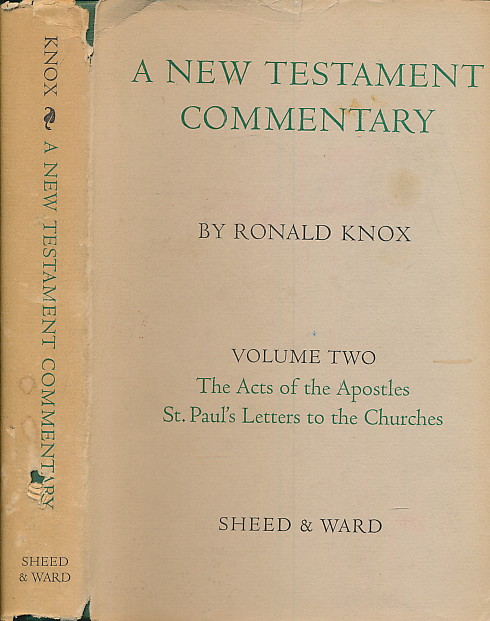
A New Testament Commentary for English Readers (Volume Two: The Acts of the Apostles, St. Paul’s Letters to the Churches)

A coming-of-age tale of fanfiction, family, and first love. Cath is a Simon Snow fan. Okay, the whole world is a Simon Snow fan…. But for Cath, being a fan is her life—and she’s really good at it. She and her twin, Wren, ensconced themselves in the Simon Snow series when they were just kids; it’s what got them through their mother leaving. Reading. Rereading. Hanging out in Simon Snow forums, writing Simon Snow fanfiction, dressing up like the characters for every movie premiere. Cath’s sister has mostly grown away from fandom, but Cath can’t let go. She doesn’t want to. Now that they’re going to college, Wren has told Cath she doesn’t want to be roommates. Cath is on her own, completely outside of her comfort zone. She’s got a surly roommate with a charming, always-around boyfriend; a fiction-writing professor who thinks fanfiction is the end of the civilized world; a handsome classmate who only wants to talk about words… and she can’t stop worrying about her dad, who’s loving and fragile and has never really been alone. For Cath, the question is: Can she do this? Can she make it without Wren holding her hand? Is she ready to start living her own life? And does she even want to move on if it means leaving Simon Snow behind?
Beginners and even fairly advanced players agree on one thing: analyzing the strength or weakness of a position (material being equal) is the hardest part of chess to learn. It is also one of the hardest elements to teach, and there are some who claim it is unteachable. But this wonderfully lucid book, written by one of the outstanding chess expositors of the twentieth century, presents the basis of analysis in such a disarmingly simple way that even the most casual player will be able to improve his game immensely. Sticking to a few well-chosen examples and explaining every step along the way, the author shows you how to avoid playing a hit-or-miss game, from move to move, and instead develop general plans of action based on positional analysis: weak and strong squares, the notion of controlling a square, how to seize control of open lines, weak points in the pawn structure, and other aspects of analysis. He includes as well a number of tips (not often found in books for beginners and average players) that the reader would do well to commit to memory: such hints as “Never omit to blockade an enemy passed pawn,” and “Do not be content with attacking an existing weakness; always seek to create others.” Throughout the book he defines and illustrates typical chess mistakes, and anyone reading his book carefully will learn in a few hours what he might otherwise have spent years to attain. For this revised edition, the author added 20 problems from master games on which the reader can test his understanding of the principles found in the text.
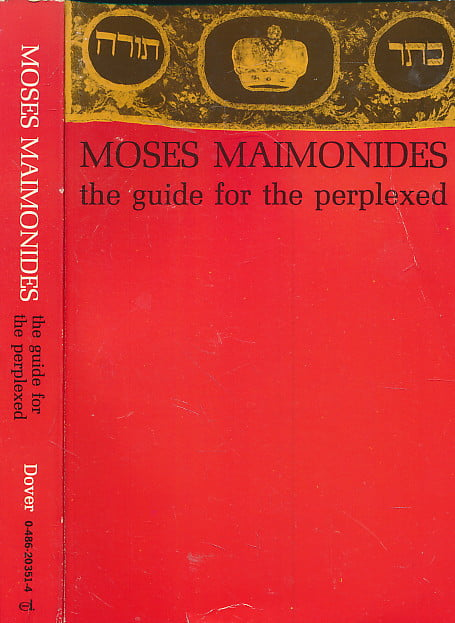
by Moses Maimonides (Author), M. Friedlander (Translator) Dive into the depths of medieval philosophy with the timeless classic. Written by the twelfth-century polymath Maimonides, this seminal work seeks to reconcile religious beliefs with philosophical thought, proving as relevant today as it was centuries ago. This is the complete, unabridged text of one of the greatest philosophical works of all time. Written by a 12th-century thinker who was equally active as an original philosopher and as a Biblical and Talmudic scholar, it is both a classic of great historical importance and a work of living significance today. The Guide for the Perplexed waswritten for scholars bewildered by the conflict between religion and the scientific and philosophical thought of the day. It is concerned with finding a concord between the religion of the Old Testament and its commentaries and Aristotelian philosophy. After analyzing the ideas of the Old Testament by means of homonyms, Maimonides examines other reconciliations of religion and philosophy (the Moslem rationalists) and then proposes his own resolution with contemporary Aristotelianism. The Guide for the Perplexed was immediately recognized as a masterwork, and it strongly influenced Jewish, Christian, and Moslem thought of the Middle Ages. It is necessary reading for any full comprehension of the thought of such scholastics as Aquinas and Scotus and indispensable for everyone interested in the Middle Ages, Judaism, medieval philosophy, or the larger problems that Maimonides discusses.
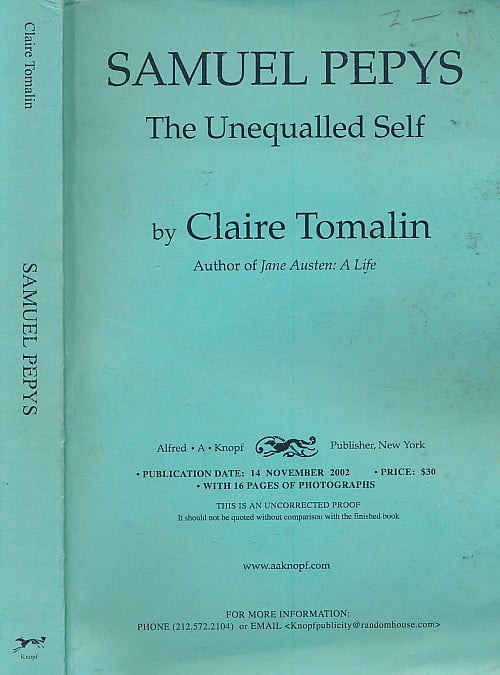
The seventeenth century saw a revolution in man’s thought, as Isaac Newton and others began the scientific study of the universe around them. At the same time a shrewd young civil servant in London began to observe, with something of the same dispassionate curiosity, the strange object around which, for him, the universe revolved–himself. For ten years, beginning in 1660, Samuel Pepys secretly kept one of the most remarkable records ever made of a human life. With astounding candor and perceptiveness he described his ambitions and peculations, his professional successes and failures, his pettinesses and meannesses, his tenderness toward his wife and the irritations and jealousies she provoked, his extramarital longings and fumblings, his coolly critical attitude toward the king he served and his watchful adaptation to the corrupt and treacherous life of the court. Pepys’s diary is a magnificent creation. But there is more to Samuel Pepys than his diary, as Claire Tomalin makes clear in this profoundly original biography. Buttressing it with less familiar sources and other contemporary material, she is able to illuminate his entire life–as a poor London tailor’s son, as a schoolboy rejoicing at the execution of Charles I, as an aspiring clerk with good connections who transforms himself into a royalist, escorting Charles II to England for the Restoration. Then there is the bureaucrat heroically working against the odds to create a modern navy, finding his way through the dangerous years of political and religious conflict (even, at one point, being charged with treason and jailed), peacefully retiring at last with his books and his music and his friends. It is Claire Tomalin’s unique skill as a biographer to achieve extraordinary intimacy with her subject, and Pepys is no exception. To the endlessly fascinating question of his relations with women, for example, she brings the same insight and freshness of approach that distinguished such highly praised books as Jane Austen and The Invisible Woman. At the same time, the historical context is never less than brilliantly evoked. The result is exemplary, by far the most revealing–and readable–portrait of the greatest diarist in the English language, a man of unmatched interest and importance.
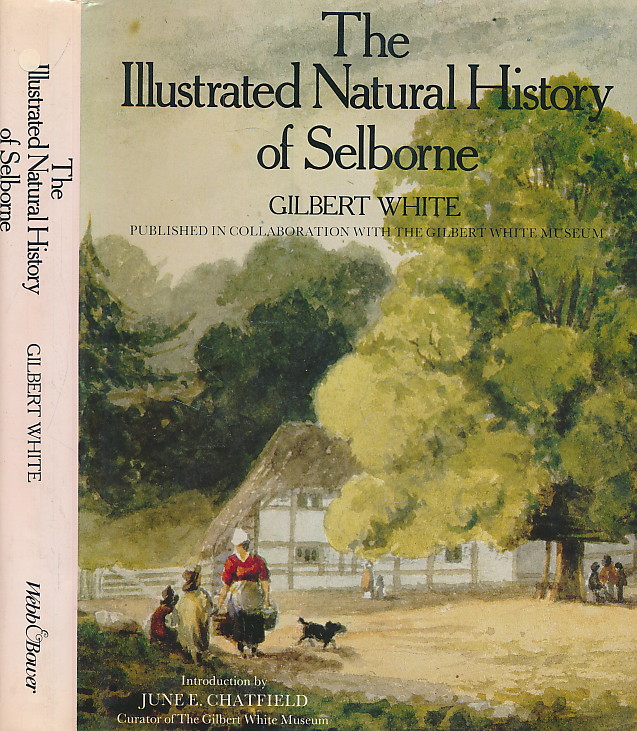
When Georg Forster boarded Captain Cook’s circumnavigation ship in 1772, Gilbert White had already been working on his own natural history observations for over two decades, far from any academies. He kept a diary of the wind and weather conditions, particularly in his birthplace of Selborne in Hampshire in southern England, where he looked after the surrounding parishes as a chaplain. He followed the seasons and made precise notes on Selborne’s flora and especially the animal world. As his pile of notes grew, so did his collection of specimens preserved in brandy, which made the diversity of the local fauna clear to his visitors. In the tradition of the English pastor-natural historians who filled the zoological and botanical nomenclatures of Carl von Linné, Gilbert White set out to explore the areas of land that he could access by hiking: pastureland, chalk formations, heaths, arable and cultivated soils, ponds, lakes and rivers, swamps and dry areas. His field research in the immediate vicinity revealed astonishing things: he is considered the discoverer of the harvest mouse as a separate species, was the first to distinguish the chiffchaff, the willow warbler and the wood warbler as three different bird species based on their song and noted that owls hoot in B major. He followed the fate of local species with sympathy: whether crows, cuckoos or nightjars, crickets, house crickets – or even his aunt’s turtle. When a mighty oak tree is felled, he describes the plight of a family of ravens that had called this very tree their home for generations; While the saw is still doing its work, the raven mother is sitting in the freshly tended nest… The amateur zoologist White spent almost 40 years composing his book from correspondence with naturalists who were well-known far beyond England at the time. It was not published until 1789, a few years before his death. Unlike his long-forgotten colleagues, Reverend White found a linguistic form that made his natural history of Selborne a timeless classic of English literature. After hundreds of editions in Great Britain and overseas, it brought his home village of Selborne some fame and notoriety – today the Gilbert White House with its adjoining natural history museum is a destination for tourists from all over the world.
Plutarch s Lives of Themistocles, Pericles, Aristides, Alcibiades and Coriolanus, Demosthenes and Cicero, aesar and Antony, translated by Dryden, corrected and revised by Arthur Hugh Clough
Letters of Marcus Tullius Cicero with his treatises on friendship and old age, translated by E S Shuckburgh, and Letters of Gaius Plinius Caecilius Secundus translated by William Melmoth, revised by F C T Bosanquet