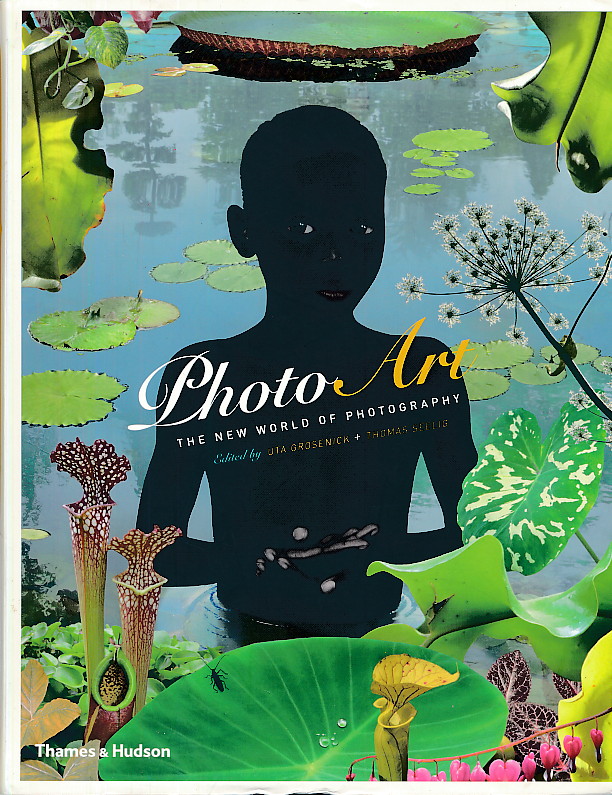
Photo Art The New World of Photography

Photo Art: The New World of Photography Hardcover – 24 Mar. 2008 by Thomas Seelig (Author), Uta Grosenick (Editor) This lavishly illustrated, accessible survey presents the work of nearly 120 international artists at the forefront of the boom in photography, among them Elina Brotherus, Tacita Dean, Luc Delahaye, Alec Soth, Jens Ullrich and Michael Wesely. Each artist is introduced by a brief essay, followed by four pages of their superbly reproduced work. This is a valuable and forward-looking reference book for photographers, collectors and photography lovers everywhere. Table of Contents Roy Arden • Olivo Barbieri • Yto Barrada • Valerie Belin • Zarina Bhimi • Richard Billingham Bitter/Weber • Ruth Blees luxembur • Niels Blommers/Anuschka Schumm • Sonja Bras • Dirk Braeckman • Sergy BBratkov • Adam Broomberg/Oliver Chanarin • Elina Brotherus • Stefan Burger Gerard Byrne • Claude Closky • Colllectif_fact • Kelli Connell • Natalie Czech • Tacita Dean • Luc Delahaye • Charlotte Dumas • Lukas Einsele • Ruud van Empel • JH Engström • Roe Ethridge Charles Fréger • Yan Fudong • Stephen Gill • Anthony Goicolea • Marnix Goossenss • GRAM • Beate Gütschow • Maria Hahnenkamp • Jitka Hanzlová • Naoya Hatakeyama • Annika von Hausswolff • José Antonio Hernández-Diez • Takashi Homma • Juul Hondius • Marine Hugonnier Michael Janiszewski • Sanna Kannisto • Rinko Kawauchi • Izima Kaoru • Pertti Kekarainen • Jean- Pierre Khazem • Iosif Király • Joachim Koester • Aglaia Konrad • Justine Kurland • Luisa Lambri An-My Le • Paul Albert Leitner • Jochen Lempert • Zbiggniew Libera • Nate Lowman • Fabian Marti • Taiji Matssue • Hellen van Meene • Florian Maier-Aichen • Jean-Luc Moulene • Zwelethus Mthethwa • Multiplicity • Oliver Musovik • Wanggechi Mutu • Simone Nieweg • Mika Ninagawa Arno Nollen • Simon Norfolk • Ohio • Gabor Ösz • Peter Piller • Martin Polak/Lukas Jasansky Marco Poloni • Barbara Probbst • Gonzalo Puch • The Atlas Group/Walid Raad • Clunie Reid Rosângela Rennó • Xavier Ribbas • Terry Richardson • John Riddy • Torbjorn Rodland • Ricarda Roggan • Guadelupe Ruiz • Anri Sala • Frank van der Salm • Diana Scheunemann • Bruno Serralongue • Shirana Shabhazi • Ann-Sofi Sidén • Santiago Sierra • Alec Soth • Heidi Specker • Jules Spinatscch • Erik Steinbrecher • Eve Sussmann • Philippe Terrier-Hermann • Ana Torfs • Janaina Tschäpe • Sze Tsung Leong • Jens Ullrich • Useful Photography • Santos Vasquez • Qingsong Wang Michael Wesely • Back Seung Woo • Takashi Yasumura • Kimiko Yoshida

Kletva

Historički roman. Dovršio Josip Eugen Tomić.

Giorgio Armani

Giorgio Armani (Guggenheim Museum Publications) Hardcover – 1 Oct. 2000 by Germano Celant (Author), Harold Koda (Author) A sumptuous photographic essay, which accompanies a new museum exhibition, celebrates the design genius of Armani, discussing his wide influence and the radical changes in fashion that he has inspired, tracing the evolution of his unique artistry.

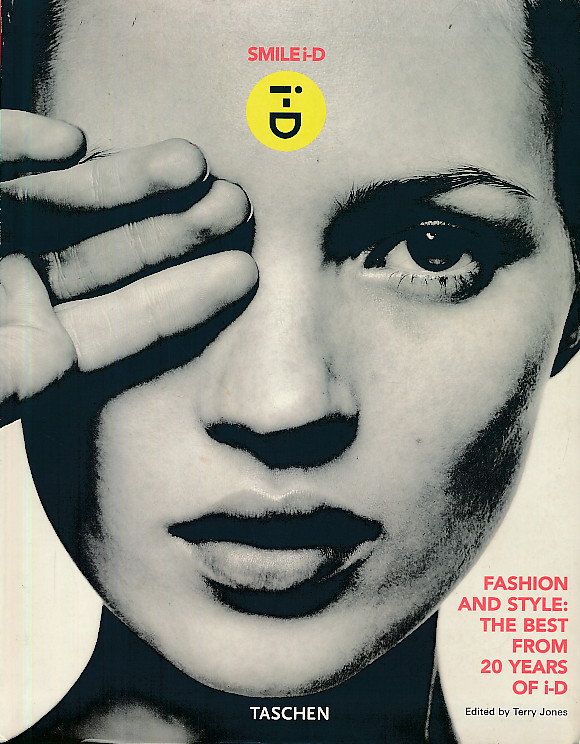
Fashion and Style: The Best

Smile ID: Fashion and Style: the Best from 20 Years of ID Hardcover – 30 Mar. 2001 by Terry Jones (Editor) The year 2000 marked the issue 200 and year 20 for i-D Magazine. Blending fashion and social documentation, early issues of i-D (now major collector’s items) were presented as 40 pages stapled together. ‘Smile i-D’ incorporates a single spread from each issue of the magazine so far, capturing stars before they were even famous. With teamwork and innovation i-D is now at the forefront of contemporary fashion, culture and now has global distribution. It is a publication, which has revolutionised not only the world of fashion magazines but also fashion itself.

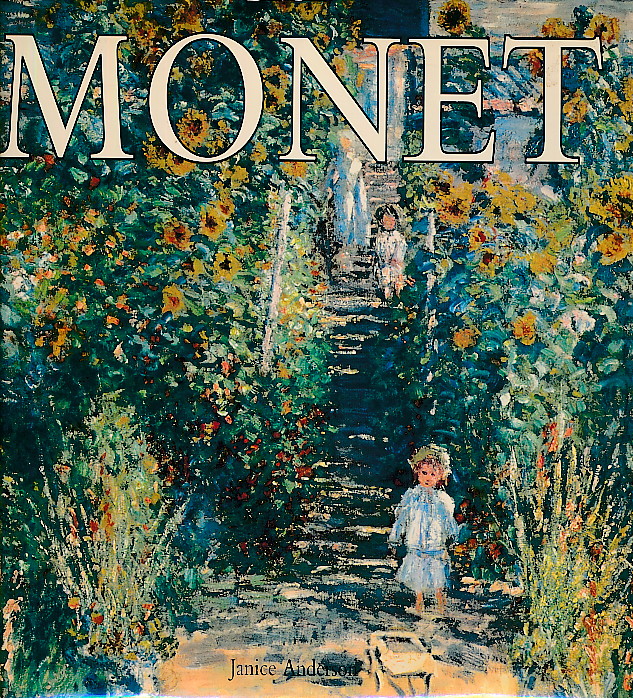
Monet

Monet [MONET] ANDERSON, Janice Published by Wellfleet Press, Edison, NJ, 2003

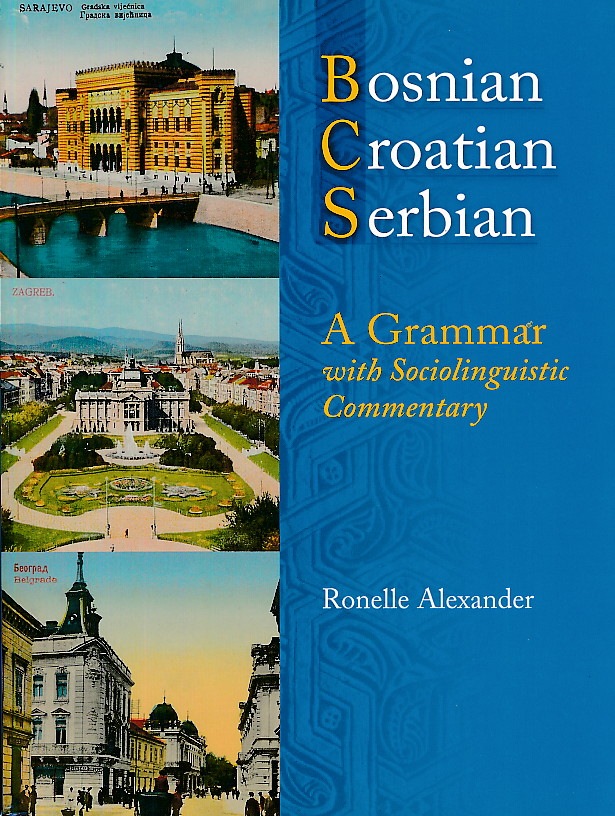
Bosnian, Croatian, Serbian, a Grammar

With Sociolinguistic Commentary. Bosnian, Croatian, Serbian, a Grammar analyzes and clarifies the complex, dynamic language situation in the former Yugoslavia. Addressing squarely the issues connected with the splintering of Serbo-Croatian into component languages, this volume provides teachers and learners with practical solutions and highlights the differences among the languages as well as the communicative core that they all share. The first book to cover all three components of the post-Yugoslav linguistic environment, this reference manual features: · Thorough presentation of the grammar common to Bosnian, Croatian, and Serbian, with explication of all the major differences · Examples from a broad range of spoken language and literature · New approaches to accent and clitic ordering, two of the most difficult points in BCS grammar · Order of grammar presentation in chapters 1–16 keyed to corresponding lessons in Bosnian, Croatian, Serbian, a Textbook · Sociolinguistic commentary explicating the cultural and political context within which Bosnian, Croatian, and Serbian function and have been defined · Separate indexes of the grammar and sociolinguistic commentary, and of all words discussed in both

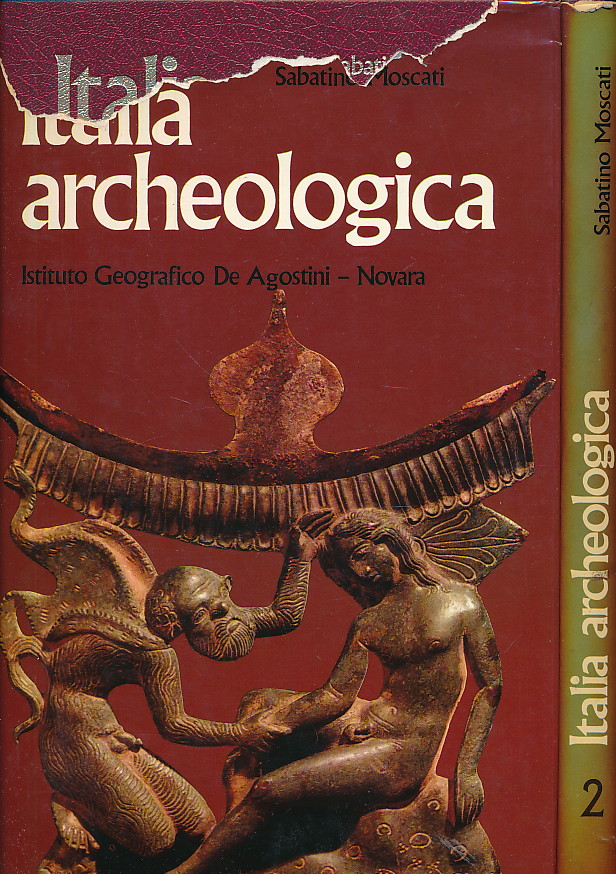
Italia archeologica 1-2

Centri greci, punici, etruschi, italici. Collaborazione di Anna Maria Bisi ed Enrico Acquaro. 2 volumi. Dal sommario: Vol. I, Civilta greca (Introduzione, Magna Grecia, Sicilia, Area adriatica) Civilta punica (Introduzione, Sicilia, Sardegna) Glossario, Note bibliografiche, Cartografia stradale. Vol. II, Civilta etrusca (Introduzione, Etruria costiera e subcostiera, Etruria interna) Civilta italiche (Introduzione, Puglia, Lucania, Campania, Lazio, Abruzzo e Molise, Piceno, Veneto, Sicilia, Sardegna) Glossario, Note bibliografiche, Indice analitico, Cartografia stradale. Volumi corredati da numerosissime illustrazioni in bn e colore nel testo. 4to. pp. 226 + 9 (cartografia) + 202 + 8 (cartografia).

Beautiful Suffering: Photography and the Traffic in Pain Tapa blanda

Beautiful Suffering: Photography and the Traffic in Pain Tapa blanda – 10 Enero 2007 de Mark Reinhardt (Editor), Holly Edwards (Editor), Erina Duganne (Editor) Susan Sontag once remarked that since the invention of the camera, photography has “kept company with death.” And indeed, images of suffering human beings and devastated landscapes appear regularly in the popular media and even in contemporary art. This volume explores these painful images from the past few decades of photography, weighing in on the intense critical debate that has arisen in recent years around depictions of acute human suffering—especially those that are beautifully rendered. Drawing on works from advertising, photojournalism, art photography, and conceptual art, Beautiful Suffering features reproductions of all the pieces in the Williams College Museum of Art exhibition that shares its name—including portrayals of AIDS sufferers, Abu Ghraib prisoners, refugees, and casualties of war. It also includes five critical essays that engage the works themselves as well as the larger issues the exhibition confronts: Is it inherently problematic to seek aesthetic pleasure in a rendering of pain? And if so, why? These essays, composed by scholars in fields as diverse as art history and political science, are perfect complements to the powerful images of suffering that probe some of the most pressing issues we face today.

The End of Faith

The End of Faith: Religion, Terror, and the Future of Reason. In The End of Faith, Sam Harris delivers a startling analysis of the clash between reason and religion in the modern world. He offers a vivid, historical tour of our willingness to suspend reason in favor of religious beliefs-even when these beliefs inspire the worst human atrocities. While warning against the encroachment of organized religion into world politics, Harris draws on insights from neuroscience, philosophy, and Eastern mysticism to deliver a call for a truly modern foundation for ethics and spirituality that is both secular and humanistic. Winner of the 2005 PEN/Martha Albrand Award for Nonfiction.

Ten Lessons for a Post-Pandemic World

New York Times Bestseller COVID-19 is speeding up history, but how? What is the shape of the world to come? Lenin once said, There are decades when nothing happens and weeks when decades happen. This is one of those times when history has sped up. CNN host and best-selling author Fareed Zakaria helps readers to understand the nature of a post-pandemic world: the political, social, technological, and economic consequences that may take years to unfold. Written in the form of ten lessons, covering topics from natural and biological risks to the rise of digital life to an emerging bipolar world order, Zakaria helps readers to begin thinking beyond the immediate effects of COVID-19. Ten Lessons for a Post-Pandemic World speaks to past, present, and future, and, while urgent and timely, is sure to become an enduring reflection on life in the early twenty-first century.

Responsability and Judgment

Responsibility and Judgment gathers together unpublished writings from the last decade of Arendt’s life, where she addresses fundamental questions and concerns about the nature of evil and the making of moral choices. At the heart of the book is a profound ethical investigation, “Some Questions of Moral Philosophy,” in which Arendt confronts the inadequacy of traditional moral “truths” as standards to judge what we are capable of doing and examines anew our ability to distinguish good from evil and right from wrong. We also see how Arendt comes to understand that alongside the radical evil she had addressed in earlier analyses of totalitarianism, there exists a more pernicious evil, independent of political ideology, whose execution is limitless when the perpetrator feels no remorse and can forget his acts as soon as they are committed.

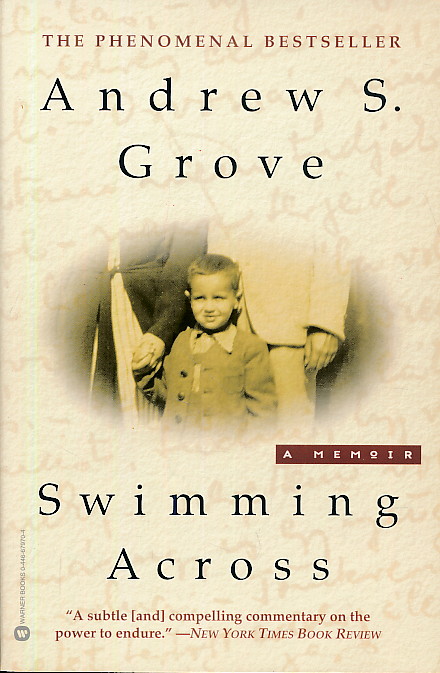
Swimming Across

Set in the cruel years of Hungary’s Nazi occupation and subsequent communist regime, the bestselling Swimming Across is the stunning childhood memoir of one of the leading thinkers of our time, legendary Intel chairman, Andrew S. Grove. Photos throughout.

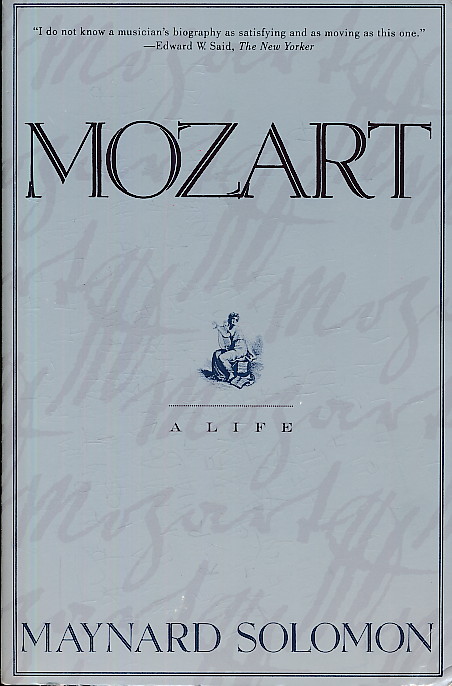
Mozart

Maynard Solomon writes with the grace of a novelist, the insight of a philosopher, and the precision of a detective. We come to know Mozart personally, as a musical genius, but more than that, as a living, breathing, thinking person. —Yo-Yo Ma Considered one of the most important music biographies ever written, esteemed biographer Maynard Solomon draws on a half-century of new information to provide an in-depth account of Mozart’s family life, his passions, and his personality.

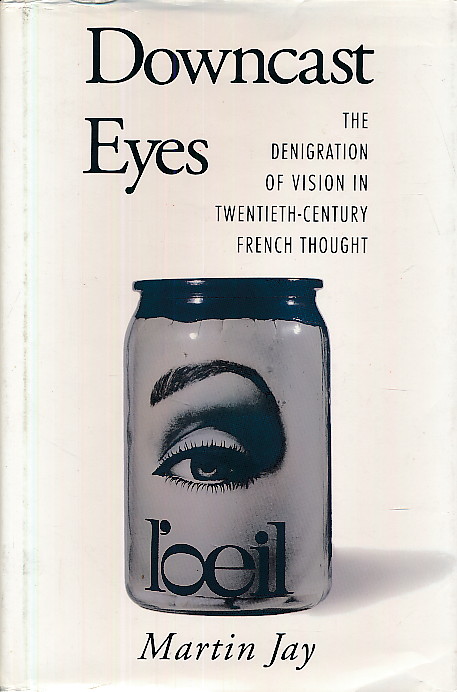
Downcast Eyes

Hardcover with dust-jacket. Downcast Eyes: The Denigration of Vision in Twentieth-Century French Thought. Long considered the noblest of the senses, vision has increasingly come under critical scrutiny by a wide range of thinkers who question its dominance in Western culture. These critics of vision, especially prominent in twentieth-century France, have challenged its allegedly superior capacity to provide access to the world. They have also criticized its supposed complicity with political and social oppression through the promulgation of spectacle and surveillance. Martin Jay turns to this discourse surrounding vision and explores its often contradictory implications in the work of such influential figures as Jean-Paul Sartre, Maurice Merleau-Ponty, Michel Foucault, Jacques Lacan, Louis Althusser, Guy Debord, Luce Irigaray, Emmanuel Levinas, and Jacques Derrida. Jay begins with a discussion of the theory of vision from Plato to Descartes, then considers its role in the French Enlightenment before turning to its status in the culture of modernity. From consideration of French Impressionism to analysis of Georges Bataille and the Surrealists, Roland Barthes’s writings on photography, and the film theory of Christian Metz, Jay provides lucid and fair-minded accounts of thinkers and ideas widely known for their difficulty. His book examines the myriad links between the interrogation of vision and the pervasive antihumanist, antimodernist, and counter-enlightenment tenor of much recent French thought. Refusing, however, to defend the dominant visual order, he calls instead for a plurality of scopic regimes. Certain to generate controversy and discussion throughout the humanities and social sciences, Downcast Eyes will consolidate Jay’s reputation as one of today’s premier cultural and intellectual historians.

Serbia’s Secret War

Serbia’s Secret War: Propaganda and the Deceit of History. An entire piece of Serbian history is missing. And in the middle of the latest Yugoslav war—Europe’s worst blood bath since World War II—Serbian politicians, propagandists, and revisionist historians have made a cynical attempt at replacing the missing piece by rewriting the Holocaust record: Serbs were not Nazi collaborators in genocide, but purely victims of the same atrocities that befell the Jews; and Serbian aspirations for a Greater Serbia are not driven by a murderous, nationalistic hatred, but rather are propelled by a victim’s desire to lay claim to a safe homeland, a Serbian Promised Land. Thus has the current spilling of blood been justified. Philip J. Cohen argues that the existence of such a propaganda campaign, emanating from Belgrade, began in the earliest days of the post-World War II era and, since then, has been reflected in the world media, as well as in popular commentary and scholarly analysis. More astonishing is that this campaign has been widely successful, particularly in Israel. In attempting to not only establish but also explain the Serbian record during the Nazi occupation, Cohen takes his reader back into nineteenth-century Serbia to uncover the foundation of a political and social system that was partly built on ethnic prejudices and the glorification of violence. The rise of Serbian fascism in the 1930s was therefore inevitable—predetermined by the politics of power- and land-grabbing. Remarkable for its broad portrayal and penetrating examination of the Yugoslav social and political experience, Serbia at War with History draws heavily on documents that have been previously unavailable to the West. Some of the written record has been translated and is published here, in full, for the first time. Destined to be regarded as an important contribution to the field, Cohen’s careful study of the Serbian role in the Second World War will dramatically alter how scholars, policy makers, and the general public view the bloodshed in the former Yugoslavia—and how they will come to understand the reasons behind it.

Seven Plays

Seven Plays by Henrik Ibsen. Hedda Gabler, Ghosts, An Enemy of the People, A Doll’s House, The League of Youth, The Wild Duck, The Master Builder.

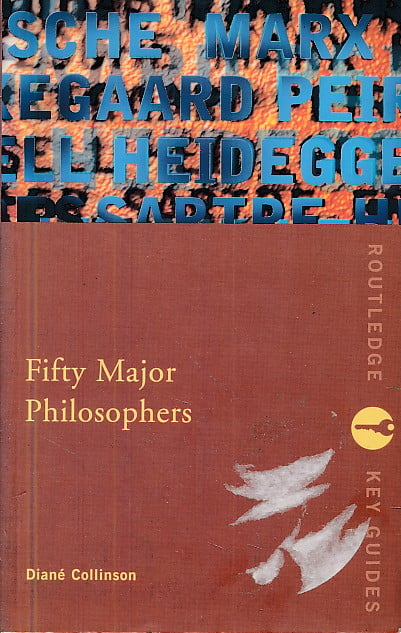
Fifty Major Philosophers

Fifty Major Philosophers – A Reference Guide. Routledge Key Guides. The history of Western philosophy spans over two thousand years, but most of the running has been made by a surprisingly small number of thinkers. It has been said that all Western philosophy is a series of footnotes to Plato, but this book takes a more accommodating view in selecting the fifty figures who have made the largest contributions to the development of our reflection upon the world and ourselves. Ranging from Plato to Wittgenstein, the thinkers treated include Aristotle, medieval philosophers and modern philosophers from Descartes and Locke to the continental schools. The book is designed as a reference tool and lists of the writers’ works are included, along with guides to further reading.

1001 Paintings

1001 Paintings You Must See Before You Die. Every one of the 1001 paintings selected for this book by Professor of Fine Art and internationally acclaimed painter, Professor Stephen Farthing, is reproduced in colour. From Ancient Egyptian wall paintings to contemporary Western canvases, this book is truly comprehensive in scope and beautiful to look at. Within its pages are displayed 1001 of the most memorable, haunting, powerful, important, controversial and arresting paintings that have ever been created. Remarkably, more than 400 twentieth- and twenty-first-century paintings are reproduced in these pages, including newly discovered works from contemporary galleries. Entertaining and informative text written by an international team of artists, curators, art critics and art collectors illuminates both the paintings and the people who painted them. An insightful review accompanies a beautiful reproduction of every painting – an enviable art collection to dip into whenever you please. Organised chronologically, you will discover fascinating and surprising juxtapositions as well as pleasing similarities. Beautifully designed and presented, 1001 Paintings You Must See Before You Die is an essential visual guidebook to sensational paintings from around the world.

Conversations with Losey

Edited down from many, many hours of interviews, this is an absolutely fascinating book. Losey comes off as that rare artist able to discuss his work without ego, and to talk about about conflicts and problems with collaborators (and even producers) with humor and understanding and without rancor. His reflections on the impact of the Hollywood Blacklist on himself and others gave me a more vivid impression of that phenomenon that I’ve ever found elsewhere. He discusses every stage of his career, including his collaborations with Brecht, Charles Laughton, Harold Pinter, Dirk Bogarde, Liz and Dick, Tennessee Williams, Alain Delon, Jeanne Moreau, Jane Fonda, etc. While Losey’s intellectual and aesthetic insights are invariably interesting, so are his occasional comments about technical challenges (difficult camera shots, working within budgets, etc.). And a few times his anecdotes made me laugh out loud (as when he describes his first meetings with the Burtons.) For fans of Losey’s work, or for anyone interested in knowing more about independent filmmaking from the inside, this book cannot be too highly recommended.

Black Hand Over Europe

Reprint 1935. Black Hand Over Europe is an English translation of Henri Pozzi’s book ‘La Guerre Revient’, originally written in French, and published in London in 1935. For nearly thirty years the author was a member of the French and English intelligence service in the Balkans and Central Europe, and for ten years was in charge of Le Temps’ Balkans Secret Service. He was the best qualified person to explain and predict the events that were to happen in the 1930s, which he described in his book ‘War is Coming Again’. Pozzi’s book, Black Hand Over Europe, was written to warn the Western World of the dangers to which they would be exposed if they continued to support Serbia’s expansionist project. Based on the combined efforts of King Aleksandar Karađorđevic, Serbian radical and extremist parties supported by individuals in the army, the Serbian Orthodox Church, paramilitary organizations, some with their legal and other secret terrorist wings, such as the Black Hand (Crna ruka), Unity or Death (Ujedinjenje ili smrt), Slavic South (Slavenski jug), People’s Defense (Narodna odbrana) etc. The author also surveys the political situation in the Kingdom of Serbs, Croats and Slovenes (SHS), renamed Yugoslavia in 1929, and shows how the Yugoslav state was created for the simple purpose of implementing Serbian domination over non-Serb nations within Yugoslavia, and infiltrating neighboring countries with secret agents. This book is distinguished by Pozzi’s excellent knowledge of the political situation in Central and South East Europe and represents a valuable testimony of his time. Following the suicide of Vojislav M. Petrovic (a Montenegrin, ex-attache to the Yugoslav Legation in London, who had been preparing a small book on the history of the Sarajevo assassination in the light of the knowledge of the Pan-Serbian organization called the Black Hand), Mr. Francis Mott, a well-known English publisher, received a letter from Paris, claiming that Petrovic’s death was only one in a long series of crimes committed by the Pan-Serbian terrorist organization Narodna Odbrana, which bore direct responsibility for the First World War. The author of the letter urged the publisher to print Petrovic’s unfinished manuscript, along with Pozzi’s book, on the basis of the author’s personal experiences and sources of information, warning the English of the dangers all Europe would be exposed to if they continued supporting Serbian expansionist political parties. The Black Hand, Unity or Death and the other mentioned organizations with similar purposes trace their roots back to 1903 and the assassination of Serbian King Aleksandar Obrenovic and his wife. At that time, born among the conspirators of that act, the idea of organizing a secret organization whose purpose would be to fight for the unity of all Serbs in Southeastern Europe, to live in the same state. The preparations for such an organization would continue until 1911, when the organization was formed under the leadership of D. Dimitrijevic-Apis. At that time, the constitution and by-laws of the organization were made, as well as a seal and a flag. The flag showing a skull, two bones and a dagger. During the oath taking ceremony, they had on the table the flag, dagger, bomb and a bottle of poison. Members were required to take an oath, and should they fail to complete a given task, they were to drink the poison, otherwise they would be killed by the other members. In the constitution, when describing the unity of the Serbs, mentioned as Serbian provinces are: Bosnia and Herzegovina, Montenegro, Old Serbia, Macedonia, Croatia, Slavonia, Vojvodina and Primorje; areas where Serbs live and wanted to incorporate into Greater Serbia. From the time of publication of Pozzi’s books until today, the occurrences described in the Black Hand have been repeated on several times or occasions. Alarmingly, the situation today, with the process of Western Balkans, is bone-chillingly similar!

Kon – Tiki

Kon – Tiki, Across the Pacific by Raft. This is a documentary writing describing science adventure. The author finds some clues which indicates that the first residents on the islands floating across South America in 5th century, according to historical remains, folk tales, wind directions and tides when he did researches on Polynesia in The Pacific. But the civilization of South America in that days is the Stone Age, rafts were the only marine vehicle, no boats. So many scientists disagreed for the simplest reason: human beings cannot cross The Pacific on rafts safely. Heyerdahl believed he was right, raft can help you cross The Pacific. In order to confirm his theory, he smoothed away many difficulties, with five companions, made a raft totally according to ancient Indian style and went to sea from Peru in April, 1947. They went through various hardships in life, won terrifying waves, encountered many horrible dangers, also interesting places. Three months later, after crossing more than four thousand nautical miles, they arrived Polynesia. As to Kon-Tiki, it is a human name, also the name of a God, who is the leader of the first group arriving Polynesia according the legends. Heyerdahl named their raft after it as well.