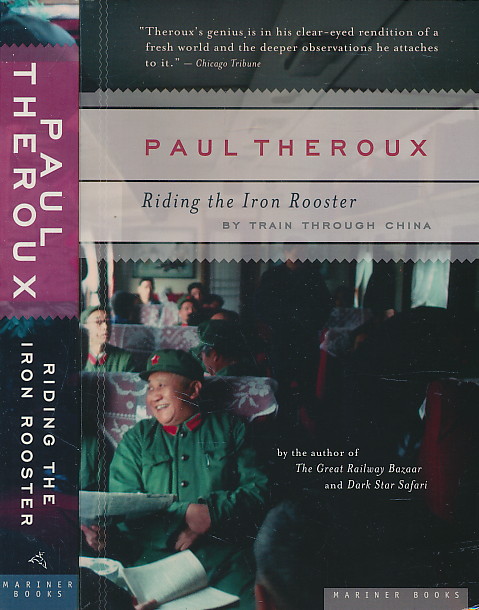
Paul Theroux, the author of the train travel classics The Great Railway Bazaar and The Old Patagonian Express, takes to the rails once again in this account of his epic journey through China. He hops aboard as part of a tour group in London and sets out for China’s border. He then spends a year traversing the country, where he pieces together a fascinating snapshot of a unique moment in history. From the barren deserts of Xinjiang to the ice forests of Manchuria, from the dense metropolises of Shanghai, Beijing, and Canton to the dry hills of Tibet, Theroux offers an unforgettable portrait of a magnificent land and an extraordinary people.
The Call continues to stand as a classic, reflective work on life’s purpose. Best-selling author Os Guinness goes beyond our surface understanding of God’s call and addresses the fact that God has a specific calling for our individual lives. Why am I here? What is God’s call in my life? How do I fit God’s call with my own individuality? How should God’s calling affect my career, my plans for the future, my concepts of success? Guinness now helps the reader discover answers to these questions, and more, through a corresponding workbook – perfect for individual or group study. According to Guinness, No idea short of God’s call can ground and fulfill the truest human desire for purpose and fulfillment. With tens of thousands of readers to date, The Call is for all who desire a purposeful, intentional life of faith.
Karl Popper has been hailed as the greatest philosopher of all time and as a thinker whose influence is ackowledged by a variety of scholars. This work demonstrates Popper’s importance across the whole range of philosophy and provides an introduction to the main themes of philosophy itself.
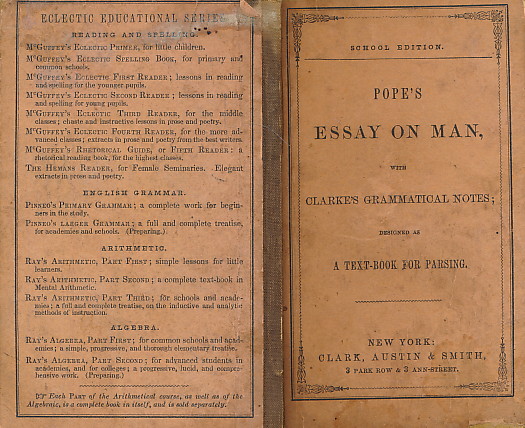
With Notes Illustrative of the Grammatical Construction, Designed as a Text-Book for Parsing by Daniel Clarke.
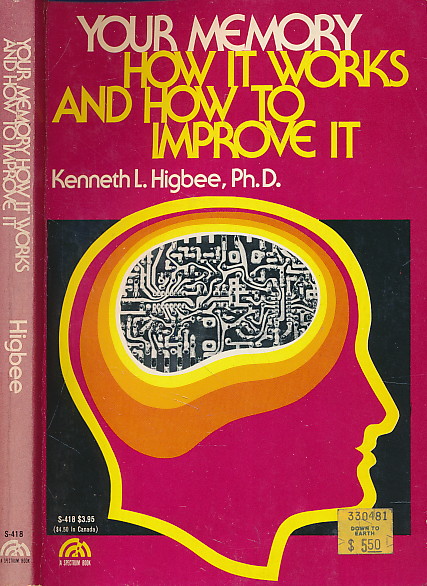
Best book on psychology and techniques of memory. Author have well researched the subject. well organised content. Everyone should read this book.
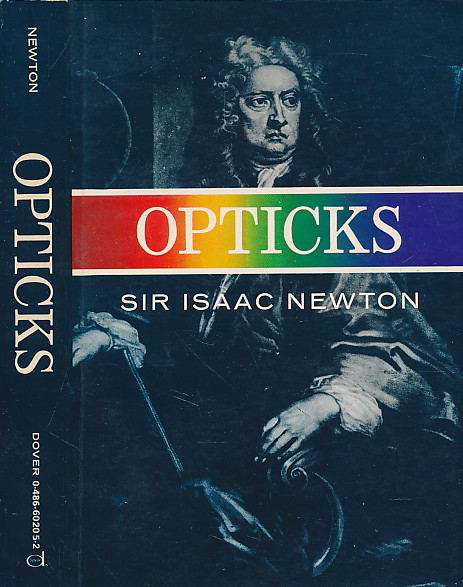
Opticks: Or a Treatise of the Reflections, Refractions, Inflections & Colours of Light-Based on the Fourth Edition London, 1730 by Sir Isaac Newton (Author), I. Bernard Cohen (Author), Albert Einstein (Author), Sir Edmund Whittaker (Author) . Recommended to all scientists. — Journal of Royal Naval Scientific Service The publishers do us a service by issuing this reprint. — The Institute of Physics An underpinning for the entire edifice of physics. — Scientific American A comprehensive survey of eighteenth-century knowledge about all aspects of light, Opticks also offers countless scientific insights by its distinguished author. One of the most readable of all the great classics of physical science, this volume will impress readers with its surprisingly modern perspectives. In language that lay readers can easily follow, Sir Isaac Newton describes his famous experiments with spectroscopy and colors, lenses, and the reflection and diffraction of light. Book I contains his fundamental experiments with the spectrum, Book II deals with the ring phenomena, and Book III covers diffraction. The work concludes with Queries — speculations concerning light and gravitation. Opticks is introduced with a Foreword by Albert Einstein.
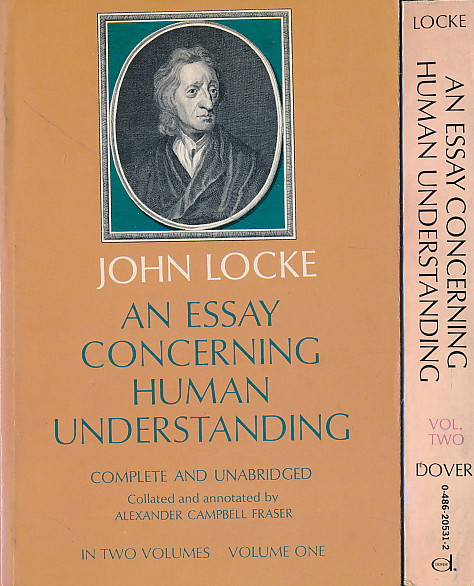
Volume 2 of a 2-volume set of Locke’s monumental work containing every word of all four books comprising the Essay. The editor, Professor A. C. Fraser, has provided marginal analyses of almost every paragraph, plus hundreds of explanatory footnotes which comment, elaborate, explain difficult points, etc.
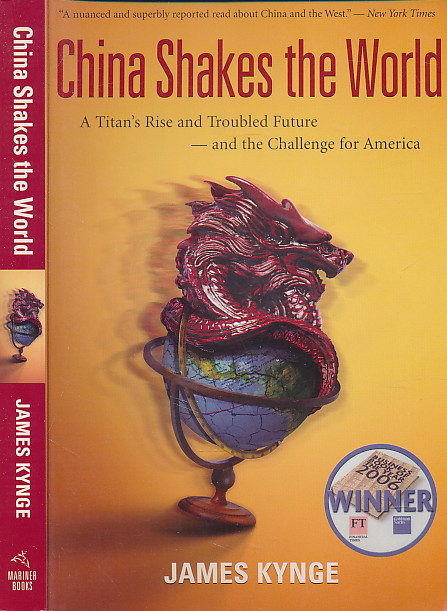
“Let China sleep, for when she wakes, she will shake the world.” Napoleon’s words seem eerily prescient today, as the shock waves from China’s awakening reverberate across the globe. In China Shakes the World, the former China bureau chief of the Financial Times, James Kynge, traces these tremors from Beijing to Europe to the Midwest as China’s ravenous hunger for jobs, raw materials, energy, and food — and its export of goods, workers, and investments — drastically reshape world trade and politics. Delving beyond mere recitation of by-now-familiar statistics, Kynge’s on-the-ground reporting provides alternative explanations for China’s explosive transformation, revealing many of the usual reasons given for its growth to be myths. Most important for the future, he details China’s deep, systemic weaknesses — rampant fraud, crippling environmental crises, a corrupt banking system, faltering government institutions, a rapidly aging population — that threaten even greater global disruptions. And he demonstrates the profound consequences of those weaknesses for American manufacturers, oil companies, banks, and ordinary consumers. Through dramatic stories of entrepreneurs and visionaries, factory workers and store clerks at the heart of this global phenomenon, China Shakes the World explains how China’s breakneck rise occurred, the extraordinary problems the country now faces, and the consequences of both for the twenty-first century.
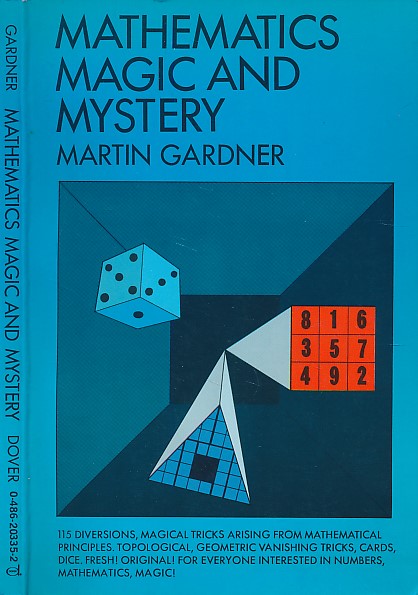
Why do card tricks work? How can magicians do astonishing feats of mathematics mentally? Why do stage mind-reading tricks work? As a rule, we simply accept these tricks and magic without recognizing that they are really demonstrations of strict laws based on probability, sets, number theory, topology, and other branches of mathematics. This is the first book-length study of this fascinating branch of recreational mathematics. Written by one of the foremost experts on mathematical magic, it employs considerable historical data to summarize all previous work in this field. It is also a creative examination of laws and their exemplification, with scores of new tricks, insights, and demonstrations. Dozens of topological tricks are explained, and dozens of manipulation tricks are aligned with mathematical law. Nontechnical, detailed, and clear, this volume contains 115 sections discussing tricks with cards, dice, coins, etc.; topological tricks with handkerchiefs, cards, etc.; geometrical vanishing effects; demonstrations with pure numbers; and dozens of other topics. You will learn how a Moebius strip works and how a Curry square can prove that the whole is not equal to the sum of its parts. No skill at sleight of hand is needed to perform the more than 500 tricks described because mathematics guarantees their success. Detailed examination of laws and their application permits you to create your own problems and effects.
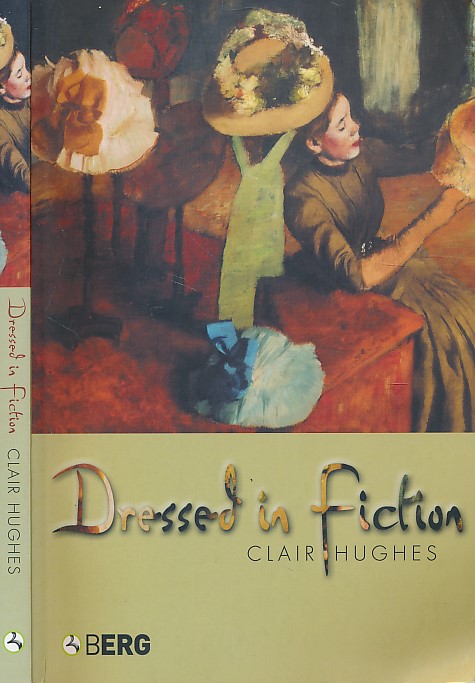
When we look closely at dress in a novel we begin to enrich our sense of the novel’s historical and social context. More than this, wealth, class, beauty and moral rectitude can all be coded in fabric. In the modern novel, narratives are increasingly situated within the consciousness of characters, and it is the experience of dress that tells us about the context and the emotional, political and psychological values of the characters. Dressed in Fiction traces the deployment of dress in key fictional texts of the eighteenth and nineteenth centuries, from Daniel Defoe’s Roxana to George Eliot’s Middlemarch and Edith Wharton’s The House of Mirth. Covering a range of topics, from the growth of the middle classes and the association of luxury with vice, to the reasons why wedding dresses rarely ever symbolize happiness, the book presents a unique study of the history of clothing through the most popular and influential literature of the eighteenth and nineteenth centuries.
This bestselling, highly-acclaimed account is a hilarious but scathing baseball tell-all. After being voted the 1977 American League Cy Young Award winner, Sparky Lyle was rewarded for his efforts by being benched. The Yankees, a leader of free agency, signed Goose Gossage as their closer. Things only went downhill from there and the 1978 season turned out to be one of controversy, firings, fights and acrimony. In short, it was a zoo.
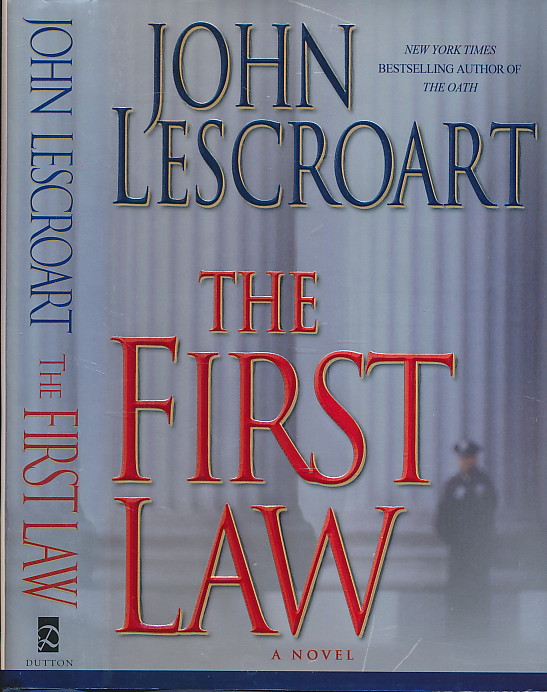
At last recovered from a near-fatal gunshot wound, Lieutenant Abe Glitsky is back at work. But instead of returning to his old job as chief of homicide detail, he’s assigned a desk job in the payroll department, where he has no business investigating murders—until his father’s closest friend is shot dead in a downtown pawn shop. Glitsky asks the new homicide lieutenant about the case, but the brass tells him to stay out of it. Guided by the Patrol Special—a private police force supervised by the SFPD that is a holdover from San Francisco’s vigilante past—the police have already targeted their prime suspect: John Holiday, proprietor of a run-down local bar, and a friend and client of Dismas Hardy. Hardy has ample reason to doubt both his client’s guilt and the evidence conveniently stacked against him. Hardy turns to Glitsky for help, but when Holiday is implicated in the grisly killings of two more men, their pleas fall on hostile ears. To avoid arrest, Holiday turns fugitive, and the police believe three things: that Hardy’s a liar protecting Holiday, that Holiday is a cold-blooded killer, and that Glitsky’s a bad cop on the wrong side of the law. And as the deadly pursuit for a murderer intensifies, Hardy, Glitsky, and even their families are directly threatened by the forces that want to see Holiday brought down. Cut off from the system that they both served, denied justice from the corridors of power, and increasingly isolated at every turn, Hardy and Glitsky face their darkest hour. For when the law that is meant to shield and protect those closest to them fails, they must look to another, more primal law in order to survive.…
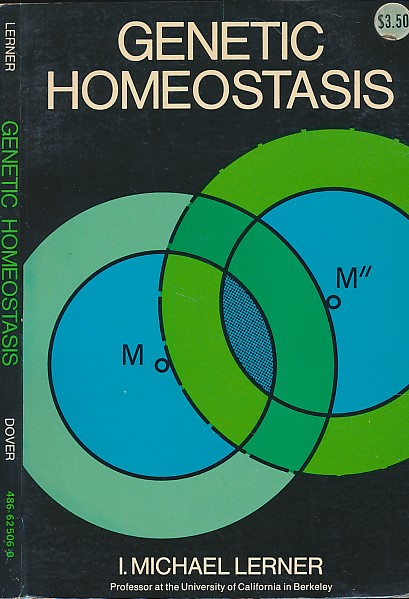
That biological feedback mechanisms exist within organisms, whose function is to maintain stability against fluctuating conditions, seems today well established. The total of steady states thus achieved within the organism is denoted as homeostasis. In this book the thesis is advanced and developed that a parallel homeostatic process occurs at the level of interbreeding groups, making for stability in the inheritance of a given population. The author, Professor of Genetics at the University of California in Berkeley, holds that Mendelian populations possess self-regulating properties, that a connection exists between genetic and developmental homeostasis, and that heterozygosity possibly provides a basis for both phenomena. These concepts are presented in terms of results of investigations of various animal populations: chickens, Drosophilia, higher animals, and plants. The evidence concerns data on artificial selection, observations on phenotypic deviants and estimates of variability of homozygotes and heterozygotes. Genetic models underlying the theory are then presented, followed by theoretic justification. An introduction to the general concept of homeostasis and its physiological, social and ecological applica-tions precedes the main body of the work. The author’s entrance to the subject is via his well known work in animal improvement, and his evidence is buttressed by mathematical and diagrammatic analysis. The concept and its exposition are of significant interest to anyone concerned with evolutionary theory, animal husbandry, and, of course, genetics from a theoretical, practical or educational viewpoint.
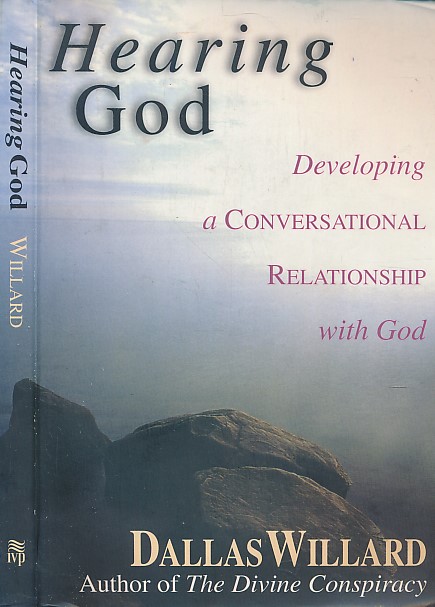
God spoke to me. The Spirit spoke to my heart. God revealed the idea to me. Being close to God means communicating with him–telling him what is on our hearts in prayer and hearing and understanding what he is saying to us. It is this second half of our conversation with God that is so important but that can also be so difficult. How do we hear his voice? How can we be sure that what we think we hear is not our own subconscious? What role does the Bible play? What if what God says to us is not clear? The key, says best-selling author Dallas Willard, is to focus not so much on individual actions and decisions as on building our personal relationship with our Creator. In this updated classic, originally published as In Search of Guidance, the author provides rich spiritual insight into how we can hear God’s voice clearly and develop an intimate partnership with him in the work of his kingdom.
A wide ranging investigation into the workings of the KGB, covering the manipulation of Egyptian President Nasser; the attempts to assassinate Fidel Castro; the campaign to intimidate journalists and silence dissent within the Soviet Union: the assistance given to IRA Provisionals; the wide scale infiltration of American Installations to steal hundreds of secret documents; the attempt to take over Ghana; sexual entrapment of Western diplomats; and the plans to paralyzed nations in the event of future international crises.
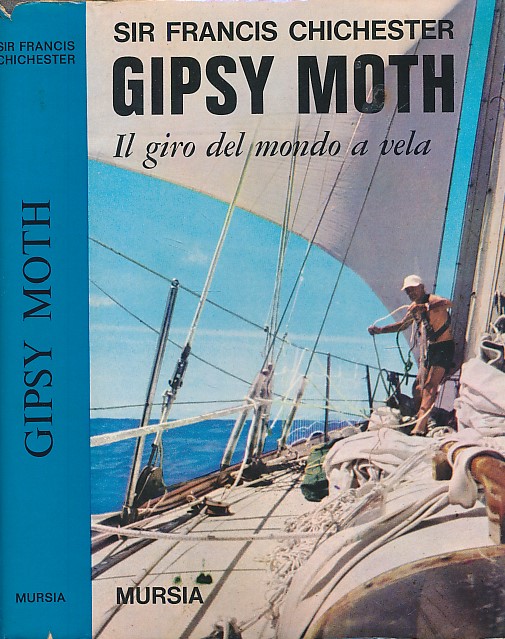
Il giro del mondo a vela compiuto dal navigatore solitario Francis Chichester col piccolo yacht Gipsy Moth e stato definito viaggio del secolo e ha impressionato il mondo intero. Partito da Plymouth il 27 agosto 1966, per compiere poco dopo, in alto mare, i suoi 65 anni, Chichester raggiunse Sydney in 107 giorni di navigazione durante i quali da Madera in poi, non vide piu terra nemmeno doppiando il Capo di Buona Speranza fino a quando non avvisto l’Australia, nell’imminenza dell’arrivo. Ripartito da Sydney, in 119 giorni attraverso il Pacifico, vide fugacemente terra doppiando Capo Horn, risali l’immensa solitudine dell’Atlantico e rientro a Plymouth il 28 maggio 1967. Nel corso della sua circumnavigazione Francis Chichester aveva battuto tutta una serie di primati. Ma il vero motivo dell’entusiasmo mondiale per questa impresa e stato determinato dall’affermazione individuale che essa costituiva. E tutti si sono chiesti come avesse fatto quest’uomo, non piu giovane, a sostenere un simile sforzo e una simile solitudine, a superare tali e tanti pericoli e ostacoli, su distanze cosi sterminate. La risposta all’interrogativo si trova in questo libro: e la cronaca del viaggio scritta dal protagonista stesso, nell’immediatezza dell’impresa e anzi, in buona parte, quando la circumnavigazione era ancora in corso. Questo libro e percio il documento non solo di un’eccezionale navigazione, ma anche dello sforzo di un individuo nei confronti della natura, delle circostanze e di se stesso per portare a termine nel mondo moderno un’impresa individuale.
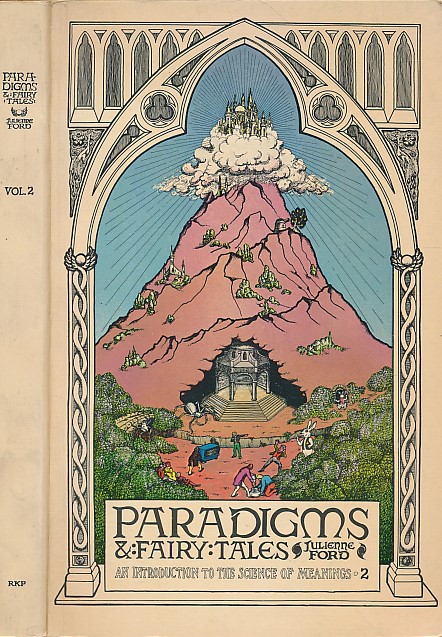
The Light is Above A Short Cut from A to B Rabbit on the Shopping List Will You Join the Dance? A Most Unlikely Story The Amazing, Incredible Sampling Machine A Box of My Own Invention Uncertain Measures Coder Coda Statistricks! What You Will! …
The role of the Chairman, Secretary and ordinary member.
PSYCHOLOGY, RELIGION AND HEALING. A critical study of all the non-physical methods of healing, with an examination of the principles under lying them and the techniques employed to express them, together with some conclusions regarding further investigation and action in this field LESLIE D. WEATHERHEAD M. PREFACE: IN THE FIRST WORLD WAR a young doctor, working in the desert amongst troops stationed north of Baghdad, talked about his dreams to two young chaplains far into the night. I was one of the chaplains. That doctor was a remarkable man. He practised psychological treat ment of an impressive kind when what was then called The New Psy chology was very new indeed. He practised hypnotism, both as a means of investigating the deep mind of the patient and also of giving him suggestions of courage, confidence and recovery. Further, he had as great a spiritual faith and power as I have ever seen. He would go out into the desert, and for hours he would concentrate his mind on one patient.
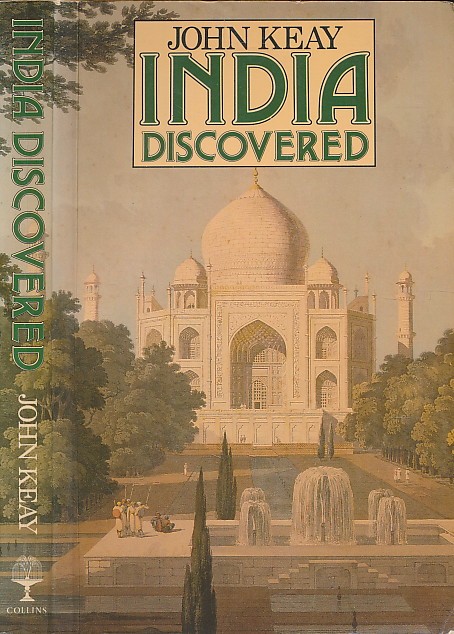
Two hundred years ago, India was seen as a place with little history and less culture.Today it is revered for a notable prehistory, a magnificent classical age and a cultural tradition unique in both character and continuity. How this extraordinary change in perception came about is the subject of this fascinating book. The story, here reconstructed for the first time, is one of painstaking scholarship primed by a succession of sensational discoveries. The excitement of unearthing a city twice as old as Rome, the realisation that the Buddha was not a god but a historical figure, the glories of a literature as rich as anything known in Europe, the drama of encountering a veritable Sistine chapel deep in the jungle, and the sheer delight of categorising ‘9291the most glorious galaxy of monuments in the world’9291 fell, for the most part, to men who were officials of the British Raj. Their response to the unfamiliar – the explicitly sexual statuary, the incomprehensible scripts, the enigmatic architecture – and the revelations which resulted, revolutionised ideas not just about India but about civilisation as a white man’9291s prerogative.
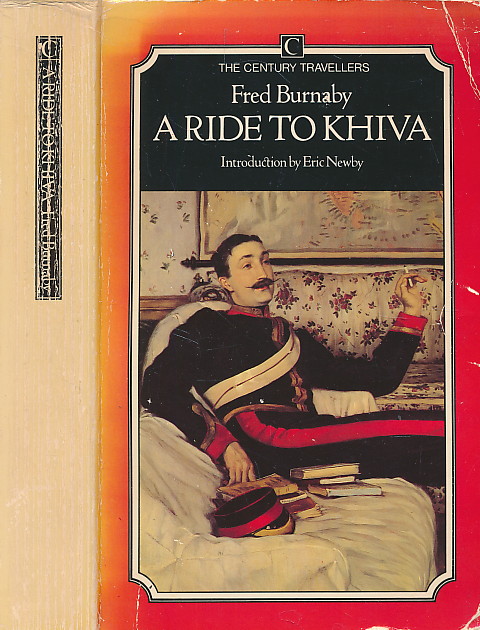
Captain Frederick Gustavus Burnaby of the Royal Horse Guards was larger than life. At 193 centimeters (6’4) and more than 90 kilos (200 lbs), he was one of the strongest men in Europe. He had studied in Germany and spoke seven languages, including Russian, Turkish and Arabic. At his own expense, he took a long leave to travel across Europe to St. Petersburg; from there he set out for the Khanate of Khiva on the Aral Sea (part of modern-day Uzbekistan), which Russia had annexed just two years before. It was the worst winter in memory; the Russians were rumored to have banned foreigners from the area; and if his own government had known of his extended reconnaissance across a thousand miles of frozen steppes and deserts, it likely would have forbidden his journey. Burnaby was completely comfortable in his imperialism and his Protestant faith, but he was no bigot. In this thrilling memoir, written to inform British public opinion of Russia?s ambitions in the areas bordering India, his observations are clear-eyed and prescient; the humanity of the Russians, Kazakhs, Kirghiz and Bukharis comes through at every turn. His story, one of the early moves in the Great Game, is still fascinating today…
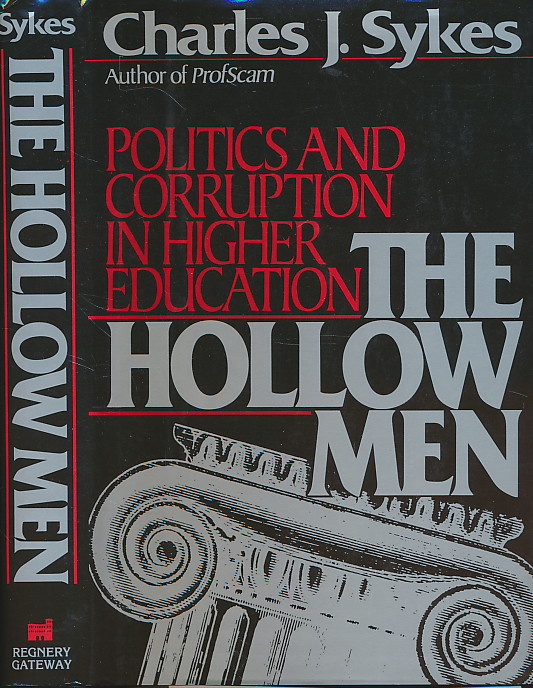
College curriculums that were once centered on instruction in the classics of Western civilization have become smorgasbords where almost anything qualifies as a course in the liberal arts and where political conformity is enforced by professors. Stanford University, caving in to demands from the Black Student Union (We don’t want to read any more dead white guys), removed Homer, Dante, Luther, Darwin, and Freud from its course on Western civilization. At Dartmouth, a professor of women’s studies describes the goal of her program as, simply, the reconstruction of reality. Sykes calls the abandonment of the great books a startling triumph for unreason and shows how American higher education is turning out hollow men and women–apathetic, ignorant, and empty of the civilizational patrimony that should be theirs.
Sir Degare is a fourteenth-century romance written in octosyllabic couplets and is classified as a Breton lay. It is extant in six manuscripts and three early printed editions. The story concerns Degare’s quest to find his parents, during the course of which he narrowly avoids committing incest with his mother and killing his father, instead reuniting his parents and finding a lady of his own to marry. Early scholarship was highly critical of Sir Degare’s aesthetic form; more recent critics have found much of interest in the romance’s folkloric elements and oedipal themes.
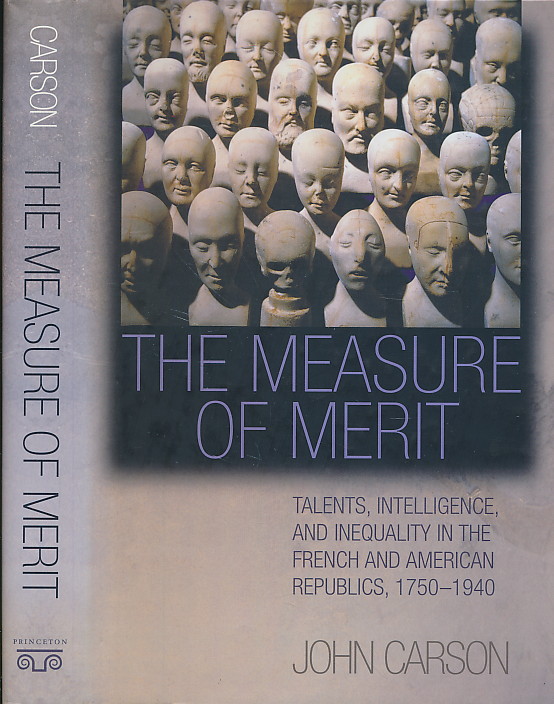
How have modern democracies squared their commitment to equality with their fear that disparities in talent and intelligence might be natural, persistent, and consequential? In this wide-ranging account of American and French understandings of merit, talent, and intelligence over the past two centuries, John Carson tells the fascinating story of how two nations wrestled scientifically with human inequalities and their social and political implications. Surveying a broad array of political tracts, philosophical treatises, scientific works, and journalistic writings, Carson chronicles the gradual embrace of the IQ version of intelligence in the United States, while in France, the birthplace of the modern intelligence test, expert judgment was consistently prized above such quantitative measures. He also reveals the crucial role that determinations of, and contests over, merit have played in both societies–they have helped to organize educational systems, justify racial hierarchies, classify army recruits, and direct individuals onto particular educational and career paths. A contribution to both the history of science and intellectual history, The Measure of Merit illuminates the shadow languages of inequality that have haunted the American and French republics since their inceptions.