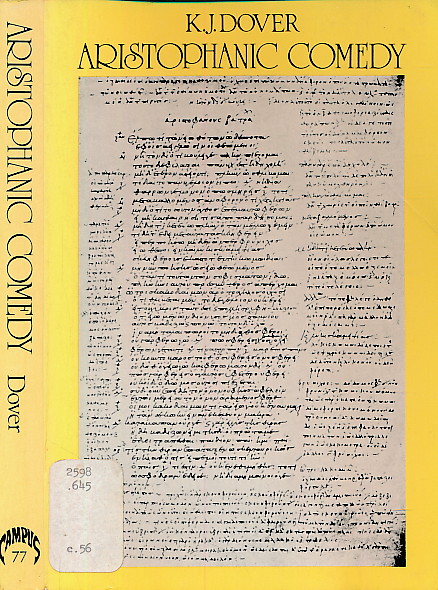
Aristophanic Comedy Paperback – 1 Mar. 1972 by Sir Kenneth J. Dover (Author) Professor Dover’s newest book is designed for those who are interested in the history of comedy as an art form but who are not necessarily familiar with the Greek language. The eleven surviving plays of Aristophanes are treated as representative of a genre. Old Attic Comedy, which was artistically and intellectually homogeneous and gave expression to the spirit of Athenian society in the late fifth and early fourth centuries B.C. Aristophanes is regarded primarily not as a reformer or propagandist but as a dramatist who sought, in competition with his rivals, to win the esteem both of the general public and of the cultivated and critical minority. He succeeded in this effort by making people laugh, and the book pays more attention than has generally been paid to the technical means, whether of language or of situation, on which Aristophanes’ humor depends. Particular emphasis is laid on his indifference-positively assisted by the physical limitations of the Greek theatre and the conditions of the Athenian dramatic festivals-to the maintenance of continuous dramatic illusion or to the provision of a dramatic event with the antecedents and consequences which might logically be expected. More importance is attached to Aristophanes’ adoption of popular attitudes and beliefs, to his creation of uninhibited characters with which the spectators could identify themselves, and to his acceptance of the comic poet’s traditional role as a mordant but jocular critic of morals, than to any identifiable and consistent elements in his political standpoint.
Der Clan der Otori Buch 4 Sechzehn Jahre sind seit »Der Glanz des Mondes« vergangen. Takeo und Kaede herrschen gemeinsam und in perfekter Balance zwischen männlicher und weiblicher Kraft über die Drei Länder. Der neue Wohlstand des Landes bleibt auch dem Kaiser im fernen Miyako und seinem obersten General, Saga Hideki, nicht verborgen. Der General fordert Takeo zu einem Wettkampf heraus: Wenn er verliert, muss er nicht nur abdanken und sein Land verlassen, sondern auch in eine Heirat seiner schönen Tochter Shigeko mit Saga einwilligen. Und schon bald überschlagen sich die Ereignisse, und ein schwerer Verrat droht das zu zerstören, wofür Takeo sein Leben lang gekämpft hat …
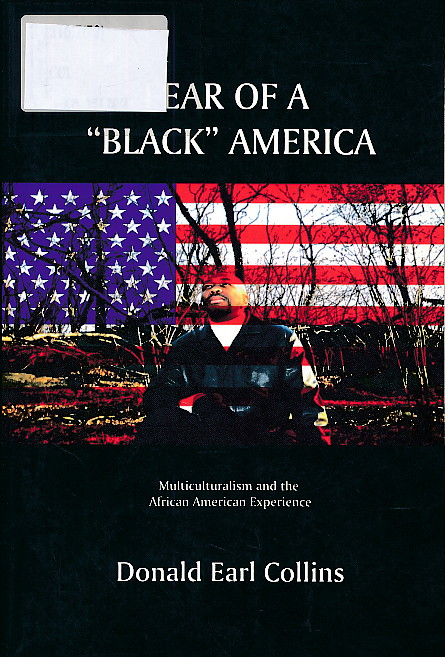
Fear of a Black America hits at the heart of America’s collective hypocrisy around diversity and race. A contributing factor is the misconstruing of diversity or multiculturalism with race, Black, and African American. Multiculturalism is really about transforming American education and culture by giving all-regardless of race, gender, religion, sexual orientation, and socioeconomic status-a voice and a chance at enjoying all that America is supposed to offer.Fear of a Black America demonstrates the historical connections between multiculturalism and African Americans. Although multiculturalism has many supporters, cultural equality remains a tough pill for highbrow American culture, mainstream Americans, and many elite African Americans to swallow. Fear of a Black America’s other theme centers on the recent battles over multiculturalism among African Americans and in the mainstream public arena. The main story is how the media worked in concert with conservatives to label multiculturalism as Black, evil, and divisive. These forces killed multiculturalism in the American public discourse, even as employers, school districts, and universities used the idea to address their increasingly diverse workforces and classrooms. Multiculturalism is similar to a ghost, neither fully dead nor alive, but in need of a resting place within America’s multicultural future.
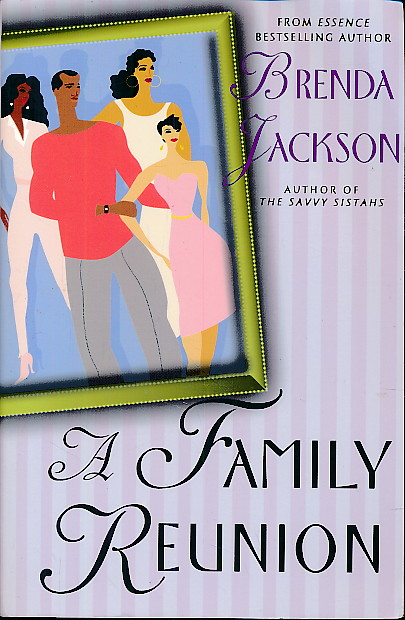
Book 1 of 5: The Bennett Family and the Masters Family EVERY FAMILY HAS ITS SECRETS. SOME ARE JUST TOO HARD TO TELL —BUT TOO HOT TO KEEP. . . It’s been fifteen years since the Bennetts were all in one place, at one time, and now at a total blowout of a reunion four special cousins’ hidden desires and long-kept secrets will challenge their bond, test their courage, and change their hearts forever. . . Taye is a hair stylist with big ambitions. She’s trusted the wrong men in the past and now she determined to land the right one, no matter who stands in her way. Michael is a widowed airline pilot struggling to manage his teenage daughter, but turbulence comes when a new passion enters his life. Alexia was the chubby little girl who has turned into a sexy superstar who seems to have it all. . .except the one thing she’s always wanted to make her life complete: a child. Now she has the perfect man in mind to be the father of her child. . .without his knowledge. Rae’jean is the pretty young doctor engaged to be married, but happiness still eludes her because her past is shrouded in mystery. And before she can say I do she must come home to finally learn the truth.
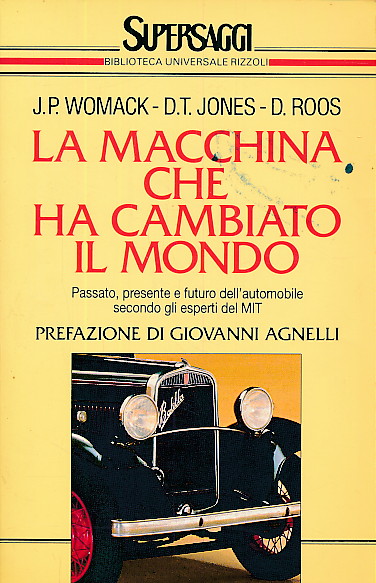
Passato, presente e futuro dell’automobile seocndo gli esperti del MIT, prefazione di Giovanni Agneli.
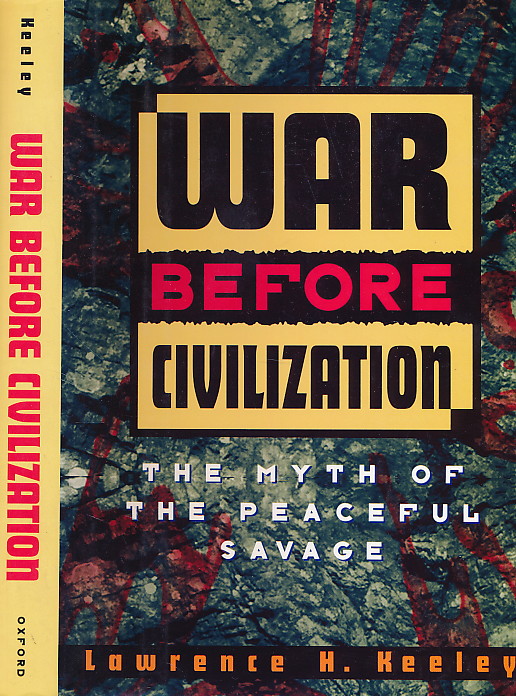
Throughout much of this century the notion has been gaining ground, bolstered by genocide and Holocaust, that modern warfare is more barbaric than war has ever been. Alongside this view has grown a romantic impression that primitive cultures were, and are, more peaceful. Lawrence Keeley, an anthropologist at the University of Illinois, aims to dispel this inversion of the connotations of civilization. He cites the historical evidence that humans have always been just as bloodthirsty as they are today, and that indeed in the days when death was less clinical it was often nastier. War, it seems, has always been with us.
THE IRISH TIMES TOP FIVE BESTSELLER ‘A beautifully reasoned book about our own unreasonableness’ Robin Ince In 1983, the reasoning of one unsung Russian narrowly averted nuclear war, proving that critical thinking can save the world. Today, facing unprecedented tides of disinformation, we’re frequently misled, to our detriment. The Irrational Ape explores the reasons why we get things so wrong, illustrated with incredible stories from the comical to the catastrophic. With a cast including murderous popes, conspiracy theorists, snake-oil salesmen, dubious celebrities and superstitious pigeons, The Irrational Ape delves into how reasoning errors, skewed perceptions and even our own psychology render us so susceptible to falsehood – and how we can improve our reasoning to ensure we avoid being taken in.
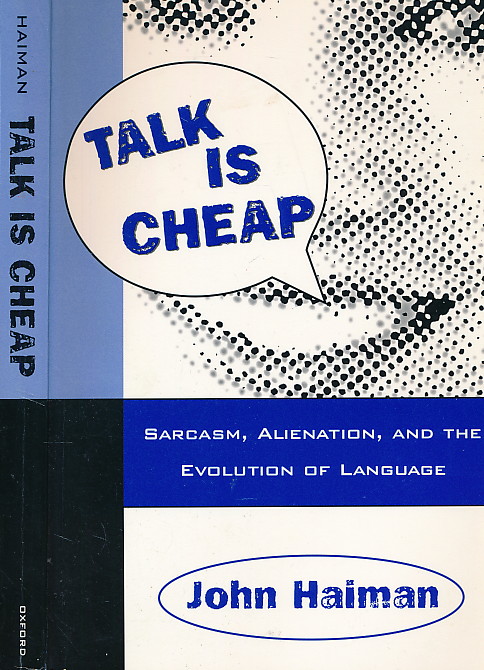
Putting aside questions of truth and falsehood, the old ”talk is cheap” maxim carries as much weight as ever. Indeed, perhaps more. For one need not be an expert in irony or sarcasm to realize that people don”t necessarily mean what they say. Phrases such as ”Yeah, right” and ”I could care less” are so much a part of the way we speak – and the way we live – that we are more likely to notice when they are absent (for example, Forrest Gump). From our everydaydialogues and conversations (”Thanks a lot!”) to the screenplays of our popular films (Pulp Fiction), what is said is frequently very different from what is meant.Talk is Cheap begins with this telling observation and proceeds to argue that such ”unplain speaking” is fundamentally embedded in the way we now talk. Author John Haiman traces this sea-change in our use of language to the emergence of a postmodern ”divided self” who is hyper-conscious that what he or she is saying has been said before; ”cheap talk” thus allows us to distance ourselves from a social role with which we are uncomfortable. Haiman goes on to examine the full range ofthese pervasive distancing mechanisms, from clichés and quotation marks to camp and parody. Also, and importantly, Haiman highlights several ways in which language is evolving (and has evolved) from non-linguistic behaviour. In other words, this study shows us how what we are saying is continually separatingitself from how we say it.As provocative as it is timely, the book will be fascinating reading for students of linguistics, literature, communication, anthropology, philosophy, and popular culture.
Manuscrits slavons en Macedoine. Podgotvil Vladimir Mošin vo sorabotka so Lidija Slaveva, Sultana Kronevska i Jovanka Jakimova. U II. svesku su faksimili.
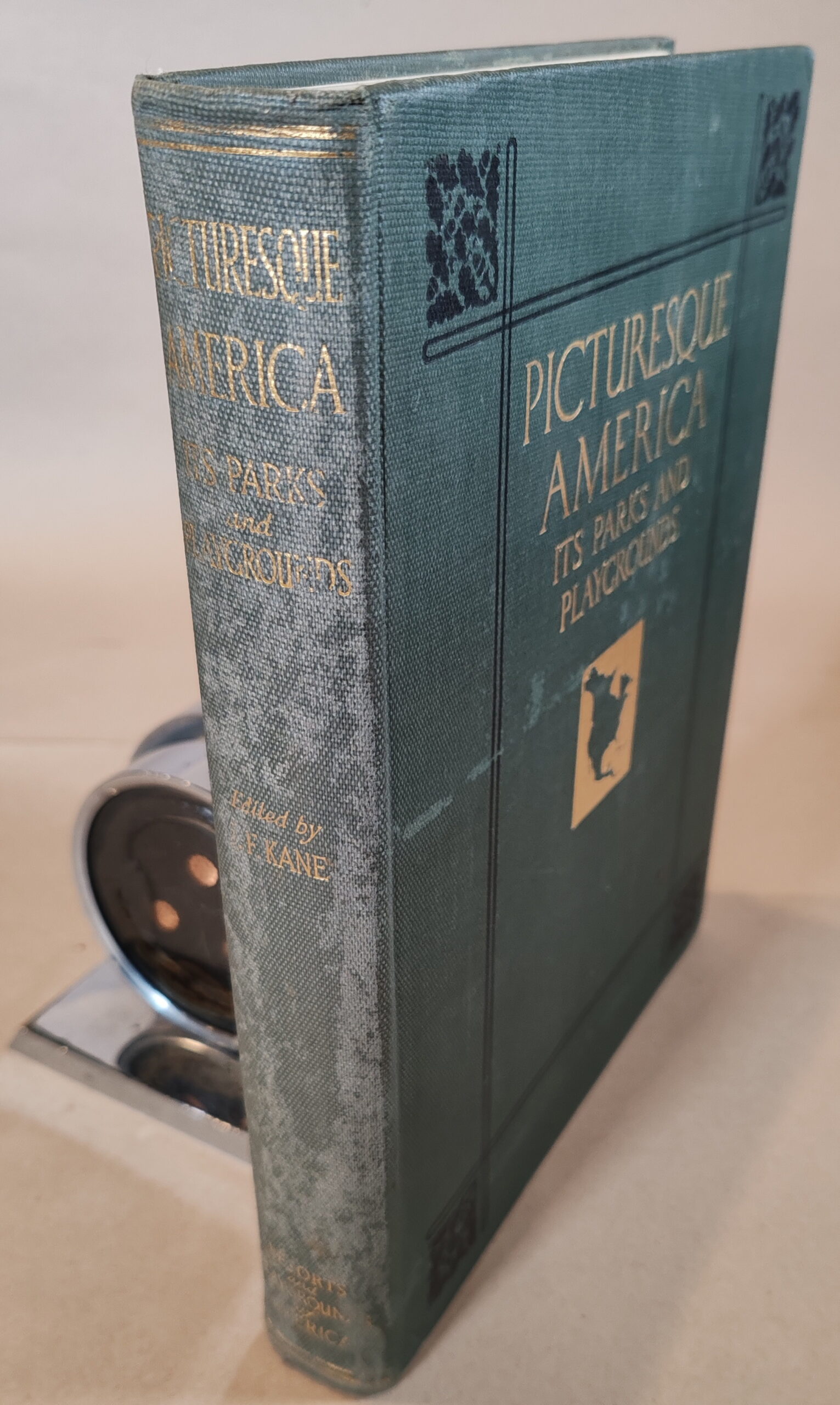
Picturesque America: Its Parks and Playgrounds.: An Illustrated Volume with Special Articles Contributed for Park and Playground Sections and Numerous Selections from the Works of Well Known Authors Expressing the Varied Appeal of Outdoors in America. by Kane, John Francis 1925. New York, Resorts and Playgrounds of America, 1925. Octavo. 521 pages. Original Hardcover with protective Mylar. Very good condition with only minor signs of external wear. Includes essays with photographs on all the important National Parks with an introductory essay by Ovid M. Butler: The Call of the National Forests / Further essays are: by: Robert Sterling Yard – Proposed Roosevelt-Sequoia National Park / C.A. Higgins – The Story of the Missions / Robert Sterling Yard – Lassen Volcanic National Park / Robert Sterling Yard – Mount Rainier National Park / Robert Sterling Yard – Crater Lake National Park / Dan Totheroh – The end of the Red Trees (Extract) / Alexander Blair Thaw – In the Giant Forest of the Sierras / Zane Grey – An Appreciation of the Grand Canyon / Robert Sterling Yard – Rocky Mountain and Mesa Verde National Park / Emerson Hough – An Appreciation of Yellowstone / Arthur G. Staples – A Tribute to the Maine Woods / Robert Sterling Yard – Yellowstone National Park / Douglas Malloch – The Diversity of Nature / Ethel C. McDonald – The Alpine Club of Canada / Robert J.C. Stead – The Canadian Rockies (Poem) / etc. etc.
Hardcover, Excellent Condition. A sequel to Daughter of Fortune, New York Times bestselling author, Isabel Allende, continues her magic with this spellbinding family saga set against war and economic hardship. Aurora del Valle suffers a brutal trauma that erases from her mind all recollection of the first five years of her life. Raised by her ambitious grandmother, the regal and commanding Paulina del Valle, she grows up in a privileged environment, free of the limitations that circumscribe the lives of women at that time, but tormented by horrible nightmares. When she is forced to recognize her betrayal at the hands of the man she loves, and to cope with the resulting solitude, she decides to explore the mystery of her past. Portrait in Sepia is an extraordinary achievement: richly detailed, epic in scope, intimate in its probing of human character, and thrilling in the way it illuminates the complexity of family ties.
A national bestseller, The Dictionary of Cultural Literacy has been widely acclaimed for identifying and defining the core body of knowledge that no literate American should be without. Now in this newly revised and updated edition, the authors provide a comprehensive look at cultural literacy for the nineties. New entries reflect suggestions from hundreds of readers. The dictionary takes into account the growing consensus over the specifics of multiculturalism, the political and geographic changes in the world, and the new ideas and terms that flow constantly from scientific research and technological development. The Dictionary of Cultural Literacy challenges us to find out more about what we know and helps us make sense of what we read, hear, and learn. It is a must have book for every home.
A Dissertation presented to the faculty of Princeton University in candidacy for the degree of Doctor of Philosophy. Condition: Excellent
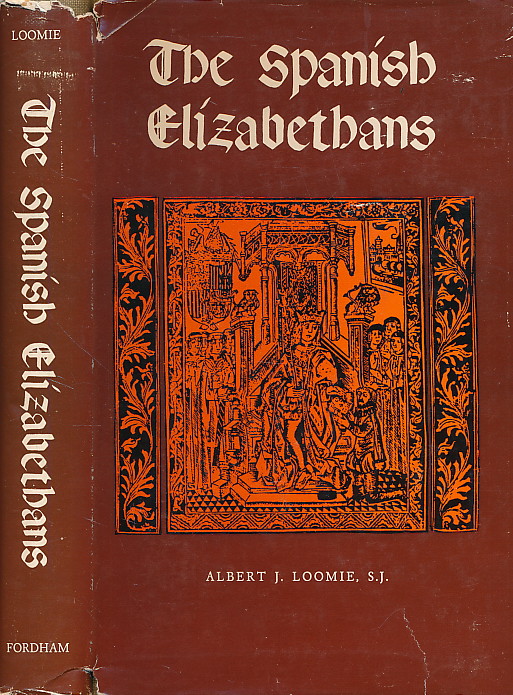
Albert J. Loomie began the study of the political implications of Spain’s concern about English Catholicism during the latter part of the reign of Queen Elizabeth. This led him to probe one over-riding issue within that problem: the relationship of the activities of the English Catholic exiles to the political objectives of Kings Philip II and Philip III. In the documents of the Estado collection at Simancas, the archive of St. Alban’s in Valladolid, the letters and reports in the Jesuit archives in Rome, and the State Papers, Foreign of the Public Record Office he found considerable new evidence. The basic research was presented in a doctoral dissertation at London University in 1957 entitled Spain and the English Catholic Exiles, 1580-1604. Since then Loomie has prepared an extensive revision of that original study. He has attempted here to explore the principal ways in which Spain tried to assist the exiles during the Anglo-Spanish war, and the complexity of the problems that its policy raised, but did not always solve.
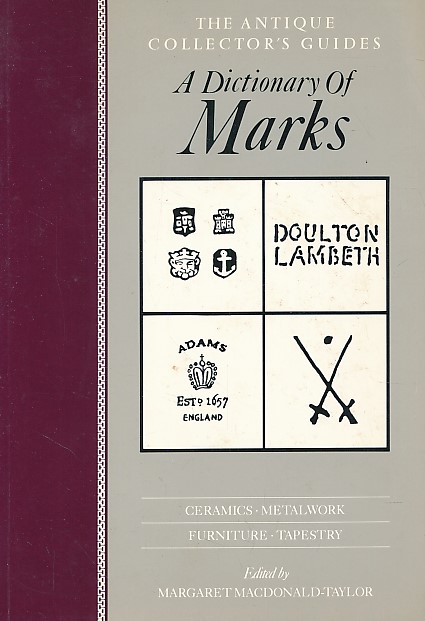
A guide to hallmarks found on pottery, porcelain, silver and other metalwork produced in England, Europe, and the United States. Ceramics, Metalwork, Furniture, Tapestry.
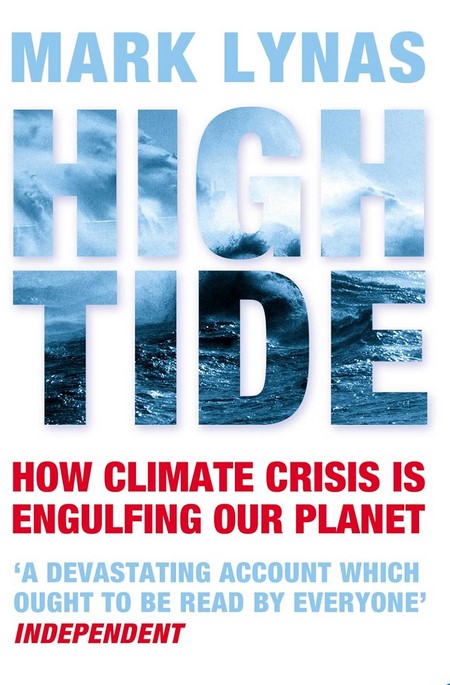
The No Logo of climate change – a book that shows how global warming is not a theory we should still debate, but something that has already happened on a global scale. Climate change is not a concern for the future. It’s happening right now. In this book – based on the latest scientific evidence – the author takes us around the world to show the impact of global warming already being felt in people’s lives. From sand-buried houses in China to thawing Alaskan plains, the author witnesses some of the worst effects of climate change at first hand. Some, like the floods in the UK, are near home. Others – like the drowning Pacific island of Tuvalu – are a world away from the exhaust pipes and factory chimneys that are actually causing global warming. But this isn’t simply an inventory of disaster, it’s a wry look at how people around the globe are coping as their world changes at unprecedented speed. In the process, the author eats whale blubber in Alaska, swims in shark-infested waters off the Great Barrier Reef and struggles to the top of Andean peaks in Peru. An adventure with a conscience and an argument with an urgent purpose, High Tide is an extremely important book.
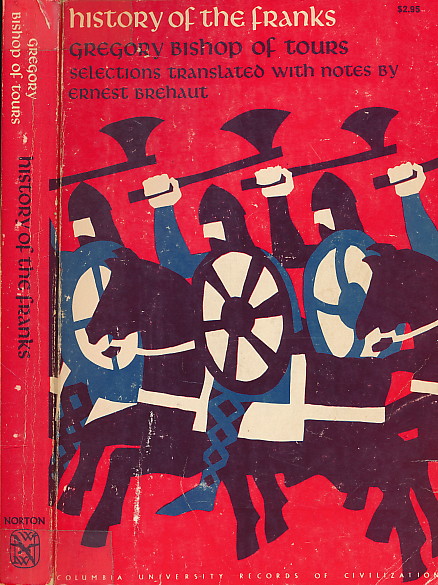
Written following the collapse of Rome’s secular control over western Europe, the History of Gregory (c. AD 539 594) is a fascinating exploration of the events that shaped sixth-century France. This volume contains all ten books from the work, the last seven of which provide an in-depth description of Gregory’s own era, in which he played an important role as Bishop of Tours. With skill and eloquence, Gregory brings the age vividly to life, as he relates the exploits of missionaries, martyrs, kings and queens including the quarrelling sons of Lothar I, and the ruthless Queen Fredegund, third wife of Chilperic. Portraying an age of staggering cruelty and rapid change, this is a powerful depiction of the turbulent progression of faith at a time of political and social chaos.

The four biographical essays that make up Eminent Victorians created something of a stir when they were first published in the spring of 1918, bringing their author instant fame. In his flamboyant collection, Lytton Strachey chose to stray far from the traditional mode of Those two fat volumes, with which it is our custom to commemorate the dead–who does not know them, with their ill-digested masses of material, their slipshod style, their tone of tedious panegyric, their lamentable lack of selection, of detachment, of design? Instead he provided impressionistic but acute (and, some said, skewed) portraits. Rarely does Strachey explore the details of a subject’s daily or family life unless they point directly to an issue of character. In short, he pioneered a deeply sardonic and often scathingly funny biographical style.None of Strachey’s Victorians emerge unscathed. In his hands, Florence Nightingale is not a gentle archangel descended from heaven to minister sweetly to wounded soldiers, but rather an exacting, dictatorial, and judgmental crusader. Her pen, in the virulence of its volubility, would rush … to the denunciation of an incompetent surgeon or the ridicule of a self-sufficient nurse. Her sarcasm searched the ranks of the officials with the deadly and unsparing precision of a machine-gun. Her nicknames were terrible. She respected no one. Dr. Thomas Arnold, the man appointed to revamp the very private British public school system, fares little in Strachey’s acid ink, he became the founder of the worship of athletics and the worship of good form. In this same vain, military hero General Gordon is portrayed as a temperamental, irascible hermit, occasionally drunk and often found in the company of young boys–a man who tended to forget and forgo the tenets found in the Bible he kept with him always. And the powerful and popular Cardinal Manning, who came within a hair’s breadth of succeeding Pope Pius IX, belonged, Strachey writes, to that class of eminent ecclesiastics … who have been distinguished less for saintliness and learning than for practical ability.As he offered up indelible sketches of his less-than-fab four, Strachey was intent on critiquing established mores. This effortlessly superior wit knew full well that deep convictions and good deeds often go hand in hand with hypocrisy, arrogance, and egomania. His task was to pique those who pretended they did not. –Jordana Moskowitz

Mercia MacDermott (Bulgarian; born 7 April 1927) is an English writer and historian. Having spent 27 years in Bulgaria, MacDermott is known for her books on Bulgarian history. MacDermott was born in Plymouth, Devon, United Kingdom. Her father was a surgeon with the Royal Navy and her mother was a teacher. Due to her father’s work in the navy, she spent some of her early years in Weihai, China, and Mercia learned Mandarin Chinese. She was educated at Westonbirt School, Gloucestershire and Oxford University to read Russian philology. In the summer of 1947, while participating in a youth brigade in Yugoslavia with other English students, she had her first contact with Bulgarians, among which was the writer Pavel Matev. In the same year, MacDermott visited Bulgaria for the first time to attend a celebration at the Divotino brigade members camp near the Pernik–Voluyak railway line. In 1948, she graduated at Oxford and once again visited Bulgaria to participate in the international youth brigade building the Koprinka Reservoir. As a foreign udarnik, MacDermott was invited along with other international participants to meet Georgi Dimitrov himself in the Euxinograd palace on the Bulgarian Black Sea Coast. While working at the Koprinka reservoir, Mercia met her future husband Alexander MacDermott. Upon returning to the United Kingdom, Mercia MacDermott enrolled in a Bulgarian language course at the University of London’s School of Slavonic and East European Studies. Mercia MacDermott stayed in Bulgaria from 1962 to 1989 with brief interruptions. From 1963 to 1979 she was a teacher at the Sofia High School of English. After that, until 1989 MacDermott read lectures on the Bulgarian national liberation movement in the region of Macedonia at Sofia University’s Faculty of History. She has been a foreign member of the Bulgarian Academy of Sciences since 1987 and was granted a honoris causa doctorate by Sofia University in 2007.