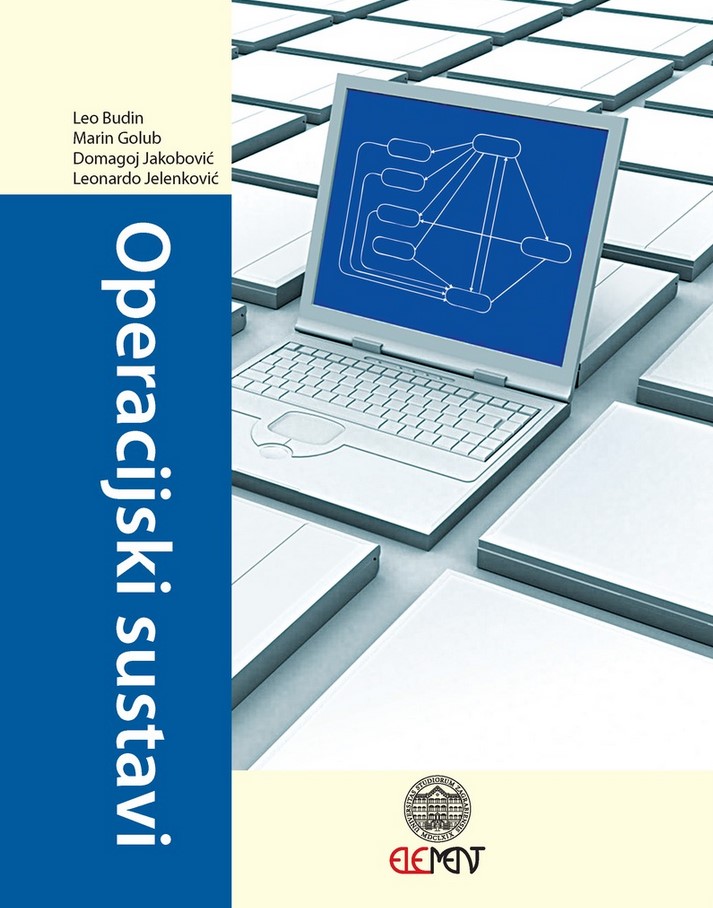
Posredstvom ugodnog grafičkog korisničkog sučelja svaki se korisnik već pri prvom pristupu računalu upoznaje s osnovnim funkcijama operacijskog sustava. Međutim, pri zasnivanju i izgradnji operacijskih sustava (pa i naprednih primjenskih programa) treba svladati golemi jaz između mogućnosti sklopovlja i složenih operacija koje oživotvoruju naše apstraktne zamisli. Svladavanje tog jaza pokušava se ostvariti svojevrsnom hijerarhijskom izgradnjom sustava. Ovim udžbenikom autori nastoje približiti načela izgradnje pojedinih razina operacijskog sustava. Pritom se oblikuju neki pojednostavnjeni modeli komponenti sustava koji olakšavaju razumijevanje osnovnih mehanizama, ali su i dovoljno bliski današnjim ostvarenjima i, prema tome, omogućuju poimanje stvarnih mogućnosti sustava.
Ostali autori: Mario Kovač Danko Basch Opis: U uvodnom dijelu objašnjeni su brojevni sustavi i kodovi. Drugi dio opisuje arhitekturu, programiranje i ulazno-izlatni prijenos za Školsko mikroračunalo (ŠMIR). Treći dio opisuje arhitekturu, programiranje i vanjske jedinice (CTC, PIO) za mikroačunalo Z80. Prilog knjige sadrži tablice naredaba za mikroračunala ŠMIR i Z80.
Knjiga koja potiče mlade ljude na razvijanje vještina u znanosti, tehnologiji, inženjerstvu i matematici – Ovo je sjajna avantura u svijetu fizike!
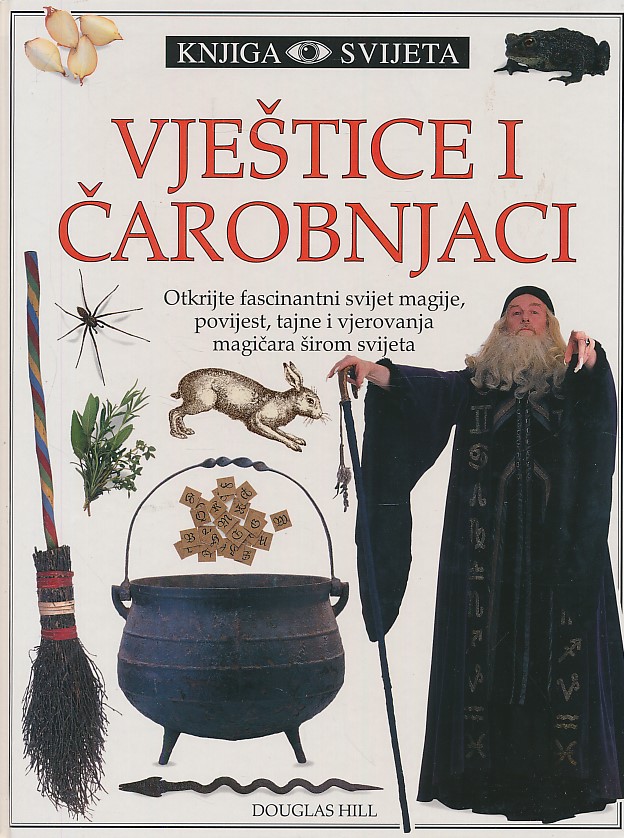
Knjiga svijeta 9. Otkrijte fascinantni svijet magije, povijest, tajne i vjerovanja magičara širom svijeta.
Pokripgljenye umiruchi za dobro i sveto pochi u milosti Boxiyoi s ovoga sviita : u komu se uzdarxe mnoghe molitve, pisne, blagoslovi, zakletve i ost. / istumaceno, skupglyeno i nadostavglyeno po d. Luci Terzichiu, popu od skupscchine S. Filippa Neria Bisccaninu … In Venetia : si vende da Bartolo Occhi libraro su la Riva de´ Schiavoni all´ insegna di San Domenico, 1704?
Czvet szveteh, ali Sivlenye, y chini szvetczev, koteri vu nassem horvatczkem, iliti szlovenszkem orszagu z-veksum pobosnosztjum, y z-prodestvom postujusze. … Y na nass szlovenszki jezik, … po lyublenom trudu p. Hilariona Gasparotti, … : preneseni, 1750. /-1760./. 869 + /55/ pag
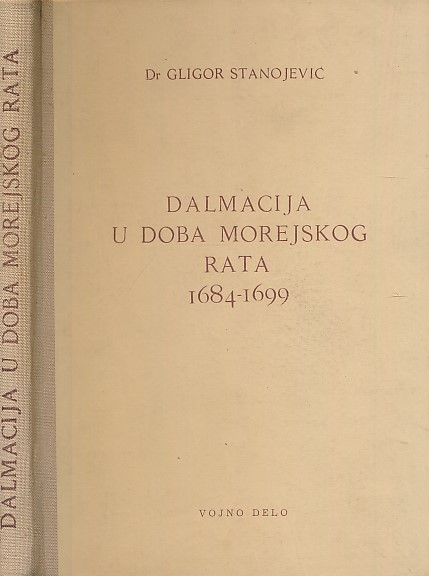
Dalmacija između dva rata Ulazak Venecije u rat Dejstva Morlaka Naseljavanje Morlaka u Dalmaciji Položaj Morlaka u Dalmaciji u vrijeme rata Trgovina i otkup roblja u Morejskom ratu Mletačko-dubrovački sukobi zbog hajduka Karlovački mir, razgraničenje i poslijeratne prilike u Dalmaciji Značaj i posljedice Morejskog rata za istoriju naših naroda
Napomena: pokidan pregib hrpta i zadnje korice.
Commento di Brunone Bianchi.
Priredio o. Josip Kovačević. Brzotiskom Lavoslava Kleina, Požega 1891.
Prošlost i sadašnjost. Bibliografija. Karte.
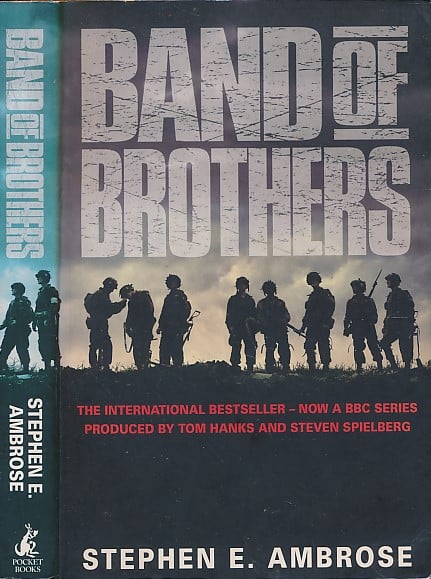
Stephen E. Ambrose’s iconic New York Times bestseller about the ordinary men who became the World War II’s most extraordinary soldiers: Easy Company, 506th Parachute Infantry Regiment, 101st Airborne Division, US Army. They came together, citizen soldiers, in the summer of 1942, drawn to Airborne by the $50 monthly bonus and a desire to be better than the other guy. And at its peak—in Holland and the Ardennes—Easy Company was as good a rifle company as any in the world. From the rigorous training in Georgia in 1942 to the disbanding in 1945, Stephen E. Ambrose tells the story of this remarkable company. In combat, the reward for a job well done is the next tough assignment, and as they advanced through Europe, the men of Easy kept getting the tough assignments. They parachuted into France early D-Day morning and knocked out a battery of four 105 mm cannon looking down Utah Beach; they parachuted into Holland during the Arnhem campaign; they were the Battered Bastards of the Bastion of Bastogne, brought in to hold the line, although surrounded, in the Battle of the Bulge; and then they spearheaded the counteroffensive. Finally, they captured Hitler’s Bavarian outpost, his Eagle’s Nest at Berchtesgaden. They were rough-and-ready guys, battered by the Depression, mistrustful and suspicious. They drank too much French wine, looted too many German cameras and watches, and fought too often with other GIs. But in training and combat they learned selflessness and found the closest brotherhood they ever knew. They discovered that in war, men who loved life would give their lives for them. This is the story of the men who fought, of the martinet they hated who trained them well, and of the captain they loved who led them. E Company was a company of men who went hungry, froze, and died for each other, a company that took 150 percent casualties, a company where the Purple Heart was not a medal—it was a badge of office.

The Life and Adventures of Martin Chuzzlewit (commonly known as Martin Chuzzlewit) is a novel by Charles Dickens, considered the last of his picaresque novels. It was originally serialised between January 1843 and July 1844. While he was writing it Dickens told a friend that he thought it was his best work thus far, but it was one of his least popular novels, judged by sales of the monthly instalments. Characters in this novel gained fame, including Pecksniff and Mrs Gamp. Like nearly all of Dickens’s novels, Martin Chuzzlewit was first published in monthly instalments. Early sales of the monthly parts were lower than those of previous works, so Dickens changed the plot to send the title character to the United States. Dickens had visited America in 1842 in part as a failed attempt to get the US publishers to honour international copyright laws. He satirized the country as a place filled with self-promoting hucksters, eager to sell land sight unseen. He also unfavourably highlighted slavery and featured characters with racist attitudes and a propensity to violence. In later editions, and in his second visit 24 years later to a much-changed US, he made clear in a speech that it was satire and not a balanced image of the nation and then included that speech in all future editions. The main theme of the novel, according to Dickens’s preface, is selfishness, portrayed in a satirical fashion using all the members of the Chuzzlewit family. The novel is also notable for two of Dickens’s great villains, Seth Pecksniff and Jonas Chuzzlewit. Dickens introduced one of the first literary private detective characters, Mr Nadgett, in this novel. It is dedicated to Angela Georgina Burdett-Coutts, a friend of Dickens.
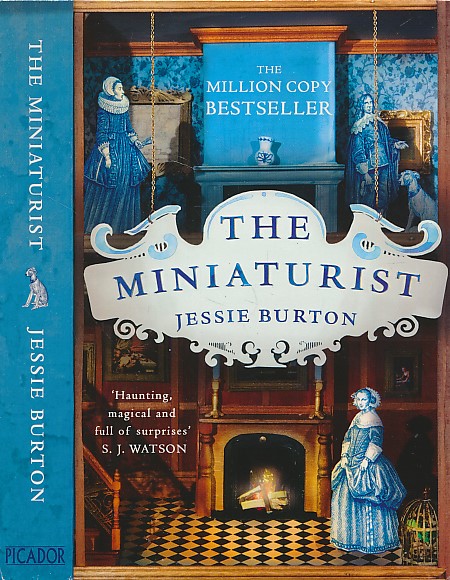
Set in seventeenth century Amsterdam–a city ruled by glittering wealth and oppressive religion–a masterful debut steeped in atmosphere and shimmering with mystery, in the tradition of Emma Donoghue, Sarah Waters, and Sarah Dunant. On a brisk autumn day in 1686, eighteen-year-old Nella Oortman arrives in Amsterdam to begin a new life as the wife of illustrious merchant trader Johannes Brandt. But her new home, while splendorous, is not welcoming. Johannes is kind yet distant, always locked in his study or at his warehouse office–leaving Nella alone with his sister, the sharp-tongued and forbidding Marin. But Nella’s world changes when Johannes presents her with an extraordinary wedding gift: a cabinet-sized replica of their home. To furnish her gift, Nella engages the services of a miniaturist–an elusive and enigmatic artist whose tiny creations mirror their real-life counterparts in eerie and unexpected ways . . . Johannes’ gift helps Nella to pierce the closed world of the Brandt household. But as she uncovers its unusual secrets, she begins to understand–and fear–the escalating dangers that await them all. In this repressively pious society where gold is worshipped second only to God, to be different is a threat to the moral fabric of society, and not even a man as rich as Johannes is safe. Only one person seems to see the fate that awaits them. Is the miniaturist the key to their salvation . . . or the architect of their destruction? Enchanting, beautiful, and exquisitely suspenseful, The Miniaturist is a magnificent story of love and obsession, betrayal and retribution, appearance and truth.
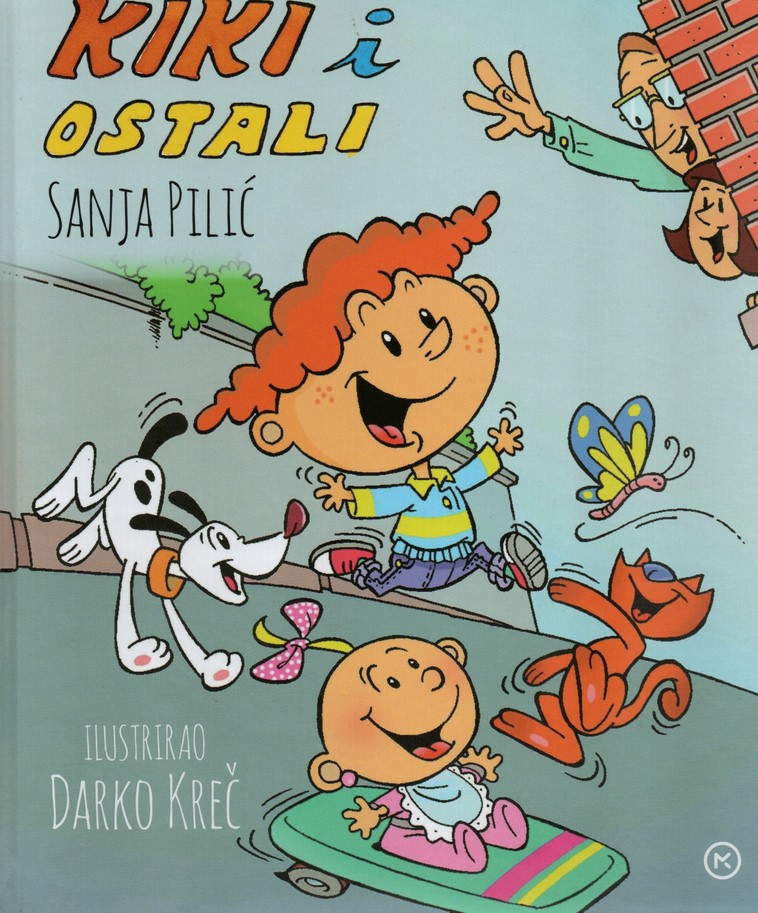
Ilustrirao Darko Kreč. Kiki i ostali je duhoviti dječji strip za najmlađe čitače jedne od omiljenih dječjih spisateljica Sanje Pilić. Maleni školarci nižih razreda osnovne škole uživat će u čitanju preslatkoga stripa o dječaku Kikiju. Strip već 10 godina izlazi u časopisu Prvi izbor. A sada su sve te pričice objedinjene u ovoj knjizi. Doznajte kako Kiki ide u školu, što očekuje od svetog Nikole, kako uživa u božićnim danima, gdje provodi praznike, što ga veseli, a što baš i ne.
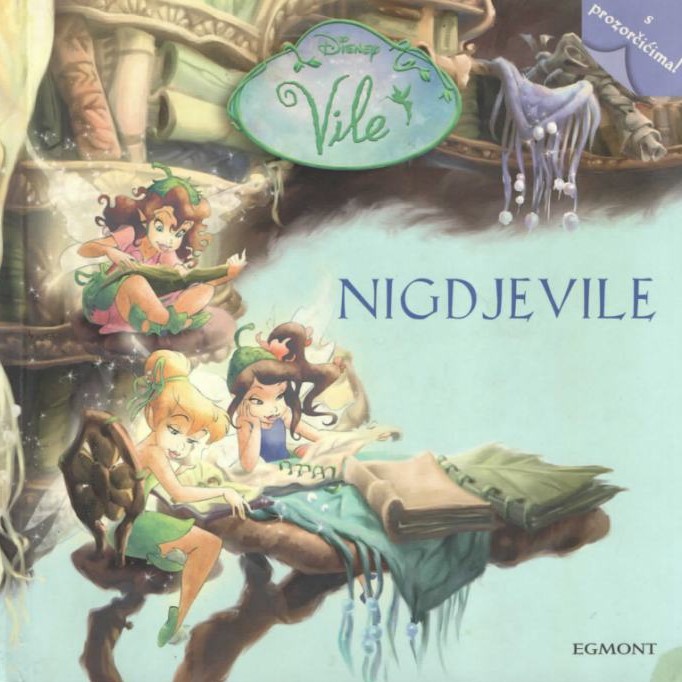
Znaš li zapravo koliko su nigdjevile visoke? Što nije teže od pahuljaste sjemenke rascvjetanog maslačka? Za što se koriste dlake buba? Ili kako ispeći makove smotuljke? Pronađi odgovore na ova pitanja i nauči još štošta o nigdjevilama u ovoj knjižici punoj tajnh formula i čarobnoga praha.
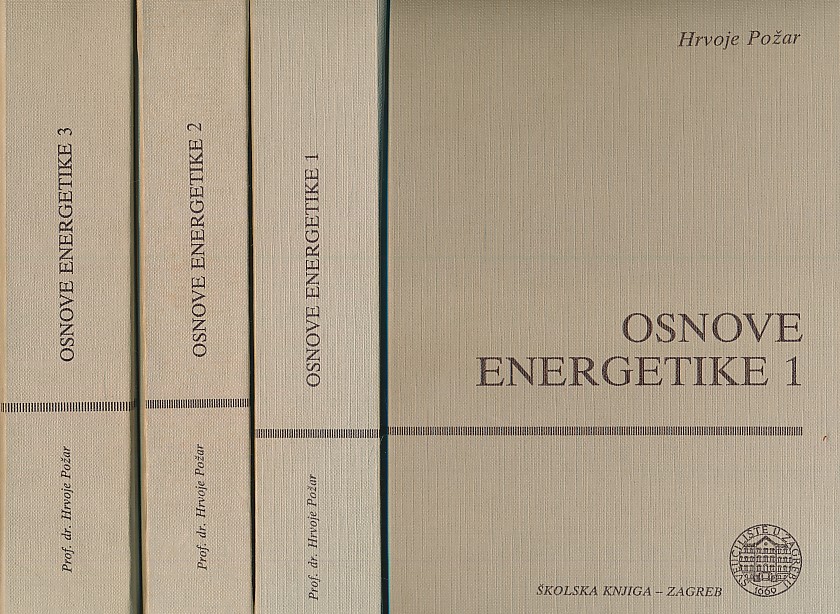
1—8 Opskrba energijom i klasifikacija oblika energije Osnovni pojmovi i jedinice mjere za energiju i snagu Primarni oblici energije Transformacija primarnih oblika energije u pogodnije oblike energije Stanje i promjene stanja tvari Prijelaz topline Transformacija kemijske energije u unutrašnju kaloričku energiju Parni kotlovi 9—17 Transformacija nuklearne energije u unutrašnju kaloričku energiju Nuklearni reaktori i nuklearna postrojenja Kružni procesi i strujanje plinova i para Stapni strojevi Parne turbine Plinske turbine Strujanje tekućina Vodne turbine Centrifugalne pumpe 18—30 Transformacija mehaničke energije u električnu Sinkroni generatori Termoelektrična transformacija Termoionska transformacija Fotoelektrična transformacija Neposredna transformacija kemijske energije u električnu Magnetohidrodinamički generatori Energetske bilance Energetski modeli Energetska efikasnost Zagađivanje atmosfere Termičko opterećenje okoliša Opterećenje okoliša radioaktivnim zračenjem
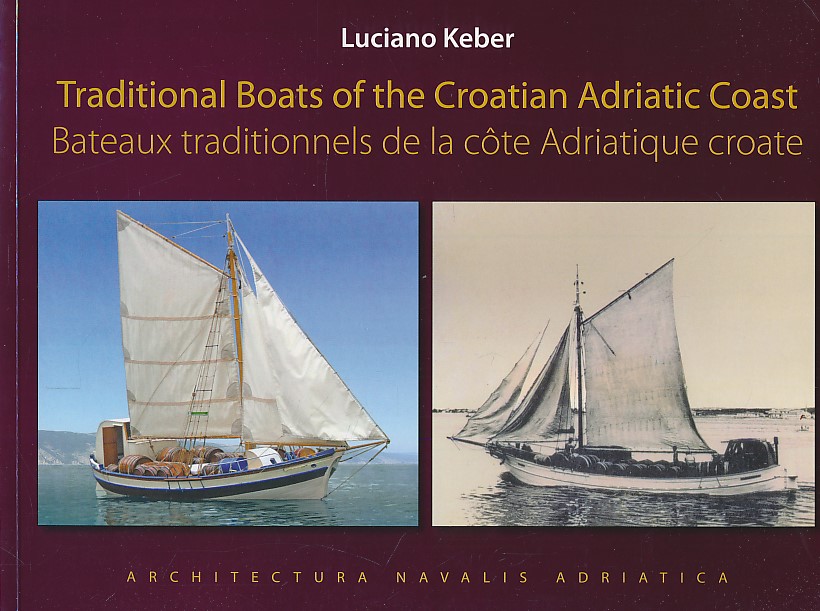
ENG – FRA edition Batiel Batana Pasara Guc Gajeta Leut Štilac Bracera Trabakul Pelig
Druga pevanija Zmaja J. Jovanovića, sveska prva
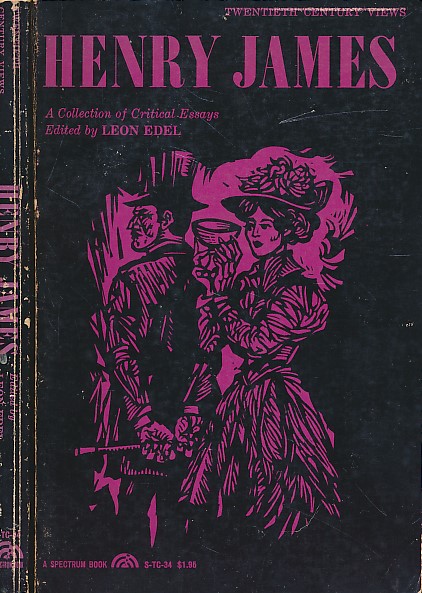
INTRODUCTION—Leon Edel AN APPRECIATION (1905)—Joseph Conrad JACOBEAN AND SHAVIAN (1906, 1909)—Max Beerbohm A BRIEF NOTE (1918)—Ezra Pound THE POINT OF VIEW [THE AMBASSADORS] (1921) —Percy Lubbock THE GHOST STORIES (1921)—Virginia Woolf A PREDICTION (1924)—T. S. Eliot THE PILGRIMAGE I (1925-1957)—Van Wyck Brooks THE PILGRIMAGE II (1925)—Edmund Wilson THE AMBASSADORS (1927)—E. M. Forster THE NEW GENERATION (1931)—William Troy THE ESSENTIAL NOVELIST? (1933)—Pelham Edgar THE CONTEMPORARY SUBJECT (1935)—Stephen Spender THE PRIVATE UNIVERSE (1936)—Graham Greene SYMBOLIC IMAGERY (1943)—Austin Warren THE MUSEUM WORLD (1946)—Adeline Tininer THE POLITICAL VOCATION (1957)—Irving Howe THE TALES (1962) – Leon Edel
Rafina avlija Jevrejin koji se subotom ne moli Bogu Nosač Samuel Solomunovo slovo Kako je Rafael postao čovjek Mirjamina kosa Plava Jevrejka Aftara …
Kraljević Marko po drugi put među Srbima Danga Mrtvo more Stradija …