Časopis Život 11/1976
Časopis Život 11/1976
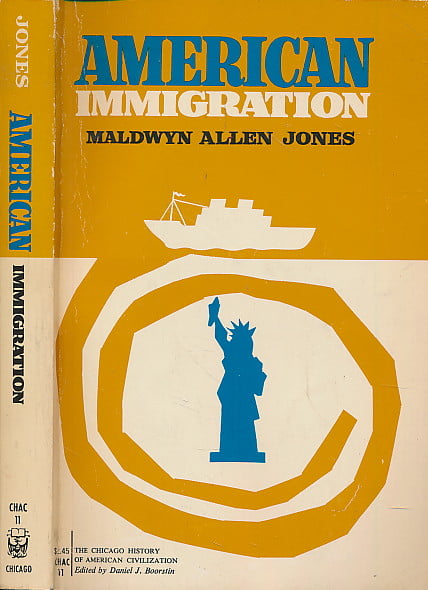
American Immigration BY MALDWYN ALLEN JONES (The Chicago History of American Civilization) Paperback – January 1, 1965 by MALDWYN ALLEN JONES (Author) In this book, the author analyses the actual process of immigration, an experience which was essential the same for Jamestown settlers and for Hungarian refugees. He points to the various national crises which tested the immigrant’s adjustment to life in America and shows us how the immigrant has played a particularly vital role in sectional conflicts, the westward movement, labor organization, foreign policy, and the theory and practice of democracy.
Few have set themselves to the formidable task of reconstructing and analyzing a whole human environment; fewer still have succeeded. Bloch dared to do this and was successful; therein lies the enduring achievement of Feudal Society.—Charles Garside, Yale Review

England in the Late Middle Ages (1307-1536) Paperback – Import, June 30, 1952 by A. R. Myers (Author)

Priredio i uvodbu raspravu napisao Josip Hamm.

Zbornik radova. I. dio.

Slavische forschungen 5

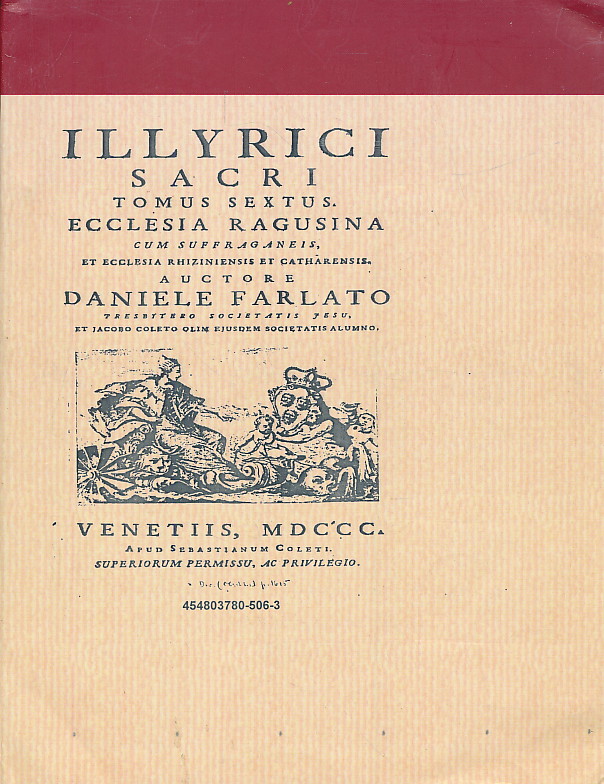
454803780-506-3 Reprint.
The American Century is an epic work. With its spectacular illustrations and incisive and lucid writing, it is as exciting and inspiring as the hundred years it surveys. Harold Evans has dramatized a people’s struggle to achieve the American Dream, but also offers a thoughtful and provocative analysis of the great movements and events in America’s rise to a position of political and cultural dominance. There are 900 photographs, several hundred brought to light for the first time, and the richly researched narrative offers many surprises. In 1889, when the United States entered the second hundred years of its existence, it was by no means certain that a nation of such diverse peoples, manifold beliefs, and impossible ideals could survive its own exceptional experiment in democracy or manage to avoid a headlong slide into oblivion. Evans describes what happened to the democratic ideal amid the clash of personalities and the convulsions of great events. Here are assessments of the century’s nineteen presidents, from Benjamin Harrison, who brought the Stars and Stripes into American life in 1889, to the movie star who waved it so vigorously a hundred years later. Here are the muckrakers who exposed the evils of rampant capitalism, and the women who fought to make a reality of the rhetoric of equality. Here are the robber barons–the Carnegies, the Rockefellers, and the Morgans — carving out great empires of unparalleled wealth, turning their millions into foundations for public benefit. Here are Al Capone and J. Edgar Hoover, Martin Luther King Jr. and the Ku Klux Klan, Joe McCarthy and Dwight Eisenhower. Here is the American heartland at peace (but on the wagon), America in two world wars, and at war with itself in the sixties. Evans analyzes the central questions of the era. Among them: How did the tradition arise that government should not meddle in business? How did anti-colonial America become an imperial power? How much was democracy threatened by the influence of money? What was the nature of American isolationism? Why did Woodrow Wilson take the United States into World War I? What caused the Great Depression, and why did it last so long? Did Franklin Roosevelt’s New Deal succeed or fail? Did the protests of the sixties go too far? Was Vietnam a noble cause? Has the Watergate scandal been blown up out of all proportion? Who deserves the credit for the end of the Cold War? Throughout, Harold Evans lets us see how America prospered because of the power of an idea: the idea of freedom. The nation did not simply become the largest economic and military power, send men to the moon and jeans and consumer capitalism to Red Square–it strengthened Western society through acts of courage, generosity, and vision unequaled in history. The British may claim the nineteenth century by force, and the Chinese may cast a long shadow over the twenty-first, but the twentieth century belongs to the United States. This is America’s story as it has never been told before.
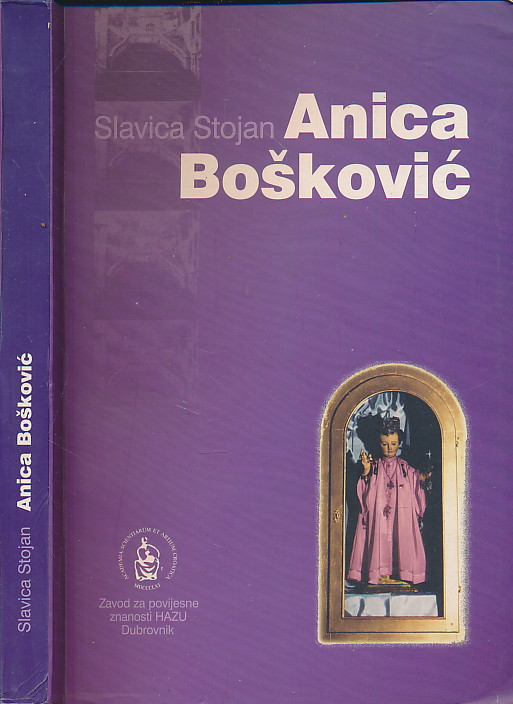

Knjižnica Zvjezda mora, Hvar.
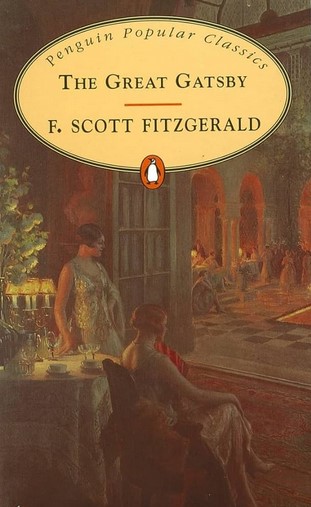
The Great Gatsby is a 1925 novel by American writer F. Scott Fitzgerald. Set in the Jazz Age on Long Island, near New York City, the novel depicts first-person narrator Nick Carraway’s interactions with mysterious millionaire Jay Gatsby and Gatsby’s obsession to reunite with his former lover, Daisy Buchanan. The novel was inspired by a youthful romance Fitzgerald had with socialite Ginevra King, and the riotous parties he attended on Long Island’s North Shore in 1922. Following a move to the French Riviera, Fitzgerald completed a rough draft of the novel in 1924. He submitted it to editor Maxwell Perkins, who persuaded Fitzgerald to revise the work over the following winter. After making revisions, Fitzgerald was satisfied with the text, but remained ambivalent about the book’s title and considered several alternatives. Painter Francis Cugat’s dust jacket art, named Celestial Eyes, greatly impressed Fitzgerald, and he incorporated its imagery into the novel. After its publication by Scribner’s in April 1925, The Great Gatsby received generally favorable reviews, though some literary critics believed it did not equal Fitzgerald’s previous efforts. Compared to his earlier novels, This Side of Paradise (1920) and The Beautiful and Damned (1922), the novel was a commercial disappointment. It sold fewer than 20,000 copies by October, and Fitzgerald’s hopes of a monetary windfall from the novel were unrealized. When the author died in 1940, he believed himself to be a failure and his work forgotten. During World War II, the novel experienced an abrupt surge in popularity when the Council on Books in Wartime distributed free copies to American soldiers serving overseas. This new-found popularity launched a critical and scholarly re-examination, and the work soon became a core part of most American high school curricula and a part of American popular culture. Numerous stage and film adaptations followed in the subsequent decades. Gatsby continues to attract popular and scholarly attention. Scholars emphasize the novel’s treatment of social class, inherited versus self-made wealth, gender, race, and environmentalism, and its cynical attitude towards the American Dream. The Great Gatsby is widely considered to be a literary masterpiece and a contender for the title of the Great American Novel.

Organizirani otpor jugokomunističkoj tiraniji 1948. – 1990. godine.

Si tratta di saggi estremamente attuali e ben argomentati perché Melita Richter affronta problemi significativi da un punto di vista teorico basandosi su una ricca bibliografia e riferimenti culturali, ma sempre mediati dalla sua esperienza personale e da una chiara attitudine di donna e di femminista.
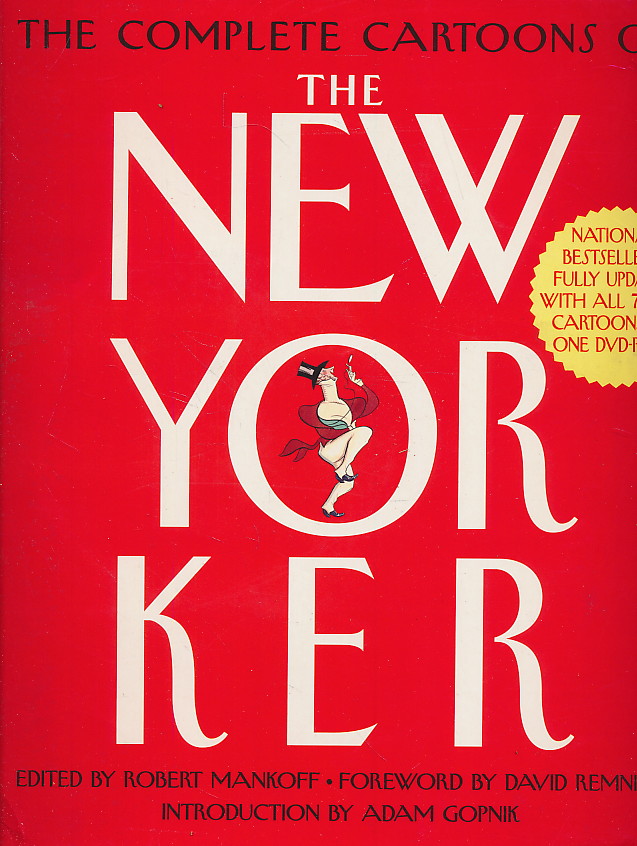
by Bob Mankoff (Editor), Adam Gopnik (Introduction), David Remnick (Foreword) The book that Janet Maslin of The New York Times has called indispensable and a transfixing study of American mores and manners that happens to incorporate boundless laughs, too is finally available in paperback—fully updated and featuring a brand new introduction by Adam Gopnik. Organized by decade, with commentary by some of the magazine’s finest writers, this landmark collection showcases the work of the hundreds of talented artists who have contributed cartoons over the course ofThe New Yorker’s eight-two-year history. From the early cartoons of Peter Arno, George Price and Charles Addams to the cutting-edge work of Alex Gregory, Matthew Diffee and Bruce Eric Kaplan (with stops along the way for the genius of Charles Barsotti, Roz Chast, Jack Ziegler, George Booth, and many others), the art collected here forms, as David Remnick puts it in his Foreword, the longest-running popular comic genre in American life. Throughout the book, brief overviews of each era’s predominant themes—from the Depression and nudity to technology and the Internet, highlight various genres of cartoons and shed light on our pastimes and preoccupations. Brief profiles and mini-portfolios spotlight the work of key cartoonists, including Arno, Chast, Ziegler, and others. The DVD-ROM included with the book is what really makes the Complete Cartoons complete. Compatible with most home computers and easily browsable, the disk contains a mind-boggling 70,363 cartoons, indexed in a variety of ways. Perhaps you’d like to find all the cartoons by your favorite artist. Or maybe you’d like to look up the cartoons that ran the week you were born, or all of the cartoons on a particular subject. Of course, you can always begin at the beginning, February 21, 1925, and experience the unprecedented pleasure of reading through every single cartoon ever published in The New Yorker. Enjoy this one-of-a-kind protrait of American life over the past eight decades, as captured by the talented pens and singular outlooks of the masters of the cartoonist’s art.
Studien zur Geschichte der balkanslavischen Volkspoesie. in deutschen Übersetzungen. Slavistische Forschungen, Band 19 – Buch gebraucht kaufen
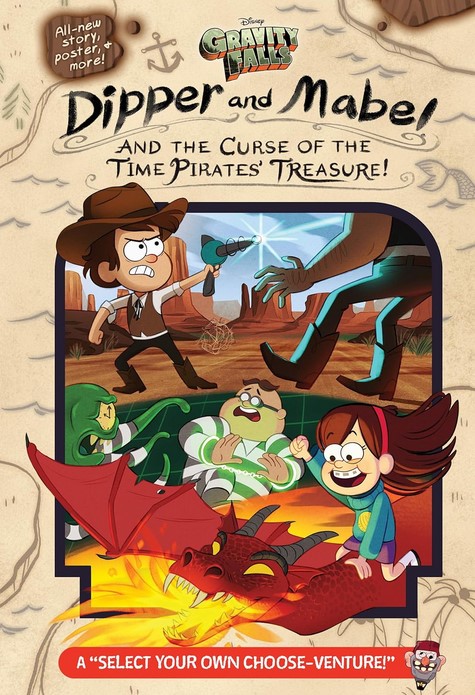
Blendin Blandin is searching for the legendary Time Pirates’ Treasure, and he needs Dipper and Mabel’s help . . . and yours, too! Journey through time and explore the dragon-infested medieval era, the Weird-and-Wild West, and the laser-and-giant-baby-filled future. YOU choose from multiple paths that lead to different wacky adventures! You might end up finding the greatest treasure ever known, or you could send the twins and Blendin into an abyss from which they will never escape! This all-new Select Your Own Choose-Venture time-travel treasure hunt book features thrilling adventures, original artwork, and an exclusive double-sided poster! The book’s author, Jeffrey Rowe, wrote episodes of Gravity Falls; Alex Hirsch, the creator of the show, provided additional story for the book; and the book’s illustrator, Emmy Cicierega, was a storyboard artist for the show.
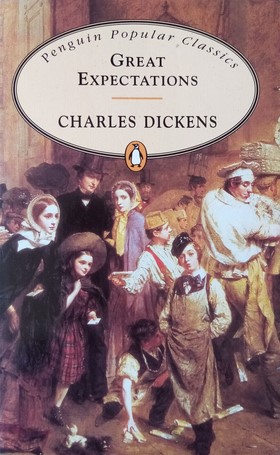
Great Expectations is the thirteenth novel by Charles Dickens and his penultimate completed novel. It depicts the education of an orphan nicknamed Pip (the book is a Bildungsroman, a coming-of-age story). It is Dickens’ second novel, after David Copperfield, to be fully narrated in the first person.[N 1] The novel was first published as a serial in Dickens’s weekly periodical All the Year Round, from 1 December 1860 to August 1861. In October 1861, Chapman & Hall published the novel in three volumes. The novel is set in Kent and London in the early to mid-19th century and contains some of Dickens’s most celebrated scenes, starting in a graveyard, where the young Pip is accosted by the escaped convict Abel Magwitch. Great Expectations is full of extreme imagery—poverty, prison ships and chains, and fights to the death—and has a colourful cast of characters who have entered popular culture. These include the eccentric Miss Havisham, the beautiful but cold Estella, and Joe Gargery, the unsophisticated and kind blacksmith. Dickens’s themes include wealth and poverty, love and rejection, and the eventual triumph of good over evil. Great Expectations, which is popular with both readers and literary critics, has been translated into many languages and adapted numerous times into various media. Upon its release, the novel received near-universal acclaim. Although Dickens’s contemporary Thomas Carlyle referred to it disparagingly as that Pip nonsense, he nevertheless reacted to each fresh instalment with roars of laughter. Later, George Bernard Shaw praised the novel, describing it as all of one piece and consistently truthful. During the serial publication, Dickens was pleased with public response to Great Expectations and its sales; when the plot first formed in his mind, he called it a very fine, new and grotesque idea. In the 21st century, the novel retains good standing among literary critics and in 2003 it was ranked 17th on the BBC’s The Big Read poll.