Published by Consejo Superior de Investigaciones Cientificas, 1981
Published by Consejo Superior de Investigaciones Cientificas, 1981
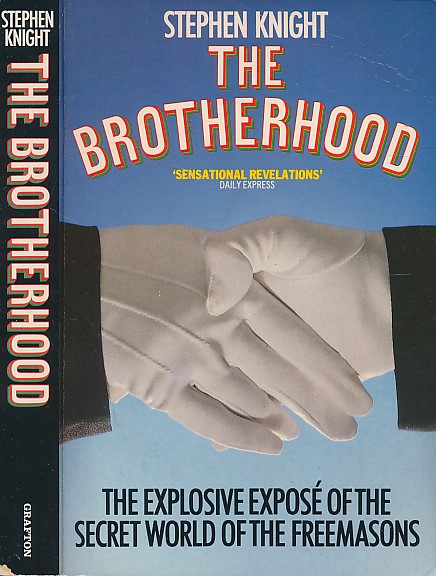
A supposed expose of the ancient free and accepted rite of freemasonry. Very unpopular book with most freemasons, very popular with conspiracy theorists, and just plain old interesting to the neutral. A bestseller.
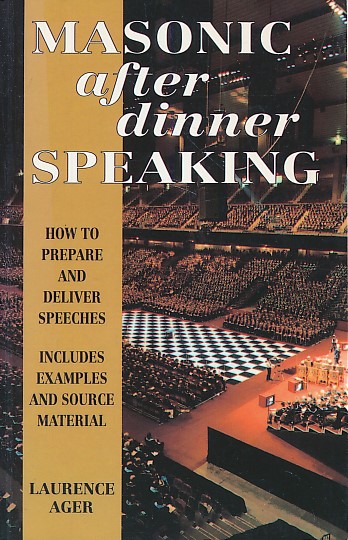
Masonic After-Dinner speaking is treated with concern and dismay by many who are called upon to address an audience. It is a sad fact that what should be one of the most attractive features of Lodge after-proceedings can so often become a source of worry to the speaker and of boredom to his audience. Few have the gift of being natural a off-the-cuff speaker and all have to work carefully at preparing and delivering a speech that will give pleasure to audience and speaker alike. Laurence Ager has been a professional speechwriter for many years and has written speeches for brethren covering a wide range of individual requirements. His knowledge and expertise is now available for all to benefit from with the publication of this book. He provides sufficient elementary instruction to enable any mason to rise with some degree of confidence and to speak for the required few minutes without disgrace. Included are many examples of speeches covering a wide variety of masonic occasions which will help the reader to develop his talents and increase his confidence.
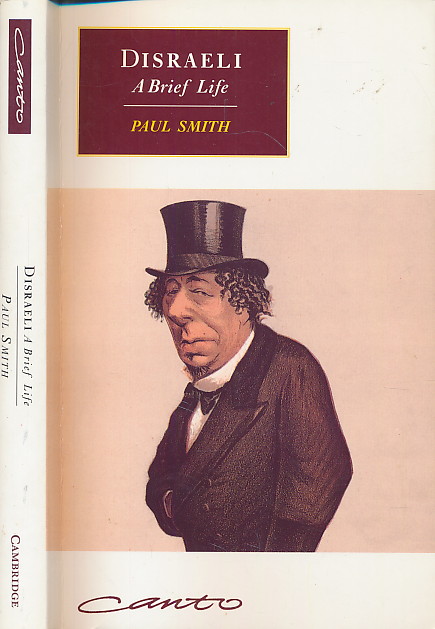
In this fresh account of Benjamin Disraeli’s life, Paul Smith looks at his unique character as a fusion of Jewishness and Anglicanism, outsider and insider, nationalist and European, Romantic and Tory; and shows how this formed his appeal as an original and a card, the most piquant joker in the pack, a faintly raffish outsider who scaled the highest peaks of public life.
Translated from the Russian by P. S. Falla.
In a powerful and deeply personal memoir David Brock, the original right-wing scandal reporter, chronicles his rise to the pinnacle of the conservative movement and his painful break with it. David Brock pilloried Anita Hill in a bestseller. His reporting in The American Spectator as part of the infamous “Arkansas Project” triggered the course of events that led to the historic impeachment trial of President Clinton. Brock was at the center of the right-wing dirty tricks operation of the Gingrich era—and a true believer—until he could no longer deny that the political force he was advancing was built on little more than lies, hate, and hypocrisy. In Blinded By the Right, Brock, who came out of the closet at the height of his conservative renown, tells his riveting story from the beginning, giving us the first insider’s view of what Hillary Rodham Clinton called “the vast right-wing conspiracy.” Whether dealing with the right-wing press, the richly endowed think tanks, Republican political operatives, or the Paula Jones case, Brock names names from Clarence Thomas on down, uncovers hidden links, and demonstrates how the Republican Right’s zeal for power created the poisonous political climate that culminated in George W. Bush’s election. With a new afterword by the author, Blinded By the Right is a classic political memoir of our times.

History Of Middle Europe – From the Earliest Times to the Age of the World Wars Hardcover – June 1, 1976 by Leslie Tihany (Author), John C. Campbell (Foreword) See all formats and editions From the Earliest Times to the Age of the World Wars. The author tells the story of those restless peoples of Middle Europe, who, locked inland from the sea, were kept in an almost constant state of political dependence throughout their existence.
1: Dalle origini al secolo di Marco Polo / introduzioni di Fernand Braudel e Alberto Tenenti 2: Autunno del Medioevo e Rinascimento 3: Dall’eta barocca all’Italia contemporanea a cura di Vittore Branca
Edited by Peter Gay. With a dedication by Arthur M. Wilson
Originally published by Dryden Press in 1977, this volume examines the period from 1300 to the end of the Thirty Years’ War in 1648, an age of disorganization and turmoil, though also one of high achievement. It was an era that was somewhat grandiosely and quite inaccurately described as a rebirth of civilization, a Renaissance, and in religious matters, a Reformation.
The prize-winning historian traces the major currents of the fourteenth century, revealing the century’s great historical rhythms and events and the texture of daily life at all levels of European society.
Czechoslovakia’s Interrupted Revolution By H. Gordon Skilling PRINCETON UNIVERSITY PRESS Copyright © 1976 Princeton University Press All rights reserved. ISBN: 978-0-691-10040-1 Contents Preface, xi, List of Abbreviations, xv, Part One. The Historical Setting, Chapter I. Communism and Czechoslovak Traditions, 3, Chapter II. The Dualism of Czechoslovak Communism: From Gottwald to Novotny, 21, Part Two. Stalinism In Decline, Chapter III. The Mounting Crisis, 45, Chapter IV. Science, Scholarship, and the Party, 90, Chapter V. The Political System Under Fire, 134, Chapter VI. The Fall of Novotny, 161, Part Three. The Politics of Change, Chapter VII. Prelude to Change, 183, Chapter VIII. Spontaneity and Consolidation, 196, Chapter IX. The Step-By-Step Strategy Challenged, 225, Chapter X. Reforms Amid Tension, 261, Chapter XI. The Storm Gathers, 295, Part Four. The New Model of Socialism, Chapter XII. A New Political System, 333, Chapter XIII. Rehabilitation and Justice, 373, Chapter XIV. Planned Market Socialism, 412, Chapter XV. Federalism and the Slovak Problem, 451, Part Five. Contending Political and Social Forces, Chapter XVI. Conflicting Tendencies in the Party, 493, Chapter XVII. Non-Communists and Public Opinion, 526, Chapter XVIII. Social Groups and Organizations, 563, Part Six. The International Context, Chapter XIX. A Foreign Policy With Its Own Face, 617, Chapter XX. The Reactions of the Ruling Communist Parties, 659, Chapter XXI. Military Intervention, 713, Chapter XXII. Resistance and Capitulation, 759, Epilogue. Dubcek’s decline and fall, 813, Conclusion: Reform, Revolution, or Counterrevolution?, 824, Appendices, 853, Bibliography, 891, Index, 899, CHAPTER 1 Communism and Czechoslovak Traditions Communist regimes have almost without exception repudiated the dominant traditions of their countries’ history and claimed to have established brand-new patterns of politics and society. At the same time they have sought to depict communism as a projection of the revolutionary and progressive elements of their national heritage and to incorporate these in the mythology of the new order. In most cases, as, for instance, Soviet Russia, the past thus rejected was autocratic and reactionary, and only selected radical traditions were regarded as the forerunners of communism. In Czechoslovakia, however, the dominant tradition was democratic, deeply rooted in the feelings of the people, and regarded positively by most Czechs and by many Slovaks. The communists, therefore, had to renounce the advanced and progressive features of the past, such as the legacy of Masaryk, since these were integral elements of the dominant tradition. In another respect, also, Czechoslovakia seemed to stand in stark contrast to other communist countries. The regimes have usually, willy-nilly, been affected and influenced, often unconsciously, by their own historical backgrounds, including those elements which were condemned. For a decade or more, Czechoslovak communism seemed to have been successful in erasing the dominant national traditions and to have escaped even their indirect influence. In the sixties, however, the forces of the past began once more to make themselves felt. National Traditions and the Communists The strongest traditions with which the Czechoslovak communists had to grapple were those that had evolved during the twenty years of the First Republic between the two World Wars. Created largely as a re
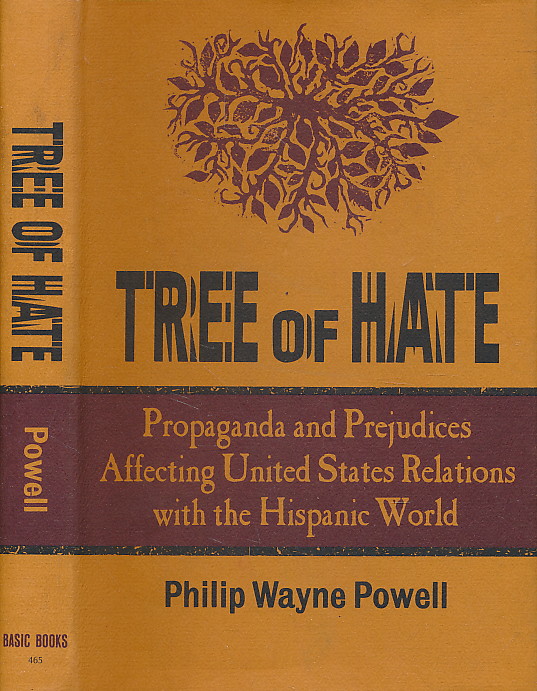
First published in the early 1970s, Tree of Hate is Philip Powell’s exploration of the Black Legend–the popular myth that colonial Spain and her military and religious agents were brutal and unrelenting in their conquest of the Americas. Powell seeks not merely to trace the origins of what he calls Hispanophobia but to analyze its impact on American education, textbooks, religion, and especially foreign policy. . . . The evidence easily demonstrates that English-speaking scholars and diplomats speak with a biased tongue. . . . Too many critics of Spain, to use Powell’s central theme, have merely erected a ‘Tree of Hate’ out of ignorance or to justify their own prejudices and activities. . . . Powell’s book deserves careful reading.–Journal of American History
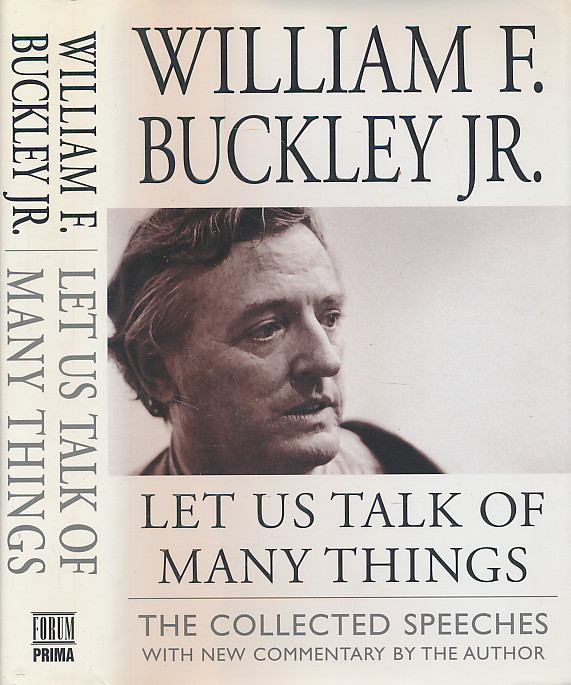
William F. Buckley Jr. has long been admired for his remarkable gifts as a writer, debater, and orator. The man who helped ignite the modern conservative movement has for the past fifty years played a significant role in the great social debates that have shaped our country and indeed the world. In the course of his long career, he has given hundreds of speeches to generations of listeners.

The highly anticipated sequel to the beloved cult classic about family, friendship and first love, from award-winning author Benjamin Alire Sáenz. This lyrical novel will enrapture readers of Love, Simon, John Green and Call me by your Name. A love story like no other. In Aristotle and Dante Discover the Secrets of the Universe, two boys fell in love. Now they must discover what it means to stay in love and build a relationship in a world that seems to challenge their very existence. Ari has spent all of high school hiding who he really is, staying silent and invisible. He expected his senior year to be the same. But something in him cracked open when he fell in love with Dante, and he can’t go back. Suddenly he finds himself reaching out to new friends, standing up to bullies and making his voice heard. And, always, there is Dante – dreamy, witty Dante – who can get on Ari’s nerves and fill him with desire all at once. The boys are determined to forge a path for themselves in a world that doesn’t understand them. But when Ari is faced with a shocking loss, he’ll have to fight like never before to create a life that is truthfully, joyfully his own.
IT is more important to make men see the Church in the divine purity of her inner life than to praise or defend her. She is the Mother whose catholic heart embraces the souls even of those who know her not, even of those who would destroy her. She is the Mother whose unwearied prayer rises every hour in praise or in supplication towards the most pure Beauty which alone can fill our souls, starved upon littleness, with its glory. This book seeks to make men see the light which illumines her countenance and the dream of Beauty glowing in it, and seeing them, recognise her as the dwelling-place of the Spirit and the Bride of the Lord.