Oznaka:
The Poems and Plays of John Masefield – Volume One: Poems
COLLECTED POEMS – The Poems and Plays of John Masefield – Volume One: Poems Masefield, John Published by The Macmillan Company, New York, 1923
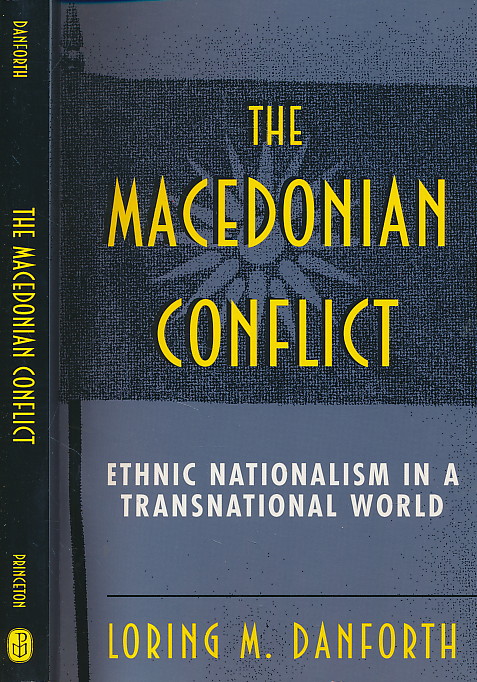
The Macedonian Conflict
Greeks and Macedonians are presently engaged in an often heated dispute involving competing claims to a single identity. Each group asserts that they, and they alone, have the right to identify themselves as Macedonians. The Greek government denies the existence of a Macedonian nation and insists that all Macedonians are Greeks, while Macedonians vehemently assert their existence as a unique people. Here Loring Danforth examines the Macedonian conflict in light of contemporary theoretical work on ethnic nationalism, the construction of national identities and cultures, the invention of tradition, and the role of the state in the process of building a nation. The conflict is set in the broader context of Balkan history and in the more narrow context of the recent disintegration of Yugoslavia. Danforth focuses on the transnational dimension of the “global cultural war” taking place between Greeks and Macedonians both in the Balkans and in the diaspora. He analyzes two issues in particular: the struggle for human rights of the Macedonian minority in northern Greece and the campaign for international recognition of the newly independent Republic of Macedonia. The book concludes with a detailed analysis of the construction of identity at an individual level among immigrants from northern Greece who have settled in Australia, where multiculturalism is an official policy. People from the same villages, members of the same families, living in the northern suburbs of Melbourne have adopted different national identities.
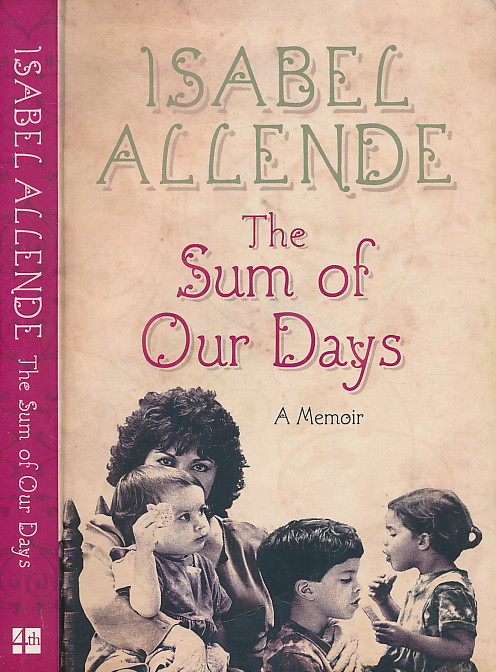
The Sum of Our Days
A brilliant memoir from the celebrated Chilean novelist on friends, family and life in California, her adopted home. Isabel Allende has sold more than 50 million copies of her books worldwide. The most beloved and successful of her books, ‘The House of the Spirits’, was based on her Chilean childhood, and her autobiographical works include the deeply moving ‘Paula’ – a family history written at the bedside of her daughter while she lay in a coma – and the fascinating ‘My Invented Country’, which explored the events of her native Chile where she lived until Pinochet’s military coup. Now, in ‘The Sum of the Days’, we have Isabel describe in an exceptionally vivid, human and deeply personal way her life in California where she has lived for more than 25 years. The first page picks up from where Paula ends – her daughter never did wake up from her coma and died in 1992 – when Allende recounts spreading Paula’s ashes in her favourite part of the woods by their home. It is fair to say that Isabel has never recovered from losing her daughter but has managed to survive by keeping her husband, son, grandchildren as well as close friends – kindred spirits – central to her life. ‘The Sum of the Days’, based on Allende’s own journals and daily correspondence with her mother in Chile, reveals the author to be a dazzling, generous, warm and hysterically funny matriarch within her swirl of family and friends. – Read Less
The Copernicus Complex: Our Cosmic Significance in a Universe of Planets and Probabilities
In the sixteenth century, Nicolaus Copernicus dared to go against the establishment by proposing that Earth rotates around the Sun. Having demoted Earth from its unique position in the cosmos to one of mediocrity, Copernicus set in motion a revolution in scientific thought. This perspective has influenced our thinking for centuries. However, recent evidence challenges the Copernican Principle, hinting that we do in fact live in a special place, at a special time, as the product of a chain of unlikely events. But can we be significant if the Sun is still just one of a billion trillion stars in the observable universe? And what if our universe is just one of a multitude of others-a single slice of an infinity of parallel realities? In The Copernicus Complex, the renowned astrophysicist Caleb Scharf takes us on a scientific adventure, from tiny microbes within the Earth to distant exoplanets, probability theory, and beyond, arguing that there is a solution to this contradiction, a third way of viewing our place in the cosmos, if we weigh the evidence properly. As Scharf explains, we do occupy an unusual time in a 14-billion-year-old universe, in a somewhat unusual type of solar system surrounded by an ocean of unimaginable planetary diversity: hot Jupiters with orbits of less than a day, planet-size rocks spinning around dead stars, and a wealth of alien super-Earths. Yet life here is built from the most common chemistry in the universe, and we are a snapshot taken from billions of years of biological evolution. Bringing us to the cutting edge of scientific discovery, Scharf shows how the answers to fundamental questions of existence will come from embracing the peculiarity of our circumstance without denying the Copernican vision. With characteristic verve, Scharf uses the latest scientific findings to reconsider where we stand in the balance between cosmic significance and mediocrity, order and chaos. Presenting a compelling and bold view of our true status, The Copernicus Complex proposes a way forward in the ultimate quest: determining life’s abundance, not just across this universe but across all realities.
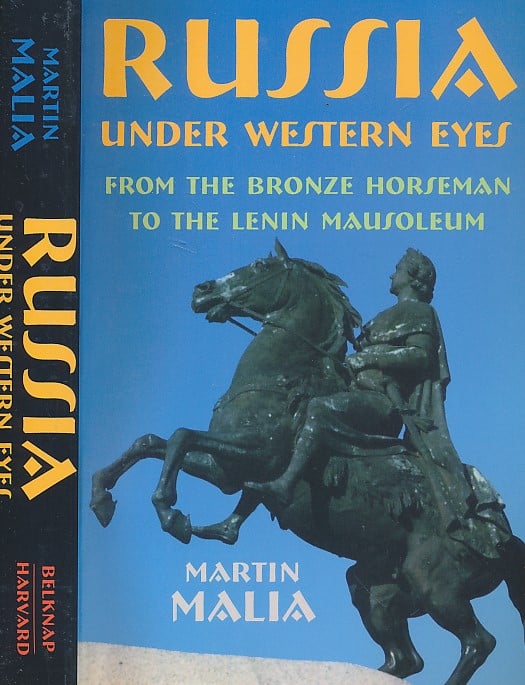
Russia under Western Eyes : From the Bronze Horseman to the Lenin Mausoleum
As the dust clears from the fall of Communism, will Western eyes see Russia, the unclaimed orphan of Western history or Russia as she truly is, a perplexing but undeniable member of the European family? A dazzling work of intellectual history by a world-renowned scholar, spanning the years from Peter the Great to the fall of the Soviet Union, this book gives us a clear and sweeping view of Russia not as an eternal barbarian menace but as an outermost, if laggard, member in the continuum of European nations. The Russian troika hurtles through these pages. The Spectre, modernity’s belief in salvation by revolutionary ideology, haunts them. Alice’s looking glass greets us at this turn and that. Throughout, Martin Malia’s inspired use of these devices aptly conveys the surreality of the whole Soviet Russian phenomenon and the West’s unbalanced perception of it. He shows us the usually distorted images and stereotypes that have dominated Western ideas about Russia since the eighteenth century. And once these emerge as projections of the West’s own internal anxieties, he shifts his focus to the institutional structures and cultural forms Russia shares with her neighbors. Here modern Europe is depicted as an East-West cultural gradient in which the central and eastern portions respond to the Atlantic West’s challenge in delayed and generally skewed fashion. Thus Russia, after two centuries of building then painfully liberalizing its Old Regime, in 1917 tried to leap to a socialism that would be more advanced and democratic than European capitalism. The result was a cruel caricature of European civilization, which mesmerized and polarized the West for most of this century. As the old East-West gradient reappears in genuinely modern guise, this brilliantly imaginative work shows us the reality that has for so long tantalized–and eluded–Western eyes.

The Palestinian People : A History
In a timely reminder of how the past informs the present, Baruch Kimmerling and Joel Migdal offer an authoritative account of the history of the Palestinian people from their modern origins to the Oslo peace process and beyond. Palestinians struggled to create themselves as a people from the first revolt of the Arabs in Palestine in 1834 through the British Mandate to the impact of Zionism and the founding of Israel. Their relationship with the Jewish people and the State of Israel has been fundamental in shaping that identity, and today Palestinians find themselves again at a critical juncture. In the 1990s cornerstones for peace were laid for eventual Palestinian-Israeli coexistence, including mutual acceptance, the renunciation of violence as a permanent strategy, and the establishment for the first time of Palestinian self-government. But the dawn of the twenty-first century saw a reversion to unmitigated hatred and mutual demonization. By mid-2002 the brutal violence of the Intifada had crippled Palestine’s fledgling political institutions and threatened the fragile social cohesion painstakingly constructed after 1967. Kimmerling and Migdal unravel what went right–and what went wrong–in the Oslo peace process, and what lessons we can draw about the forces that help to shape a people. The authors present a balanced, insightful, and sobering look at the realities of creating peace in the Middle East.
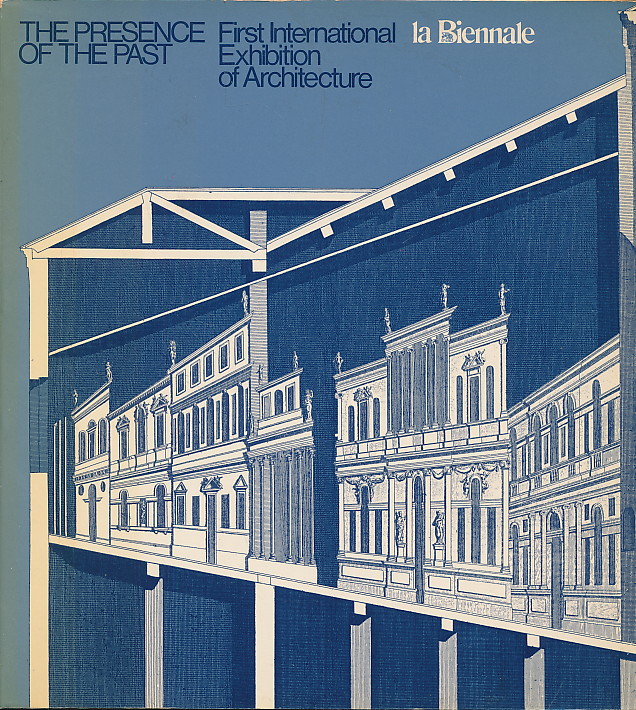
The Presence of the Past: First International Exhibition of Architecture — The Corderia of the Arsenale, La Biennale di Venezia 1980, Architectural Section
Venice, Italy: La Biennale de Venezia, 1980. Paperback. 350, [2] p.: illustrations, plans; 24 cm. Paperback with illustrated cover. Includes articles by Paolo Portoghesi, Vincent Scully, Christian Norberg-Schulz, Charles Jencks, Paolo Farina, Emilio Battisti, Francesco Cellini, and Claudio D’Amato. Text is in English. In Very Good Condition.
The Fallacy of Fine-Tuning: Why the Universe Is Not Designed for Us
A number of authors have noted that if some physical parameters were slightly changed, the universe could no longer support life, as we know it. This implies that life depends sensitively on the physics of our universe. Does this fine-tuning of the universe suggest that a creator god intentionally calibrated the initial conditions of the universe such that life on earth and the evolution of humanity would eventually emerge? In his in-depth and highly accessible discussion of this fascinating and controversial topic, the author looks at the evidence and comes to the opposite conclusion. He finds that the observations of science and our naked senses not only show no evidence for God, they provide evidence beyond a reasonable doubt that God does not exist.
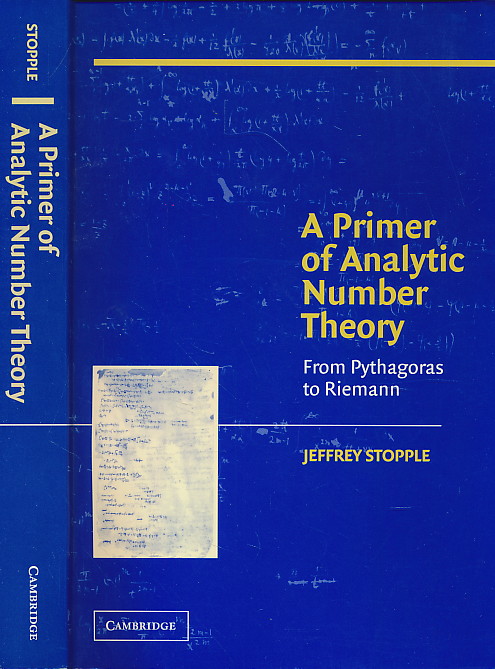
A Primer of Analytic Number Theory: From Pythagoras to Riemann
This undergraduate-level introduction describes those mathematical properties of prime numbers that can be deduced with the tools of calculus. Jeffrey Stopple pays special attention to the rich history of the subject and ancient questions on polygonal numbers, perfect numbers and amicable pairs, as well as to the important open problems. The culmination of the book is a brief presentation of the Riemann zeta function, which determines the distribution of prime numbers, and of the significance of the Riemann Hypothesis.
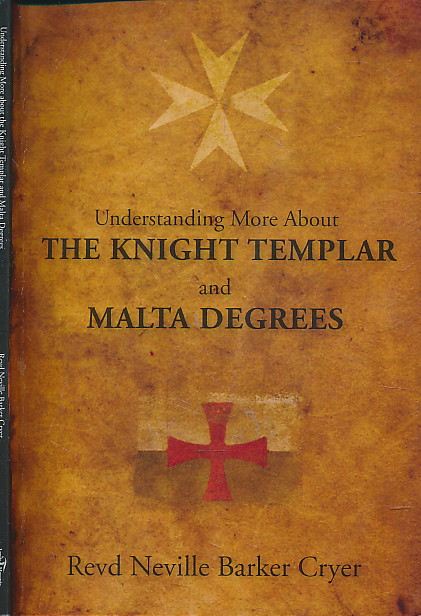
Understanding More About the Knight Templar and Malta Degrees
Whatever does the word ‘Bauseant’ mean? Why does the Malta Cross have eight points? Whatever is a Turcopolier and why do knights have an Admiral? Over the last 25 years, whilst becoming Provincial Prior in two areas, the Revd Neville Barker Cryer has produced shorter booklets providing some of the answers to these and other similar questions. So successful have they been in explaining various aspects of the degrees of Knight Templar and of Malta that it was decided to expand the number of subjects dealt with and make them available to any knight in England.Stories about the Knights Templar and their exploits abound; here is something to help Masonic knights become more informed about what they do and say. The subjects include: Templar Churches and the Holy Sepulchre, Why Is the Royal Arch Linked with the Knights Templar?, The Pilgrim’s Hat, The Accolade of Dubbing, What Is the Significance of the Mediterranean Pass?, What Does the Patte Cross of the Degrees Mean?, The Malta Banners, What Exactly Was the Office of Conservator?, The Knightly Garments, Is there any Link between the First Templars and Freemasonry?
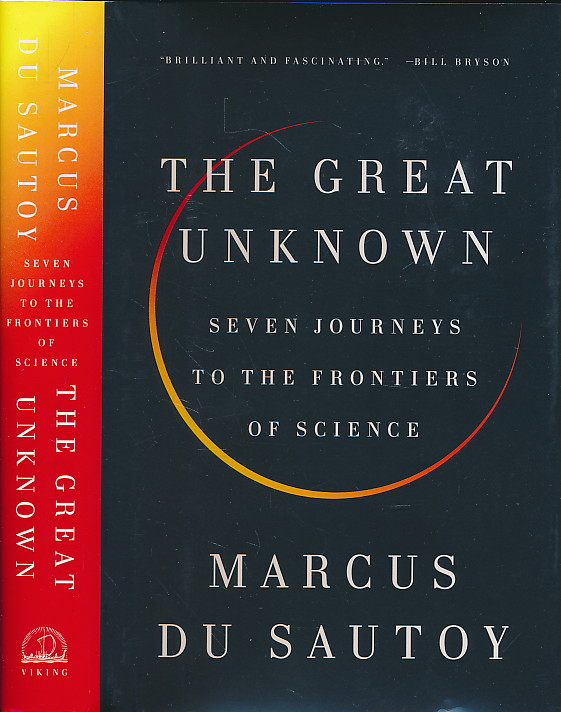
The Great Unknown: Seven Journeys to the Frontiers of Science
Every week seems to throw up a new discovery, shaking the foundations of what we know. But are there questions we will never be able to answer—mysteries that lie beyond the predictive powers of science? In this captivating exploration of our most tantalizing unknowns, Marcus du Sautoy invites us to consider the problems in cosmology, quantum physics, mathematics, and neuroscience that continue to bedevil scientists and creative thinkers who are at the forefront of their fields. At once exhilarating, mind-bending, and compulsively readable, The Great Unknown challenges us to consider big questions—about the nature of consciousness, what came before the big bang, and what lies beyond our horizons—while taking us on a virtuoso tour of the great breakthroughs of the past and celebrating the men and women who dared to tackle the seemingly impossible and had the imagination to come up with new ways of seeing the world.
Considérations sur l occident européen
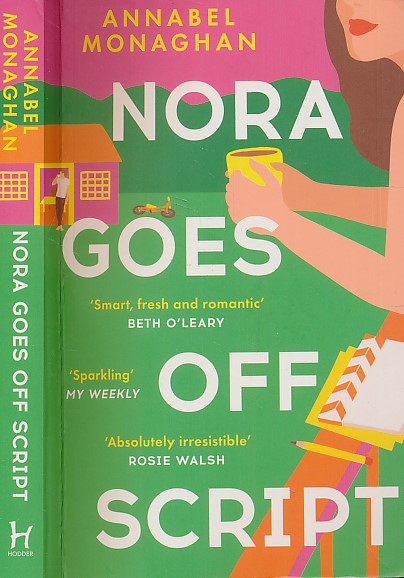
Nora Goes Off Script
Nora`s life is about to get a rewrite . . . Nora Hamilton knows the formula for love better than anyone. As a romance channel screenwriter, it`s her job. But when her husband leaves her and their two kids, Nora turns the collapse of her marriage into the best script of her life. When it`s picked up for the big screen and set to film on location at her picturesque Hudson Valley home, Nora`s life will never be the same – especially after world-famous Hollywood actor and former `Sexiest Man Alive` Leo Vance is cast as her ex-husband. The morning after the crew leaves, Nora finds Leo on her porch with a half-empty bottle of tequila and a proposition. He`ll pay a thousand dollars a day to stay for an extra week. Seven days: it`s the blink of an eye or an eternity, depending on how you look at it. It`s enough time to fall in love. Enough time to break your heart . . . Filled with warmth, wit, and wisdom, Nora Goes Off Script is the best kind of love story – the real kind where love is complicated by work, kids, and the emotional baggage that comes with life.
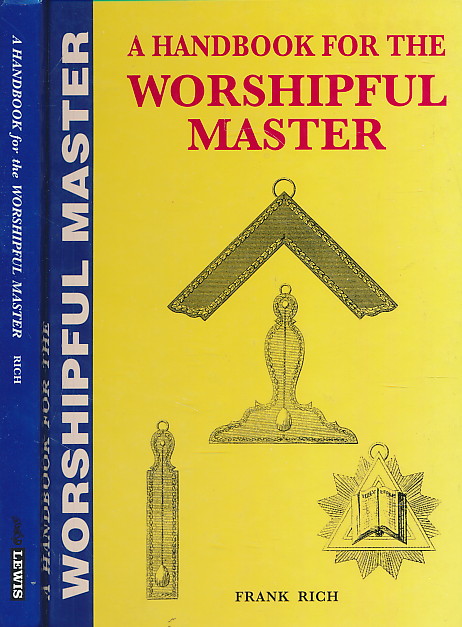
Handbook for the Worshipful Master
As you look forward to occupying the Master’s Chair you will already have acquired a good idea of what is to be done. This book sets out to fill in the details of how, when, where and to some extent, why. Like a road map it gives an overall view of the journey and enough detail not only to find the way but also to enjoy it. It takes you from Master Elect to the end of your year as Immediate Past Master, and finishes with a look at your Ladies’ Festival. The various stages along the way are described separately, so that if you are pressed for time you can read each chapter as you need it. As well as being a guide to your important duties as Master of your Lodge it will remain a work of reference to keep throughout your years as Past Master.
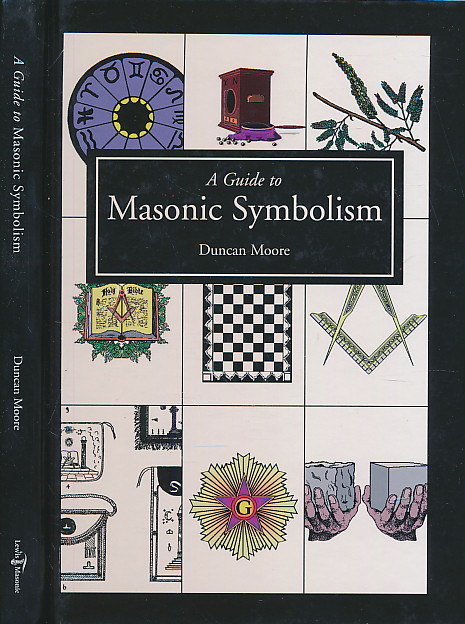
A Guide to Masonic Symbolism
This new book sets out a clear and easy to understand explanation of Masonic symbols.
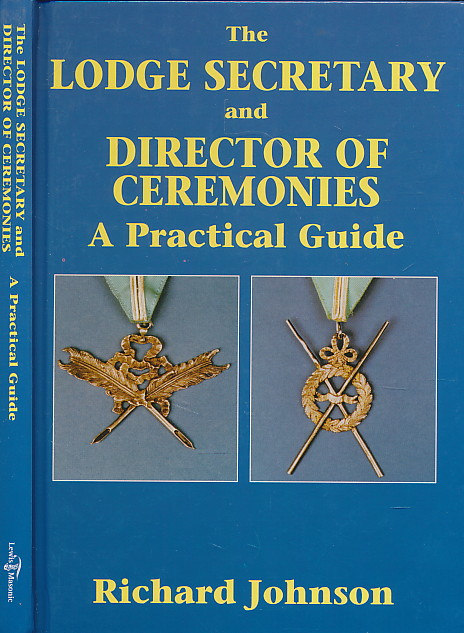
Lodge Secretary and Director of Ceremonies: A Practical Guide by Richard Johnson
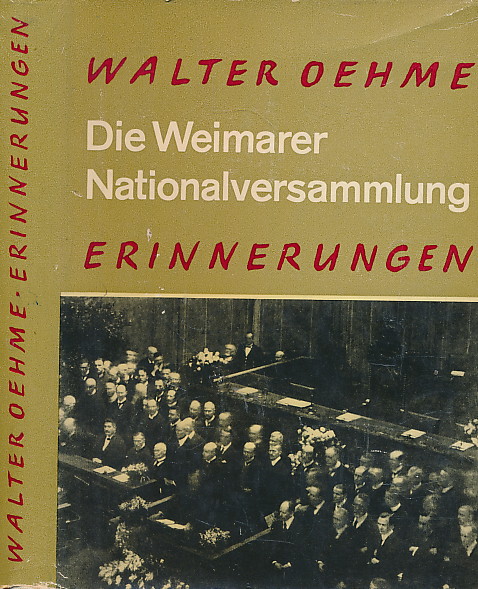
Die Weimarer Nationalversammlung 1919. Erinnerungen
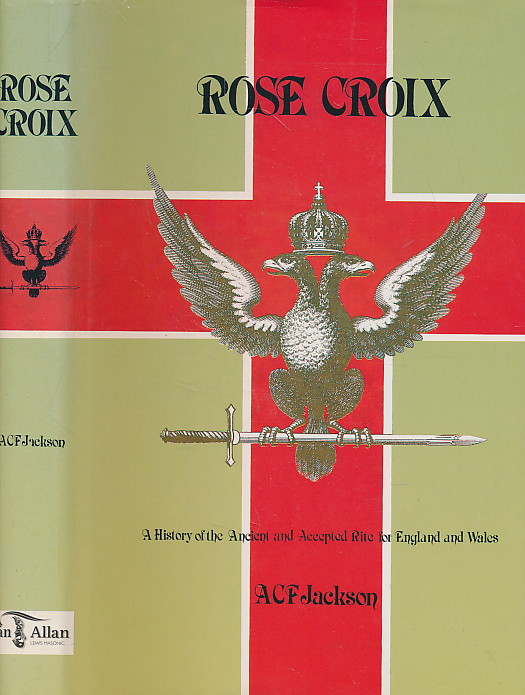
Rose Croix: History of the Ancient and Accepted Rite
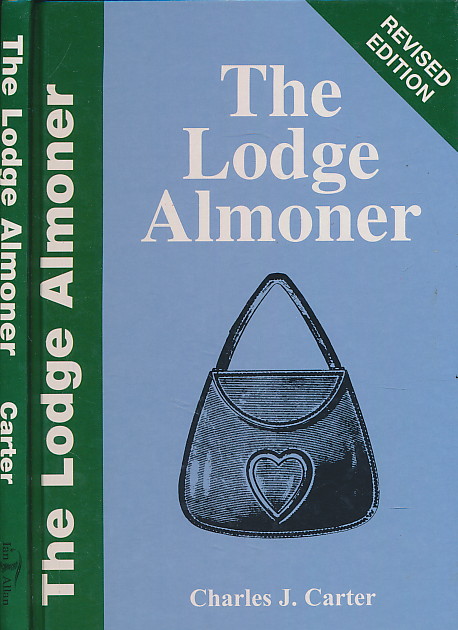
The Lodge Almoner
Title in the Lewis Masonic handbook series which gives the reader a thorough introduction to the duties and responsibilities of the Lodge Almoner.
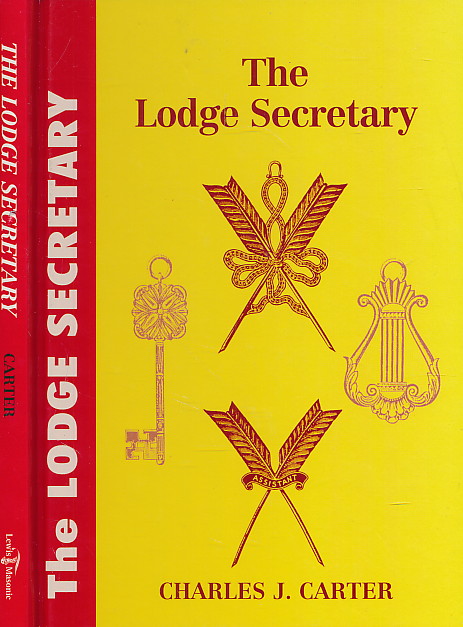
The Lodge Secretary
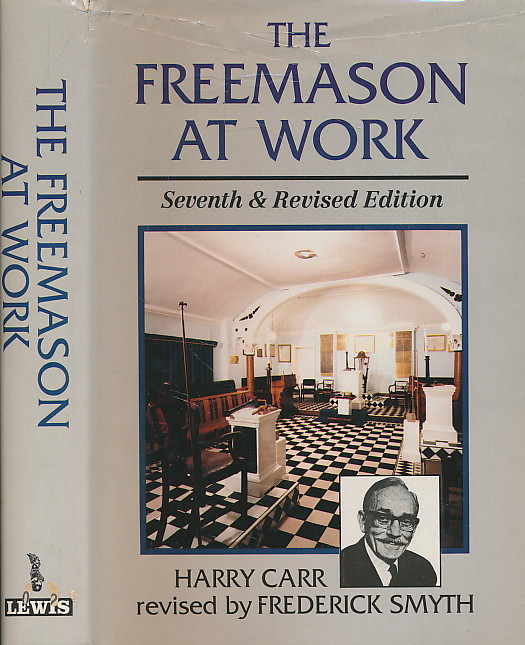
The Freemason at work
This is one of the most successful Masonic Publications in recent times due to the immense knowledge of the late Harry Carr and his entertaining writing style. If you enjoy your masonry then this book will bring a new delight to all that you see and hear in lodge. When Harry Carr became secretary and editor of the Quatuor Coronati Lodge of Research, the answering of lodge questions became a major part of his duties. In a style that became a hall mark of all his masonic writing, he always answered a little more than the original question. In response to hundreds of requests from all over the world, the answers he gave to questions during his twelve years office as editor of Quatuor Coronati Transactions have been collected together in this book. Only the best and most interesting subjects are included and every question will be relevant to most brethren in the course of their work in the lodge ? hence the title The Freemason at Work This book was substantially revised by Frederick Smyth, the eminent Masonic author and Past Master of Quatuor Coronati Lodge, in 1992; brining the text right up-to-date for much had change since the book was first published in 1976. This is a book to be treasured, one that will provide a wealth of knowledge in an easy to read style. A collection of more than 200 questions with comprehensive answers to all manner of masonic subjects.
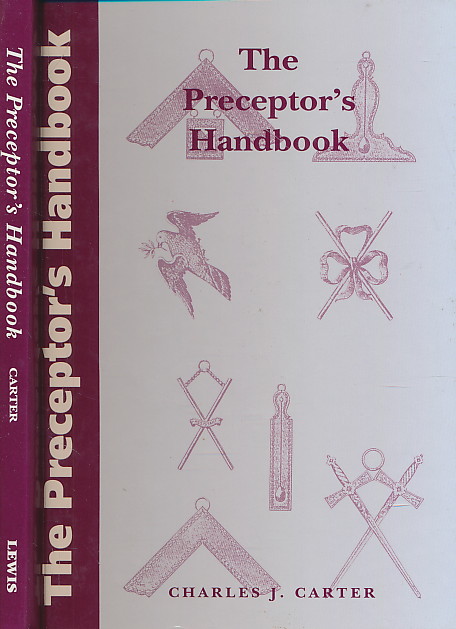
The Preceptor’s Hand Book
About the Author Charles James Carter was initiated into the Three Pillars Lodge No 4923 in May 1962, became Master in 1971 and Secretary the following year. In 1971 he became Founding Secretary of the Plantagenets Lodge No 8409 in the Province of Kent and Master in 1973. He served the office of Perceptor and Director of Ceremonies for ten years. He is the current secretary of the Quatuor Coronati Correspondence Circle Limited, London, where he is responsible for the worldwide operations of the Correspondence Circle of the Quatuor Coronati Lodge, the Premier Lodge of Masonic Research in the world to which he was elected a full member in 1992.
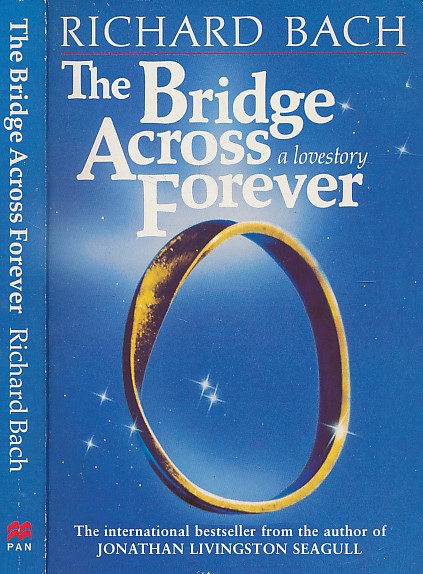
The Bridge Across Forever : A Lovestory
More than one year on the New York Times bestseller list! Richard Bach’s timeless and uplifting classic of hope and love We’re the bridge across forever, arching above the sea, adventuring for our pleasure, living mysteries for the fun of it, choosing disasters triumphs challenges impossible odds, testing ourselves over and again, learning love and love and love! The opposite of loneliness, it’s not togetherness. It is intimacy. Look in a mirror and one thing’s what we see is not who we are. Next to God, love is the word most mangled in every language. The highest form of regard between two people is friendship, and when love enters, friendship dies. There are no mistakes. The events we bring upon ourselves, no matter how unpleasant, are necessary in order to learn what we need to learn; whatever steps we take, they’re necessary to reach the places we’ve chosen to go.