Provides a satirical view of motherhood, suburbia, and the problems of contemporary family life

Provides a satirical view of motherhood, suburbia, and the problems of contemporary family life


MARQUIS DE SAINT-MAURICE LETTRES SUR LA COUR DE LOUIS XIV 1667-1670. Publiees avec une introduction et des notes par Jean Lemoine
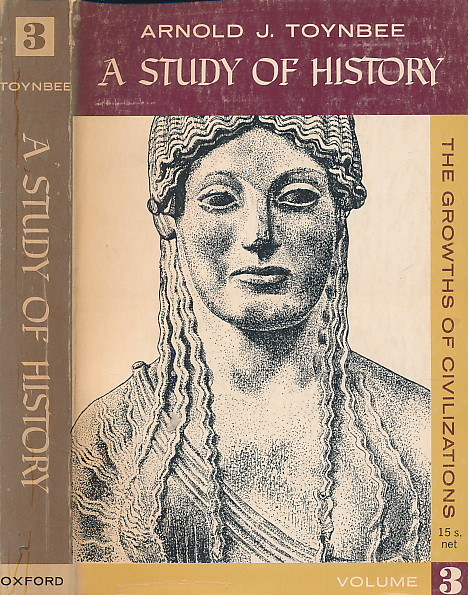
oynbee continues his study through this third volume in the series by analyzing the source, nature and ways of growths of civilizations. In the first two parts, he specified what a civilization is and how one such society sprouts its first shoots as a response to challenges from physical or human sphere of influences. This volume discusses about the criteria of growth, because once something takes birth, it is the next step to take. This does not take place automatically, and this volume is a catalog of several false starts and stillborns. A creative minority in the society puts forward original ideas which might be ridiculed by the unthinking majority of the population. The pioneers then withdraw to seclusion in which the metamorphosis of development of the idea takes place. In the fullness of time, such savants return to the society and conquer the minds of the majority with their seed of originality. This takes deep root in the society and it moves forward on the path of development. We see from the numerous examples cited in the volume that this principle is faithfully followed by all civilizations in the world. The author appends an index which covers the first three volumes with this part.
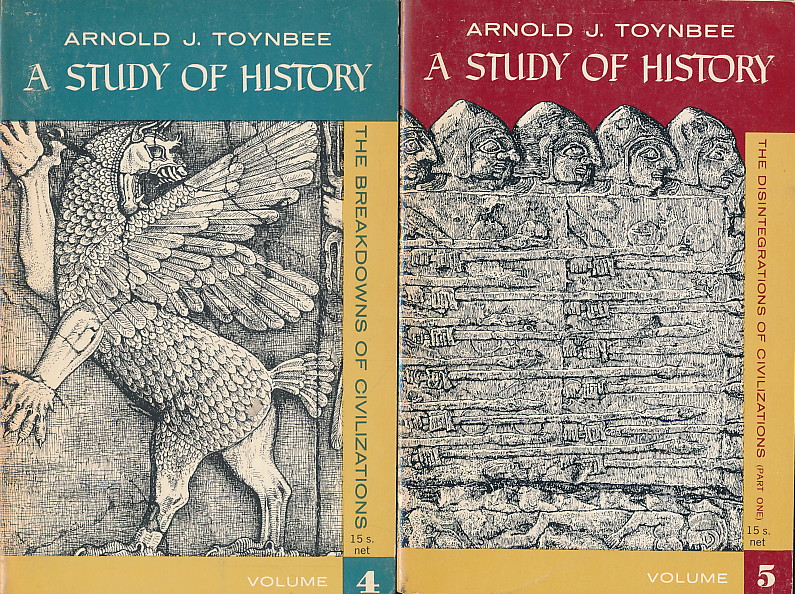
We saw how a civilization takes birth and how it grows to adulthood, in the previous volumes. We have also witnessed the problems of origin and growth the societies encounter in their multiplicity of paths and saw how Toynbee proposes a general law that applies to all known cases in the world. And we come now to analyse the problem of the breakdowns of civilizations and learn about the mechanisms that cause cracks in the body social from within. One aspect of the author’s thinking that shines through the text is his preference for an ecumenical world order that is not fettered by nation states divided on the principle of nationalism that spread like wildfire across the face of the globe in the last century. In fact, nothing irritates him more than the appeal to patriotism to a parochial state. He identifies papacy with the personification of a spiritual order that embraces all humanity. Some readers are justified in suspecting this to be the author’s weak point. This volume also includes a concise, yet illuminating monograph on the caste system in India which turned into hyper-religiosity that is the hallmark of Indian society even today. Even though the author has not delved deep into the unique social feature of caste in India, what is given is a nice preface for other scholars to build on. Toynbee is an admirer of science and an enthusiast in applying its findings to history too. Evolution is his favourite area of interest and imports its concepts freely to demonstrate as proof to his own arguments in a historical milieu. Though his researches go deep into five millennia of history, the failure to anticipate a world war looming on the horizon in 1938 when the book was in publication is indeed a drawback. Mussolini and Hitler are criticized regularly in the text, but the quicksand in which contemporary Europe was mired in, does not find articulation in any convincing detail.
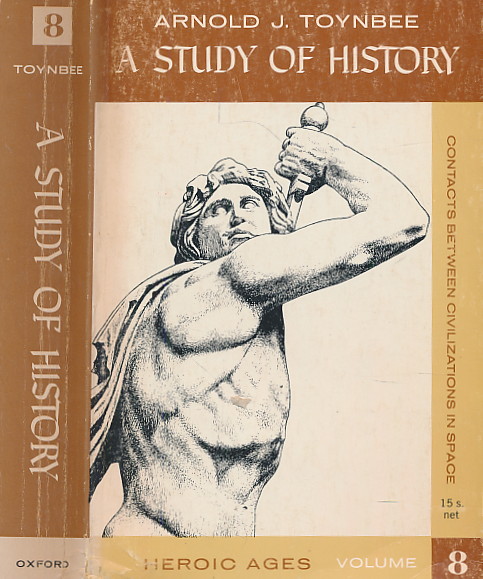
In this eighth volume of the series on ‘A Study of History’, Toynbee analyzes the contacts between civilizations in the Space domain, that is, the contacts between those societies that are separated by a frontier in the form of a geographical barrier like the sea or desert. The contacts between contemporary societies may take the form of a military invention through the contraption of war, or in the spiritual domain in the form of religion, literature or art. Whenver there is a contact, intermingling between the opponents is bound to take place on the cultural plane. The author describes a mechanism through which the cultural assimilation is germinated on the soil of the assaulted society and the way in which it spreads its roots. The defeated society first tries to imitate the military techniques of the victor, by employing the same weapons, modes of combat and drill of the soldiery. But this token adoption comes at a cost. A society is proved to be incapable of copying only one aspect – in this case military – of an alien civilization. The paraphernalia on other related spheres gradually makes an entrance on the imitator’s bosom. Several examples are cited to illustrate the point in a convincing manner. This volume is also an excellent preface to the next one in which the contacts between civilizations in the Time domain, in the form of Renaissances, are elucidated.

Rethink: a paraprimitive solution Gordon Rattray TAYLOR Published by London: Secker & Warburg, 1972
Cuneus Prophetarum. Patavii MDCLXXXV. Bogdani, Pietro. Published by München Trofenik (Beiträge zur Kenntnis Südosteuropas und des nahen Ostens XXIV), 1977. 19 S. (Vorwort des Herausgebers), 25 Bl., 162 S., 11 Bl. Orig. goldgepr. Leinen. Reprint der theologischen Abhandlung des bekannten albanisch stämmigen kathol. Bischofs Pjeter Bogdani (1630-1689, 1677 zum Erzbischof von Skopje ernannt) parallel in Italienisch und Albanisch 1685 in Padua erschienen. Es handelt sich um das erste gedruckte Originalwerk der albanischen Literatur.
Sacred Discontent: The Bible and Western Tradition by Herbert N. Schneidau (Author) Drawing from anthropology, archaeology, literary theory, the Bible, and literature, the author argues that the Bible confronted the ancient world with a new mode of thought and assesses its impact on Western culture in general and Western literature in particular.
The Ways of Knowing or the Methods of Philosophy Montague, William Pepperell Published by George Allen & Unwin Ltd, London, 1924
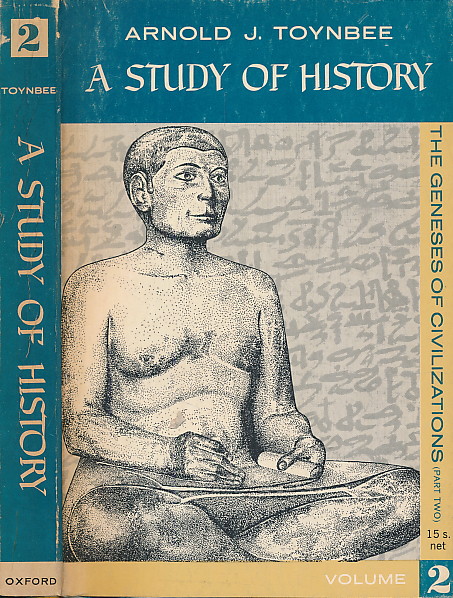
Arnold Toynbee writes: In the first volume of A Study of History, I start by searching for a unit of historical study that is relatively self-contained and is therefore more or less intelligible in isolation from the rest of history. I was led into this quest by finding myself dissatisfied with the present-day habit of studying history in terms of national states. These seemed, and still seem, to me to be fragments of something larger, and I found this larger and more satisfying unit of study in a civilization. The history of the United States, for instance, or the history of Britain, is, as I see it, a fragment of the history of Western Christendom or the Western Christian World, and I believe I can put my finger on a number of other societies, living or extinct, that are of the same species. Examples of other living civilizations besides the Western Civilization are the Islamic and the Civilization of Eastern Asia, centring on China. Examples of extinct civilizations are the Greco-Roman and the Ancient Egyptian. This practice of dealing in civilizations instead of nations is taken for granted by orientalists, ancient-historians, archaeologists, and anthropologists. The carving-up of a civilization into pieces labelled nations is, I believe, something peculiar to students of modern Western history, and, with them too, this present practice of theirs is only recent. Down to the beginning of the eighteenth century the classic works of Western historians took for their field the whole history of Western Christendom or even the whole history of the World from the creation to the Last Judgement.
(Deutsche Gesamtausgabe der Werke von Wladimir Solowjew. Bd. 2 u. 3); 347 pp., 472 pp.
Documents and Materials on the History of the Bulgarian People / Compiled by M. Voynov Et Al. ; Editors-In-Chief D. Kosev and H. Hristov Hardcover – 1 Jan. 1969 by Institut Za Bulgarska Istoriia (Bulgarska Akademiia Na Naukite) (Author)

Ronald B. McKerrow’s An Introduction to Bibliography for Literary Students has been the classic manual on bibliography, showing how the transmission of texts might be affected by the processes of printing, but he concentrated almost exclusively on Elizabethan printing – the period from 1560 to 1660. However, in recent years, there has been an increasing interest in the textual problems of the 18th, 19th and 20th centuries, and, although McKerrow covered the period up to 1800, he did not describe the technology of the machine-press period. Gaskell incorporates work done since McKerrow’s day on the history of the printing technology of the hand-press period, and he breaks new ground by providing a general description of the printing practices of the machine-press period. Little has been previously published about the techniques and routines of nineteenth- and twentieth-century book production, making this book essential to students of literature, scholars, printing historians, librarians, and booklovers.

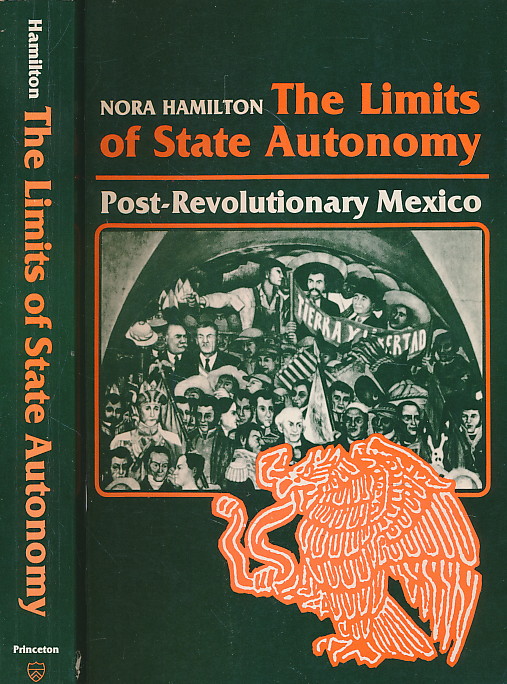
In a historical treatment of Mexico beginning with the pre-Revolutionary period and focusing on the administration of Lazaro Cardenas (1934-1940), Nora Hamilton explores the possibilities and limits of reform in a capitalist society.
Journal des campagnes du prince de Wurtemberg, 1812-1814: avec une introduction, des notes et des pieces justificatives / par C. G. F. [le capitaine Georges Fabry.] CCCXX, 254
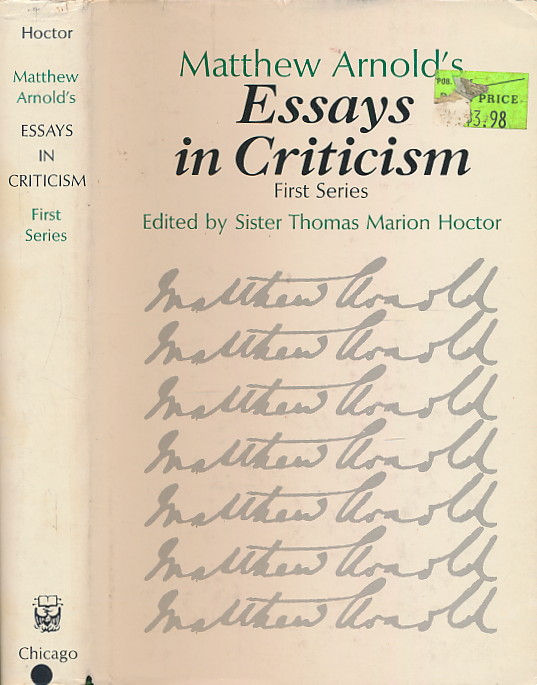
Edited by Sister Thomas Marion Hoctor. Matthew Arnold described his concept of the modern spirit in literary criticism. This volume contains the complete text of the 1875 Edition as well as Arnold’s various prefaces. The essays are fully annotated.
In a book written out of a passionate belief in the staying powers of the democratic principles, a noted historian has written a major work that may be described as an interpretation of American thought and character since the 1880s. Impressive in its inclusive sweep.-Joseph Wood Krutch, New York Times
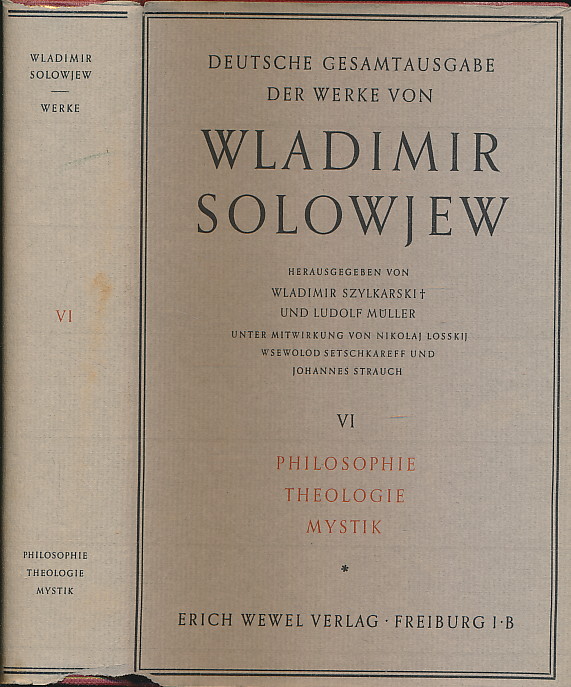
Wladimir Szylkarski, Ludolf Müller
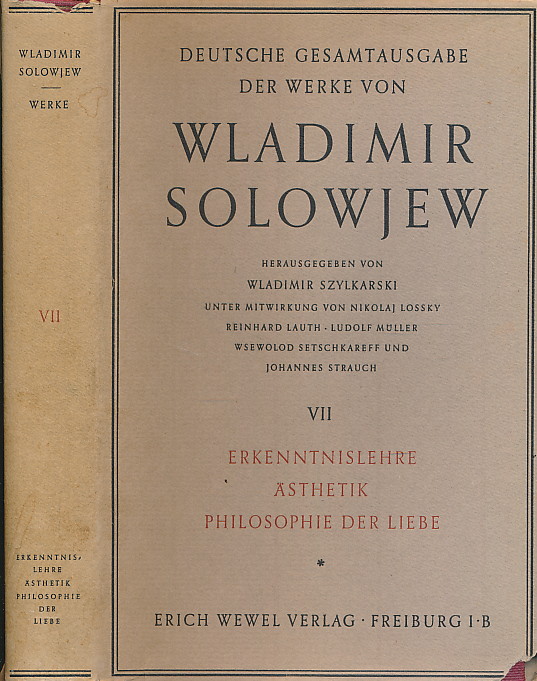
Wladimir Solowjew