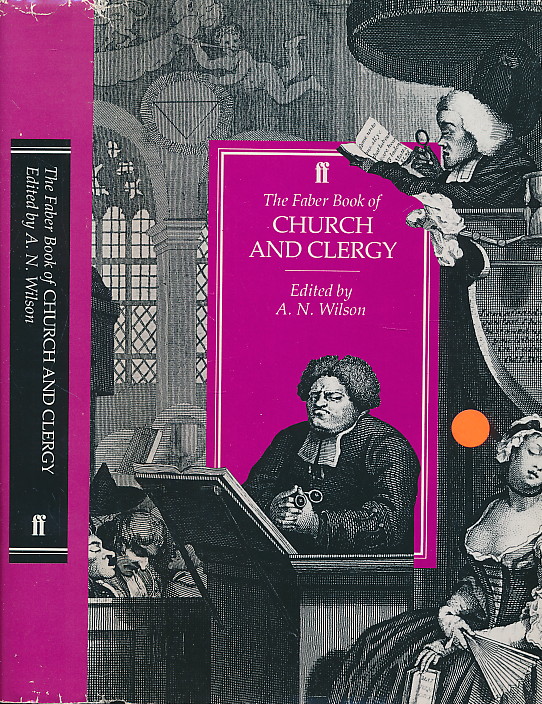
Andrew Norman Wilson is an English writer and newspaper columnist, known for his critical biographies, novels, works of popular history and religious views. He is an occasional columnist for the Daily Mail and former columnist for the London Evening Standard, and has been an occasional contributor to the Times Literary Supplement, New Statesman, The Spectator and The Observer.
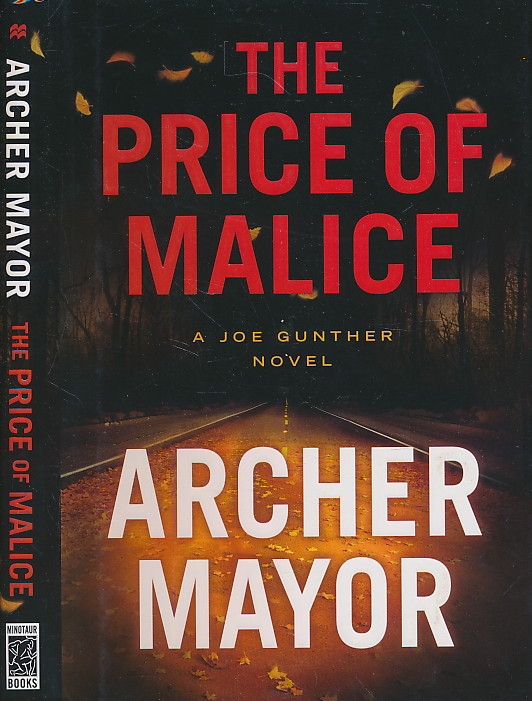
SIGNED hardcover first edition. Wayne Castine was found brutally murdered and the murderer remains at large. Castine, a suspected child predator, was killed in Brattleboro where he was involved with a tangled network of an extended family living in a local trailer park. Any member of the clan would have had the opportunity to kill him, and, as he was involved with both the mother and her 12 year old daughter, reason to commit the murder. At the same time, Joe Gunther has learned that his girlfriend Lyn Silva’s fisherman father and brother, believed lost at sea off the coast of Maine, might have actually been murdered. Without enough solid information to warrant law enforce ment involvement, Lyn returns to Maine to try and investigate Gunther’s findings. Gunther periodically puts his on-going murder investigation on hold—irritating his colleagues and angering his bosses —to go and help Lyn in Maine. It appears increasingly possible that her father and brother weren’t the good guys that Lyn always believed them to be and that they might have been involved with vicious smugglers who murdered them—and might do the same to Lyn if she keeps pushing. Torn between his conscience and his heart, a murder invest – igation and a personal search for the truth, Gunther finds that betrayal and loyalty are often a matter of viewpoint.
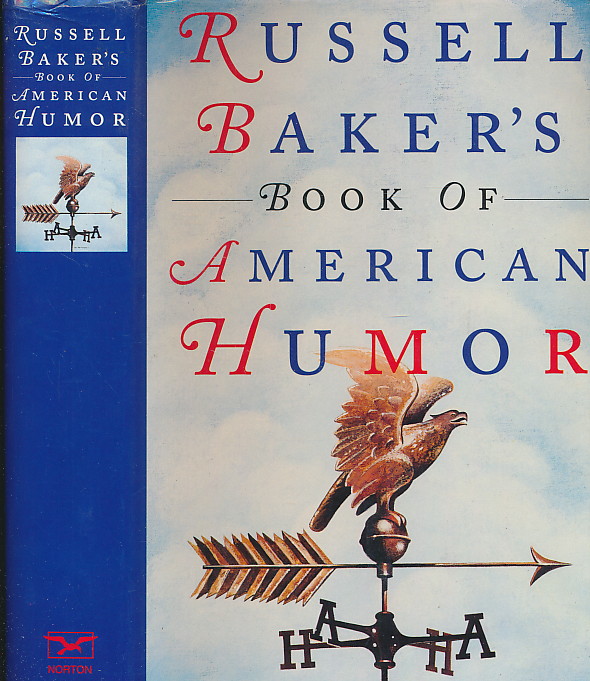
One of the great glories of life in the U.S. is the humor of its people. Baker surveys this territory in this rich treasury and stakes it out in a dozen sections. Roaming through them, the reader will find P.J. O’Rourke, H.L. Mencken, James Thurber, Zora Neale Hurston, and many others.
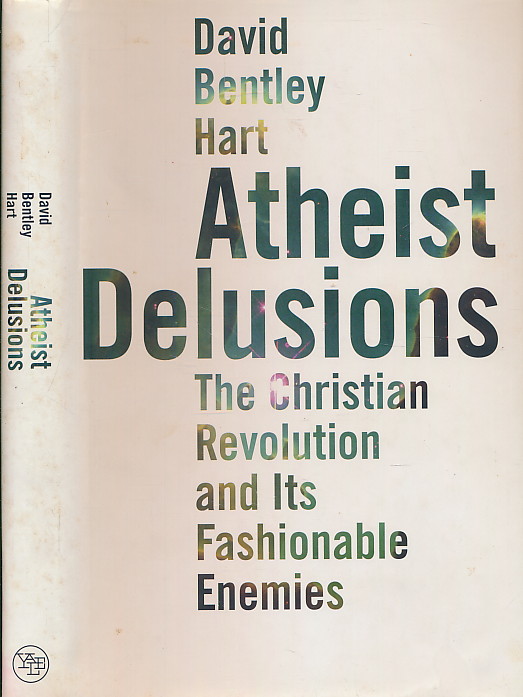
Among all the great transitions that have marked Western history, only one—the triumph of Christianity—can be called in the fullest sense a “revolution” “Hart has the gifts of a good advocate. He writes with clarity and force, and he drives his points home again and again. He exposes his opponents’ errors of fact or logic with ruthless precision.”—Anthony Kenny, Times Literary Supplement In this provocative book one of the most brilliant scholars of religion today dismantles distorted religious “histories” offered up by Christopher Hitchens, Richard Dawkins, and other contemporary critics of religion and advocates of atheism. David Bentley Hart provides a bold correction of the New Atheists’ misrepresentations of the Christian past, countering their polemics with a brilliant account of Christianity and its message of human charity as the most revolutionary movement in all of Western history. Hart outlines how Christianity transformed the ancient world in ways we may have forgotten: bringing liberation from fatalism, conferring great dignity on human beings, subverting the cruelest aspects of pagan society, and elevating charity above all virtues. He then argues that what we term the Age of Reason was in fact the beginning of the eclipse of reason’s authority as a cultural value. Hart closes the book in the present, delineating the ominous consequences of the decline of Christendom in a culture that is built upon its moral and spiritual values.
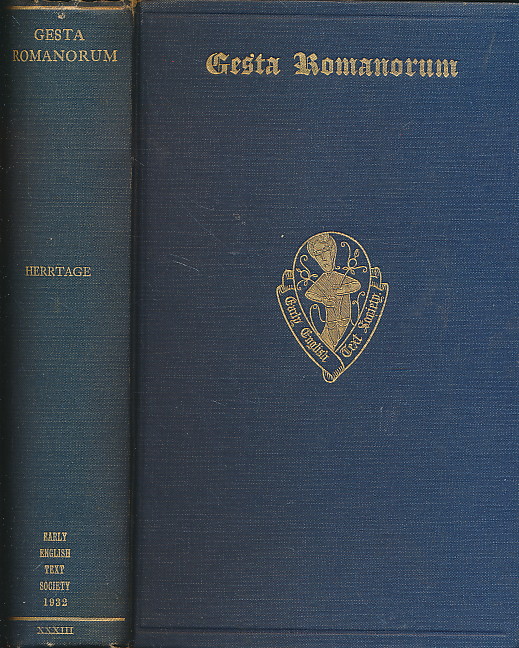
The Early English Versions of the Gesta Romanorum is a book written by Sidney J. H. Herrtage. It is a scholarly work that focuses on the Gesta Romanorum, a medieval collection of moral tales and anecdotes that were popular in Europe during the Middle Ages. Specifically, the book examines the early English translations of the Gesta Romanorum, which were produced between the 14th and 16th centuries. The book begins with an introduction that provides historical context for the Gesta Romanorum and its various translations. It then goes on to present the texts of three early English versions of the Gesta Romanorum, along with detailed notes and commentary on each. Throughout the book, Herrtage provides insights into the literary and cultural significance of the Gesta Romanorum and its translations. He also discusses the sources and influences that shaped the tales, as well as the ways in which they were adapted and transformed in different cultural contexts. Overall, The Early English Versions of the Gesta Romanorum is a valuable resource for scholars and students of medieval literature, as well as anyone interested in the history of storytelling and moral education in the Middle Ages.
Until the 1960s, only once had a southern jury convicted a white man on a capital offense on the testimony of a Negro. The white man was Leo Frank, and he was convicted of the murder of fourteen-year-old Mary Phagan in 1913 not because the jury believed his Negro accuser, but because Frank was a Jew and a capitalist. In 1915, a mob seized Frank from prison and hanged him near the home where Mary was born. There is little doubt Frank was innocent, and his lynching shocked the civilized world. Golden has set out to illumine a crucial moment in the American past, a moment in which courage and mob rule, prejudice and humanity, compassion and frenzy clashed and contended – and courage, humanity, and compassion lost.
Here is the thoroughly comprehensive, absolutely definitive guide to spells–the basic handbook for anyone looking to practice some hands-on magic. Delightfully well written and practical, filled with atmospheric illustrations and diagrams throughout, it encompasses all the principles and philosophy of spell casting, and gives recipes for charms to solve common contemporary problems. This offers what witchcraft and Wicca books dont: an in-depth understanding of whats behind the spells and why they work. Its amazing how much magic is in here: Geomancy, Elemental Scrying, Tree Divination, Mystic Dance and Drumming, Kitchen Witchery, and lots more. From healing, protection, and attraction spells to spells for discernment, repulsion, and concealing, not a topic goes uncovered.
Benjamin Jonson (1572-1637) was a Renaissance dramatist, poet and actor, known best for his satirical plays and lyric poems. His career began in 1597 when he held a fixed engagement in the Admiral’s Men, and although he was unsuccessful as an actor, his literary talent was apparent and he began writing original plays for the troupe. Jonson had a knack for absurdity and hypocrisy, a trait that made him immensely popular in the 17th century Renaissance period. However, his reputation diminished somewhat in the Romantic era, when he began to be unfairly compared to Shakespeare. A Tale of a Tub was the last of Jonson’s plays to be staged during his lifetime. It is set on Valentine’s Day, when the young Audrey Turfe is being chased by four different suitors. Audrey’s father, the constable, is drawn into the disorder that ensues as each suitor attempts to sabotage the others’ chances. Edited with introduction, notes, and glossary by Florence May Snell, Th.D.
This dense brick of a book starts with a warning to the unwary–an (untranslated) Latin dedication. It was written by a Czech priest who eventually became a Harvard professor of Byzantine history. He informs readers that this book enlarges upon a Harvard course on Slavic history from the 13th to the 17th centuries.
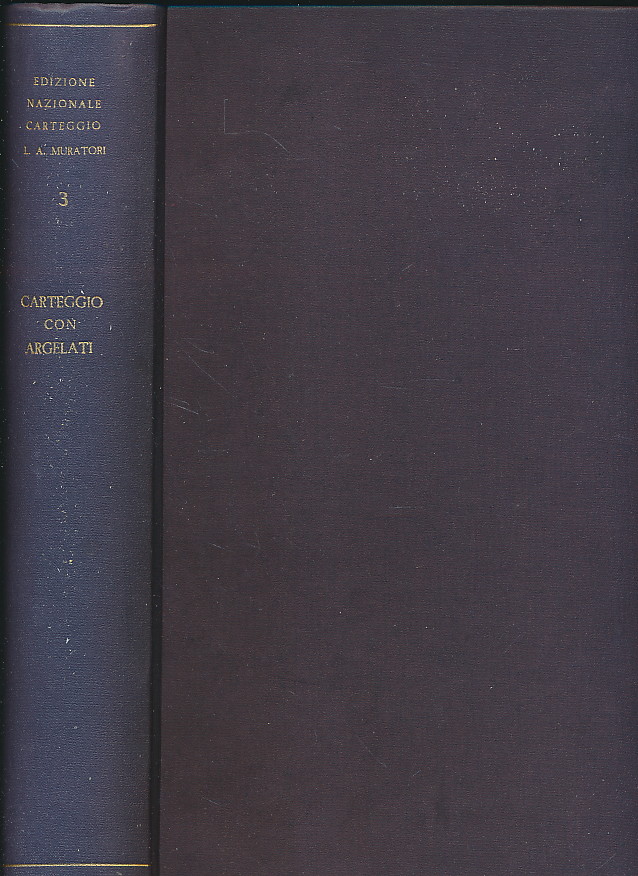
Edizione nazionale del carteggio di L. A. Muratori. a cura di Cristiana Vianello Vol. 3 Carteggio con Francesco Arisi
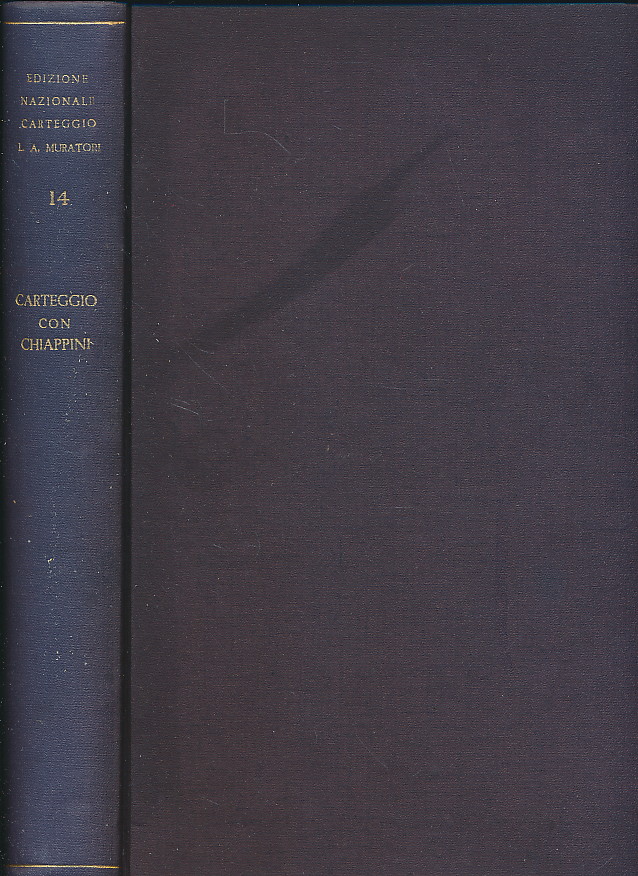
Edizione nazionale del carteggio di L. A. Muratori. Vol 14 Carteggio con Alessandro Chiappini Copertina flessibile – 1 gennaio 1975 di Lodovico Antonio Muratori (Autore), P. Castignoli (a cura di)
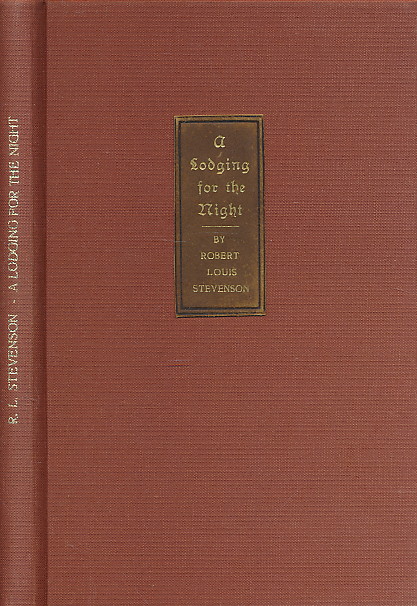
Printed at the Roycroft Shop, East Aurora, New York. Presswork finished on October Sixteenth, Ninteen Hundred Two.