The definitive book on lesbians and gay men in the US military. Randy Shilts, author of the classic documentary history of the AIDS epidemic And The Band Played On, was acclaimed for his ability to take epic histories and molding them into gripping, intimate narratives. Conduct Unbecoming, his groundbreaking exploration of lesbians and gays in the military, came out of hundreds of interviews conducted with servicepeople at all levels of the Army, Navy, Air Force and Marine Corps and intense research uncovering thousands of documents resulting in a unique history of gays in the military as well as the persecution of gays in the military. Conduct Unbecoming will leave readers moved and imbued with a better understanding of the pressing situation in our nation’s military. A sober, thoroughly researched and engrossingly readable history on the subject. [Shilts’s] chronicle is excellent military history, closely woven with an enthralling analysis of the changing definitions of sexuality and personal relationships in American society….[A] landmark book….Remarkable. –New York Times Book Review A masterpiece of investigative reporting…Shilts has shown us the honor homosexuals have brought, and continue to bring, to the uniforms they wear and the country they serve. – Boston Globe Gays, we are told, would damage morale in the military. Shilts documents the fact that morale has already been eaten away by hypocrisy, contradictions, and favoritism…This book will be to gay and lesbian liberation what Betty Friedan’s was to early feminism or Rachel Carson’s to ecological consciousness. No fair-minded person can read Conduct Unbecoming and consider the present system defensible. – USA Today Gripping reading….the history of homosexual people and the movement for gay/lesbian equality in the United States can nowhere be more clearly told. – Los Angeles Times

The narration of Greyfriars Bobby is most unusual. The book is written from the point of view of the dog, which makes every-day events very strange. The main story of the book is directly adapted from the supposedly true Scottish story of Greyfriars Bobby. Bobby spends much time with his master and unofficial owner, Auld Jock (Scots for Old John), creating a very strong emotional connection. They have an intense connection and Jock cares for Bobby very well—though Jock never bought Bobby. This creates problems later, because of Jock’s having, in the eyes of the law, stolen an unlicensed dog. Eventually, Auld Jock dies. Bobby is in great distress, but a loyal dog will never leave its owner’s side, even after death. After his owner dies, Bobby is lost; he can barely function without his companion. Though his owner’s body was identified by the man’s given name, John Gray, and not as Auld Jock, his nickname, people still tell Bobby to look for Jock, which just worsens Bobby’s pain. He is lost for a while, and a large reward is offered for his return. Eventually, Bobby finds Auld Jock’s grave and guards it day and night. The pair are inseparable.
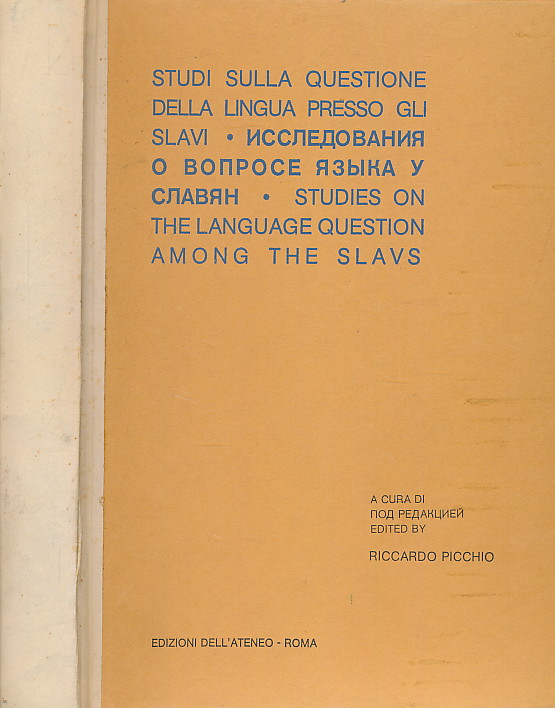
a cura di Riccardo Picchio
Many of the earliest books, particularly those dating back to the 1900s and before, are now extremely scarce and increasingly expensive. We are republishing these classic works in affordable, high quality, modern editions, using the original text and artwork.
Oeuvres Completes de Francois de Salignac de la Mothe Fenelon Tome XI
Oeuvres Completes de Francois de Salignac de la Mothe Fenelon Tome X
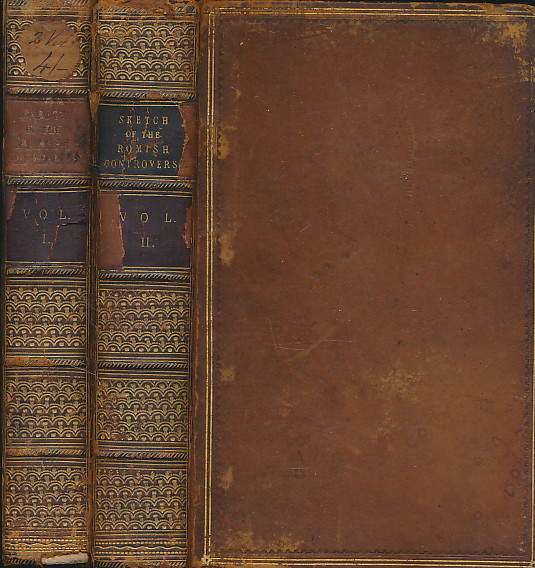
Part the first : Containing The Persecuting Principles Of The Church Of Rome and the Corruptions of the Nicene Church in the fourth century, and of The Church of Rome, from the fourth century until the middle of the sixteenth century. 424 p. Parth the second : Containing Extracts from the faters, extracts from the Roman breviary, the council of Trent, etc., Explanatory of Romish doctrines; and Miniature controvhes of miniature ersial sketches of transubstantiation, the mass, papal supremacy, etc. 515 p. The Persecuting Principles of the Church of Rome is a book written by George Finch and published in 1850. The book is a detailed analysis of the religious controversies between the Roman Catholic Church and the Protestant Church. The author discusses the historical background of the Catholic Church, its doctrines, and its practices, highlighting the differences between the two churches. The book focuses on the persecuting principles of the Catholic Church, which the author argues have been used to suppress dissent and maintain its authority throughout history. The author also examines the role of the Catholic Church in the Inquisition and other historical events that have shaped its image. The book is a valuable resource for anyone interested in the history of the Catholic Church and its relationship with Protestantism.And The Corruptions Of The Nicene Church In The Fourth Century, And Of The Church Of Rome, From The Fourth Century Until The Middle Of The Sixteenth Century.
VOL. I : Texts, 1974. 286 p. VOL. II : Introduction, Notes and Glossary, 1979. 172 p. ++ Peter of Blois (Latin: Petrus Blesensis; French: Pierre de Blois; c. 1130 – c. 1211) was a French cleric, theologian, poet and diplomat. He is particularly noted for his corpus of Latin letters.
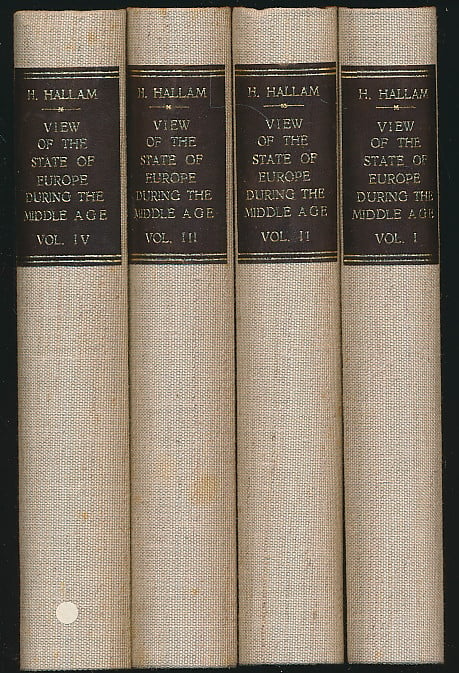
I. Vol. 340 p. II. Vol. 439 p. III. Vol. 448 p. IV. Vol. 460 p.
Oeuvres Completes de Francois de Salignac de la Mothe Fenelon Tome I
Oeuvres Completes de Francois de Salignac de la Mothe Fenelon Tome II
Oeuvres Completes de Francois de Salignac de la Mothe Fenelon Tome III
Oeuvres Completes de Francois de Salignac de la Mothe Fenelon Tome V
Oeuvres Completes de Francois de Salignac de la Mothe Fenelon Tome VII
A Project of Universal and Perpetual Peace Gargaz, Pierre-Andre, Benjamin Franklin and Bruce Rogers Published by George Simpson Eddy, New York, 1922
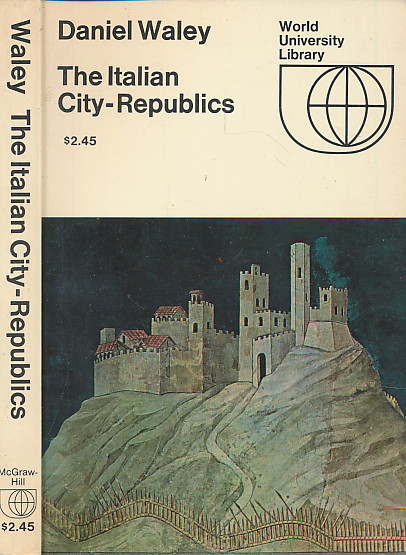
The Italian City-Republics (World University Library) by Daniel Philip Waley (1969-07-30) Hardcover by Daniel Philip Waley (Author) Daniel Waley’s highly enjoyable book remains the best short introduction to the subject in English. List of MapsIntroductionThe legacy of powerThe population Government External relationsInternal divisionsThe failure of the republicsNotesBibliographyAcknowledgmentsIndex
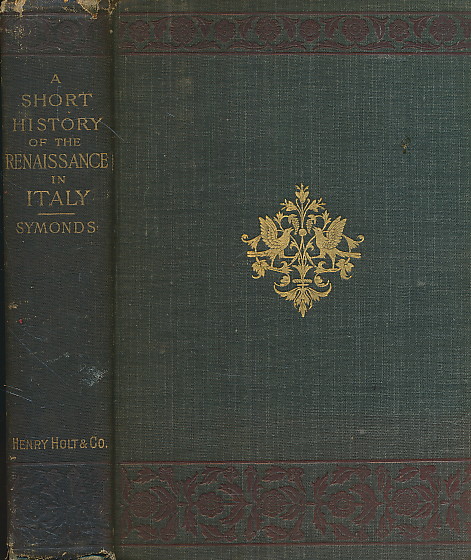
A Short History of the Renaissance in Italy taken from the work of John Addington Symonds
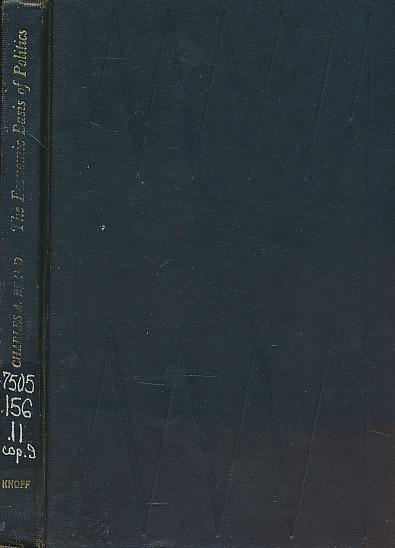
Economic interpretations of history are irrevocably identified with the name of Charles A. Beard. This is mainly due to his early book An Economic Interpretation of the Constitution of the United States (1913). Yet, in Beard’s later work, The Economic Basis of Politics (1922), he articulates the main principles of his method and argues for its applicability to understanding of current events. In this brief survey of Western political philosophy and contemporary constitutional arrangements, Beard concludes that it is well established doctrine that there is a vital relation between the forms of state and the distribution of property, revolutions in the state being usually the results of contests over property. In advancing this axiom, Beard responds to charges that he was a Marxist by constructing an interpretation of Western political philosophy and history that draws a firm distinction between his economic interpretation of history and Marx’s historical materialism. Beard traces the origins of his own method to the works of Aristotle, Machiavelli, Harrington, Locke, and Montesquieu. This view of political theory and political theorists stands in sharp contrast to the view prevailing among many contemporary political philosophers, who insist that political theory must somehow transcend history and rise above ordinary politics to count as theory. Beard’s observations on the nature and tradition of Western political philosophy provide an entrue into New World political thought, which many academic political philosophers have long regarded as something less than political theory. In contrast, Beard regards the development and application of the method of economic interpretation to be the greatest contribution of American political thought to the tradition of Western political theory. In his surveys of thinkers such as Madison, Webster, and Calhoun, Beard links American political thought to the Western tradition of economic interpretation, which undergirds both liberalism and republicanism. The present-day relevance of this important volume will be evident to all social scientists.