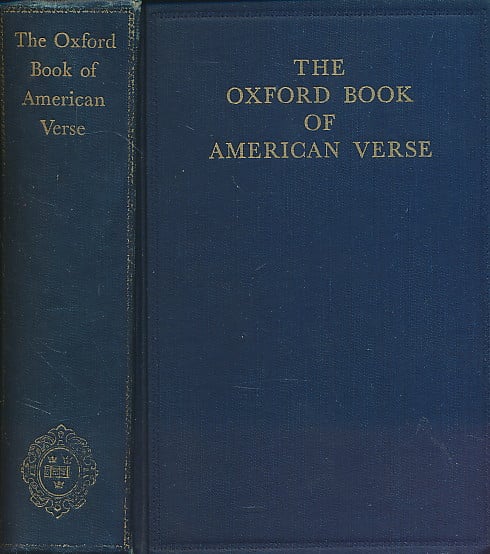
The Oxford Book of American Vers

The Oxford Book of American Verse Chosen and with an Introduction by F. O. Matthiessen (Oxford Books of Verse) by F. O. Matthiessen (Editor) A worthy companion to The Oxford Book of English Verse, this anthology covers, in 571 selections, the whole range of American poetry from colonial times; more than half of it is devoted to the best work of the period from 1900 to 1950. Fifty-one poets represented–deliberately fewer than in most anthologies, so that sufficient space can be devoted to each poet to afford a real understanding of his or her work. More recent and less well-known poets are represented wherever possible by works of some length rather than by a scattering of short poems. Brief biographical notes at the end enable the reader to know in what volume of the poet’s work each poem originally appeared.

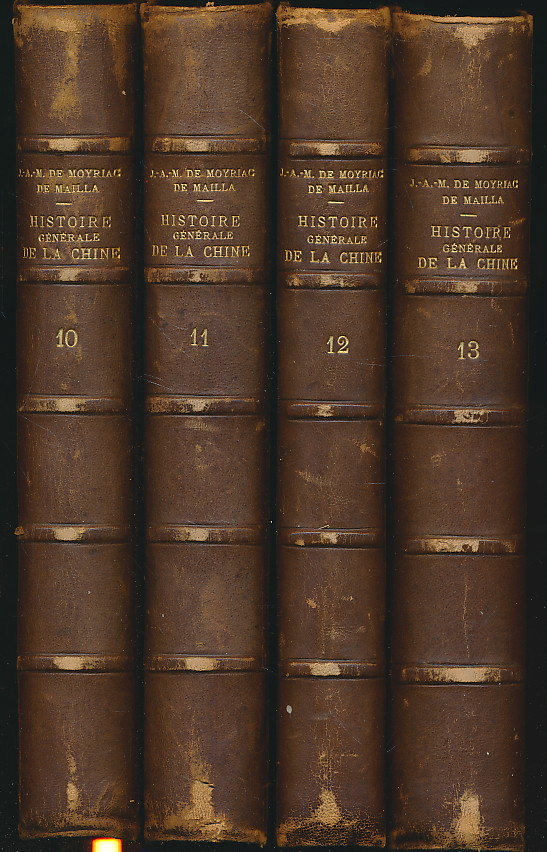
Histoire Générale de la Chine 10-11-12-13 vol.

L’ouvrage au complet doit comporter 13 volumes (3 cartes, 5 tableaux, 16 planches) et un atlas in-folio de 65 planches. Célebre missionaire français, le pere Mailla obtint en 1701 de faire partie de la mission de Chine. En 1703 il débarqua a Macao, et se rendit ensuite a Canton ou en peu de temps il acquit une parfaite connaissance de la langue et de l’écriture de ce pays. L’empereur Khan-Hi qui avait une haute estime des jésuites, le chargea en 1708 de lever une carte générale de la Chine et de la tartarie. Le pere Mailla s’acquitta fort bien de cette tâche et fut élevé, en récompense, au titre de mandarin. Résidant a la cour, il y commença l’étude du mandchou et passa plusieurs années a traduire le Thoun-Kiang Kang-Mou, grande chronique chinoise rédigée en mandchoue. Son manuscrit fut envoyé en France en 1737 a Fréret, et l’abbé Grosier se chargea de le publier sous le titre d’Histoire générale de la Chine.

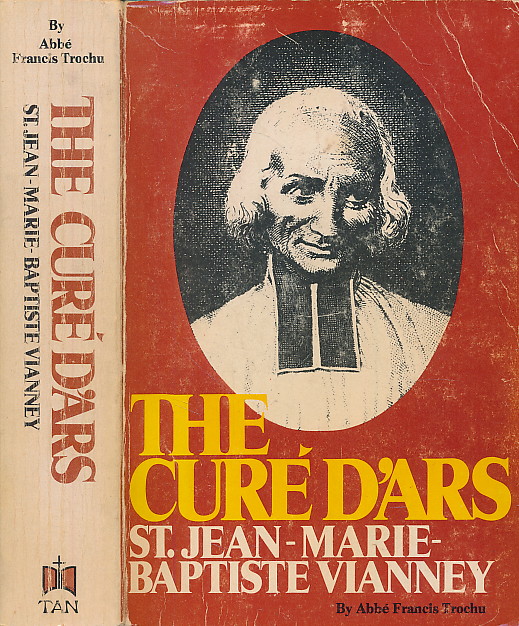
The Cure D Ars: St. Jean-Marie-Baptiste Vianney

The Thoughts of the Cure D’Ars is the most beautiful, simple, and inspiring statement of practical Catholic wisdom that most of us will likely ever read. Consisting of short, profound sayings, almost comparable to the proverbs in the Bible, this little book reflects perfectly its simple but holy author, St. John Vianney. Jean-Marie Baptiste Vianney (1786-1859) was popularly known as the Cure of Ars, or the parish priest of Ars, which is a small farmer’s village north of Lyons, France. Though of poor education, the Cure of Ars was very intelligent and well versed in the Faith. He rose to great sanctity, converted thousands of souls to Christ, became famous throughout the Catholic world, and in 1929 Pope Pius XI proclaimed him Patron Saint of Parish Priests worldwide! This little book is a sample of his sanctity and wisdom.

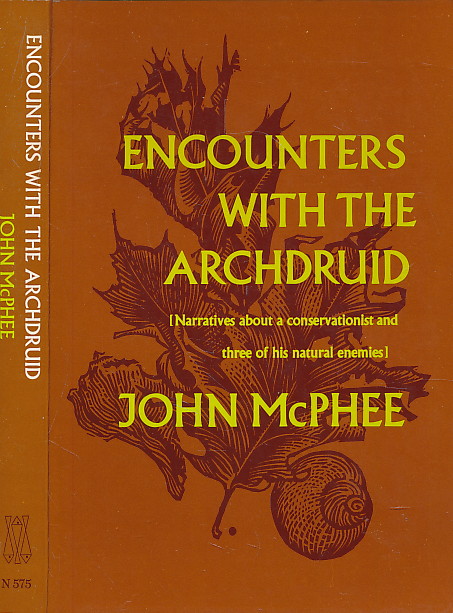
Encounters with the Archdruid

The narratives in this book are of journeys made in three wildernesses – on a coastal island, in a Western mountain range, and on the Colorado River in the Grand Canyon. The four men portrayed here have different relationships to their environment, and they encounter each other on mountain trails, in forests and rapids, sometimes with reserve, sometimes with friendliness, sometimes fighting hard across a philosophical divide.

Munch before Munch (ita.)

Una macchiolina bianca. L’irrispettoso ricordo lasciato cadere da un uccellino sulla tela dell’Urlo. E il frutto della hestekur, la cura da cavallo che un uomo in cappotto nero decide di somministrare ai suoi dipinti, esponendoli alla neve, al vento, alla luna, agli insetti. Edvard Munch nasce 150 anni fa a pochi chilometri da Oslo, in direzione nord. Famiglia puritana, quartiere operaio, notti bohémien. Munch before Munch propone un viaggio illustrato alla scoperta di questo Edvard, il piu remoto, il meno conosciuto. A parlare sono una sedia di vimini mai abbandonata, una stanza fumosa affacciata sulla Senna, lo sguardo di Ibsen, incontrato per caso nella sala da colazione dell’Hotel Grand. Suggestioni di un ragazzo particolare che cammina e assorbe il circostante con la tensione di un animo oppresso. Conducendo il lettore nella cultura europea di fine Ottocento, l’autrice presenta, attraverso intense atmosfere litografiche, un nuovo scorcio sul giovane artista norvegese.

Blondels Song: The Capture Imprisonment And Ransom Of Richard The Lionheart

On his way back from the crusades, one of England’s most famous and romantic medieval kings was ship-wrecked and stranded near Venice. Trying to make his way home in disguise, he was arrested and imprisoned and effectively disappeared. He didn’t return home for another fifteen months, and at enormous cost – a quarter of the entire wealth of England was paid to win his release. The extraordinary events surrounding Richard the Lionheart’s disappearance provides the background to some of the most colourful and enduring legends – Robin Hood, the Sheriff of Nottingham, the discovery of King Arthur’s grave, and above all, the story of Blondel, Richard’s faithful minstrel, and his journey across central Europe – singing under castle towers – until he finds the missing king. Blondel’s Song tells the tale of one of the most peculiar incidents of medieval history, and the background to the real Blondel and his fellow troubadours, as well as the courts of love, the Holy Grail, emergence of gothic cathedrals like Notre Dame and Chartres, and the unique moment of tolerance in the West – when Europe shared a language, and a new culture of music, romance and chivalry.

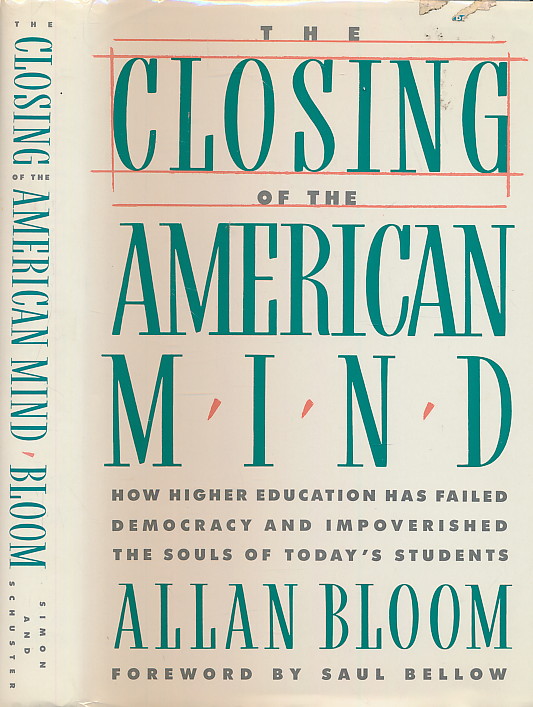
The Closing of the American Mind: How Higher Education Has Failed Democracy and Impoverished the Souls of Today s

The brilliant, controversial, bestselling critique of American culture that “hits with the approximate force and effect of electroshock therapy” (The New York Times)—now featuring a new afterword by Andrew Ferguson in a twenty-fifth anniversary edition. In 1987, eminent political philosopher Allan Bloom published The Closing of the American Mind, an appraisal of contemporary America that “hits with the approximate force and effect of electroshock therapy” (The New York Times) and has not only been vindicated, but has also become more urgent today. In clear, spirited prose, Bloom argues that the social and political crises of contemporary America are part of a larger intellectual crisis: the result of a dangerous narrowing of curiosity and exploration by the university elites. Now, in this twenty-fifth anniversary edition, acclaimed author and journalist Andrew Ferguson contributes a new essay that describes why Bloom’s argument caused such a furor at publication and why our culture so deeply resists its truths today.

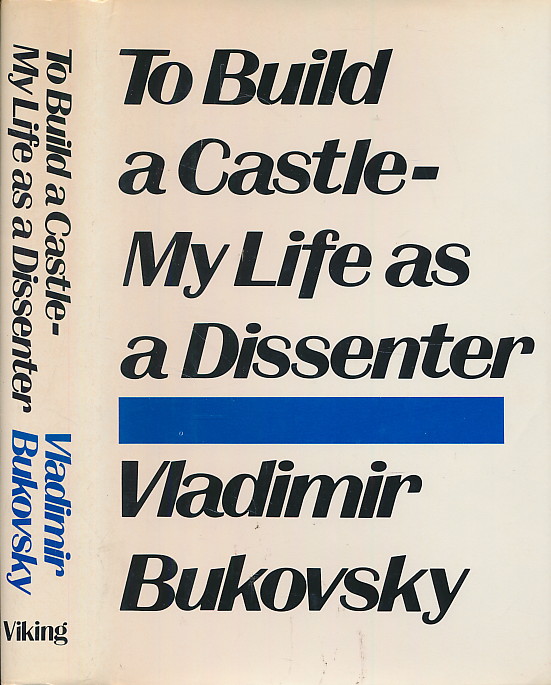
TO BUILD A CASTLE My Life As a Dissenter

By Raymond Nadeau This is truly an exceptional achievement, unlike anything to have come out of the Soviet Union before or since Stalin. It is much, much more than just another “voice from the chorus.” At 36, Vladimir Bukovsky has spent one third of his life in Soviet prisons, labor camps, and psychiatric hospitals. From the moment of his first arrest, while still a high school student, to his sudden expulsion in 1976, Bukovsky’s determination was to survive, and to learn the intricate workings of the Soviet legal system in order to fight back. Fight back he did, and more often than not he paid dearly for his tenacity. Certainly, we have read of these horrors more often than we like to remember, yet Bukovsky’s case stands out sharply in contrast to other men like Solzhenitsyn and Sakharov. Bukovsky was of a generation that held little hope for socialism and certainly none for Leninist-Stalinist socialism. He and his friends fought the authorities with a youthful determination which found little room for sentiment. Indeed, at no time in Soviet history had men so courageously defied the authorities in the face of almost certain imprisonment or death. For the first time, the “politicals” were not condemned to the torment of other prisoners. Instead, they were looked to for guidance, support, courage. And they brought with them hope. Enduring torture, starvation, and the worst forms of humiliation, Bukovsky learned the details of the Soviet legal system. He created a bureaucratic nightmare of appeals and demands which he knew were all within the limit of the Soviet law. Knowing how badly informed Soviet jurists were about procedural law, he devoured the criminal codes like detective novels. He found legal means of defending his right to conscience that even some lawyers knew nothing about. He was, in fact, that unique Soviet prisoner, his own defense counsel. Of course, this proved to be an embarrassment to the government, which forced them to invent new laws countermanding those already in existence. Bukovsky also recorded in secret and with great detail, psychiatric case histories, and the diagnoses of doctors convinced that dissidence was a form of “creeping schizophrenia.” These he smuggled to the West, asking that they be presented to the World Psychiatric Association, meeting that year, 1971, in Mexico City. Because the entire Soviet bloc threatened to walk out, the assembly ignored the issue. Yet Bukovsky had made his point and did not lose his spirit. After 12 years of this suffering, the Soviet government responded in the way Bukovsky had at first envisioned. The system, unable to deal with the accurate charges being made against it, began to fumble and to frighten even itself. Bukovsky would not give up. The government’s reaction was lacerating and ultimately inept. They had no choice. World-wide pleas for Bukovsky’s release made extermination impossible. Their only choice was to throw him out. So quite suddenly, Bukovsky was exchanged for Chilean communist leader Luis Covalan, which in effect exposed, if only implicitly, an admission of guilt on the part of the Soviets, that they were in fact guilty of political repression. That the exchange was made between the Pinochet regime and the Soviet Union, was, in Bukovsky’s words, “a symbol of the times.” No review can do justice to this book or to Bukovsky. The justice comes in its being read, for Bukovsky is a marvelous writer. His attention to detail may be horrific, but it will move you as it should. His description of his final flight from his homeland is one of the most moving passages in memory. And Bukovsky is not without humor and tenderness. Yet most important is the determination that emanates from the book.
Teleplay: An Introduction to Writing for Television

Sound, practical advice from writer, story editor, producer Coles Trapnell on television grammar and tools; camera terminology and calling the shots; characters, crisis, and exposition; how the teleplay differs from the motion picture form; adaptation; writer and director; writing for actors; the teleplay outline and how to watch television; how to sell your script; the WGAW and how it helps. With a sample of a completed teleplay script.

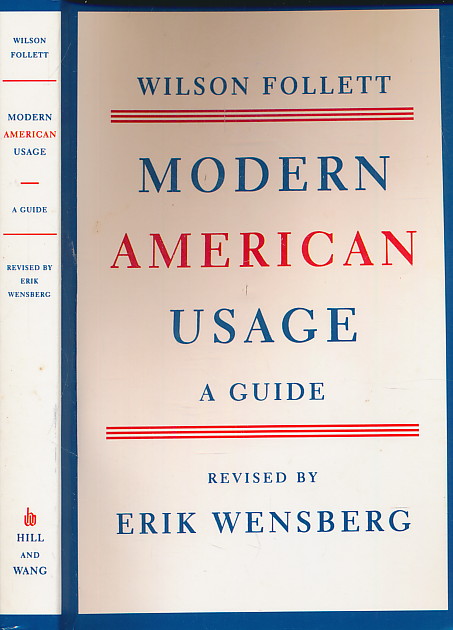
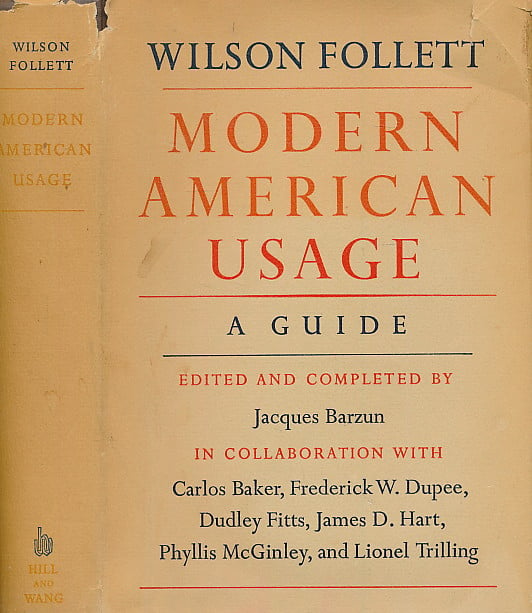
Modern American Usage: A Guide

A classic since its first edition in 1966, Modern American Usage has been called a book that “every literate American ought to read.” Now fully revised and brought up-to-date, this one-volume course in good writing brims with helpful answers—large and small—for readers who want to use English clearly, naturally, and correctly. Alphabetical for easy consulting (and full of cross-references), the book carries the reader to the entry that explains a troublesome word or phrase—and shows how to use or avoid it. Every page offers natural ways to avoid saying or writing the vague, the long-winded, the needlessly technical, and the hopelessly stale. With verve and eloquence, Erik Wensberg spears the empty words that clog clear thought—“impact,” “frustrated,” “basically,” and many more—and offers us good English words that are definite and have more life. Offering standards by which to judge language now and in the future, Modern American Usage takes account of a generation of changes in American idiom and of attempts to reform the use of pronouns, titles, and phrases to fit shifting ideals of social justice. All this it does with easy learning and with sympathy alike for the experienced writer and for those who come new to American English.

Memoirs of Elizabeth Stuart, Queen of Bohemia 1-2

A complete two volume set, in in the first edition.This fascinating biography was written by Elizabeth Benger an English novelist, biographer and poet.Elizabeth Stuart, was Electress of the Palatinate and Queen of Bohemia as the wife of Frederick V of the Palatinate, a state that was part of the Holy Roman Empire. As her husband’s reign lased for just one winter she is called the Winter Queen.The volumes also include sketches of the state of society in Holland and Germany in the 17th Century.With a portrait of Queen Elizabeth to the first volume.

CANCION DE CUNA

Gregorio Martínez Sierra es considerado ante todo un moderno hombre de teatro, tanto más como director que como autor, y un renovador en la escenografía. Su obra dramática se distingue, dentro del tono benaventiano, por una cierta finura psicológica y una delicadeza poética que, a veces al mismo borde del sentimentalismo dulzón, nunca logra traspasarlo. La crítica ha senalado también una gran habilidad en la creación de personajes femeninos. Se consideran sus mejores obras el monólogo Sólo para mujeres (1913); Canción de cuna (1911), llevada al cine por Mitchell Leisen y José Luis Garci; La sombra del padre (1909); Primavera en otono (1911), Mamá (1913) y El reino de Dios (1916), drama este último en el que, sin abandonar el modo psicológico y sentimental que caracteriza toda su obra, intenta dar significación social y revolucionaria al tema de la caridad cristiana.