Oznaka:
The Harry Bosch Novels: The Black Echo, The Black Ice, The Concrete Blonde
Collected into a single volume for the first time, the three novels introducing Detective Harry Bosch take readers from the sun-drenched streets of Hollywood Boulevard to the dusty backroads of Mexico.

Against All Enemies
For years, ex–Navy SEAL Maxwell Moore has worked across the Middle East and behind the scenes for the Special Activities Division of the CIA, making connections, extracting valuable intelligence, and facing off against America’s enemies at every turn. And then…news of a potentially devastating coalition: What if two of the greatest threats to the security of the United States were to form an unholy alliance? The Taliban is trying to exploit a Mexican drug cartel to which they supply opium as a means to bring the fire of jihad to the hearts of the infidels. It is up to Moore, and his team, to infiltrate and dismantle the drug cartel, even as they hunt for those who would bring the ultimate terror and destruction to the streets of America. In a story that races from the remote, war-scarred landscapes of the Middle East to the blood-soaked chaos of the U.S.–Mexico border, Tom Clancy once again delivers a heart-stopping thriller that is frighteningly close to reality.
An Investigation of the Laws of Thought
A classic of pure mathematics and symbolic logic … the publisher is to be thanked for making it available. — Scientific American George Boole was on of the greatest mathematicians of the 19th century, and one of the most influential thinkers of all time. Not only did he make important contributions to differential equations and calculus of finite differences, he also was the discoverer of invariants, and the founder of modern symbolic logic. According to Bertrand Russell, Pure mathematics was discovered by George Boole in his work published in 1854. This work is the first extensive statement of the modern view that mathematics is a pure deductive science that can be applied to various situations. Boole first showed how classical logic could be treated with algebraic terminology and operations, and then proceeded to a general symbolic method of logical interference; he also attempted to devise a calculus of probabilities which could be applied to situations hitherto considered beyond investigation. The enormous range of this work can be seen from chapter headings: Nature and Design of This Work; Signs and Their Laws; Derivation of Laws; Division of Propositions; Principles of Symbolical Reasoning; Interpretation; Elimination; Reduction; Methods of Abbreviation; Conditions of a Perfect Method; Secondary Propositions; Methods in Secondary Propositions; Clarke and Spinoza; Analysis, Aristotelian Logic; Theory of Probabilities; General Method in Probabilities; Elementary Illustrations; Statistical Conditions; Problems on Causes; Probability of Judgments; Constitution of the Intellect. This last chapter, Constitution of the Intellect, is a very significant analysis of the psychology of discovery and scientific method.
Dnevnik 1941-1944.
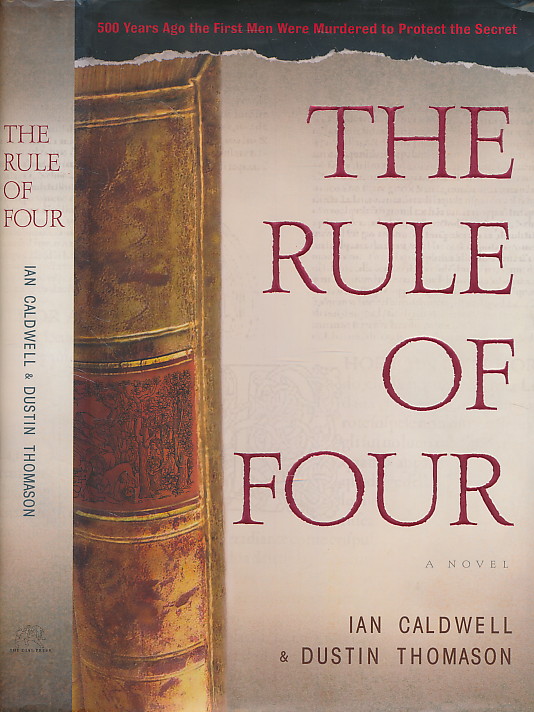
The Rule of Four
An ivy league murder, a mysterious coded manuscript, and the secrets of a Renaissance prince collide memorably in The Rule of Four—a brilliant work of fiction that weaves together suspense and scholarship, high art and unimaginable treachery. It’s Easter at Princeton. Seniors are scrambling to finish their theses. And two students, Tom Sullivan and Paul Harris, are a hair’s breadth from solving the mysteries of the Hypnerotomachia Poliphili—a renowned text attributed to an Italian nobleman, a work that has baffled scholars since its publication in 1499. For Tom, their research has been a link to his family’s past—and an obstacle to the woman he loves. For Paul, it has become an obsession, the very reason for living. But as their deadline looms, research has stalled—until a long-lost diary surfaces with a vital clue. And when a fellow researcher is murdered just hours later, Tom and Paul realize that they are not the first to glimpse the Hypnerotomachia ‘s secrets. Suddenly the stakes are raised, and as the two friends sift through the codes and riddles at the heart of the text, they are beginnning to see the manuscript in a new light—not simply as a story of faith, eroticism and pedantry, but as a bizarre, coded mathematical maze. And as they come closer and closer to deciphering the final puzzle of a book that has shattered careers, friendships and families, they know that their own lives are in mortal danger. Because at least one person has been killed for knowing too much. And they know even more. From the streets of fifteenth-century Rome to the rarified realm of the Ivy League, from a shocking 500 year-old murder scene to the drama of a young man’s coming of age, The Rule of Four takes us on an entertaining, illuminating tour of history—as it builds to a pinnacle of nearly unbearable suspense.
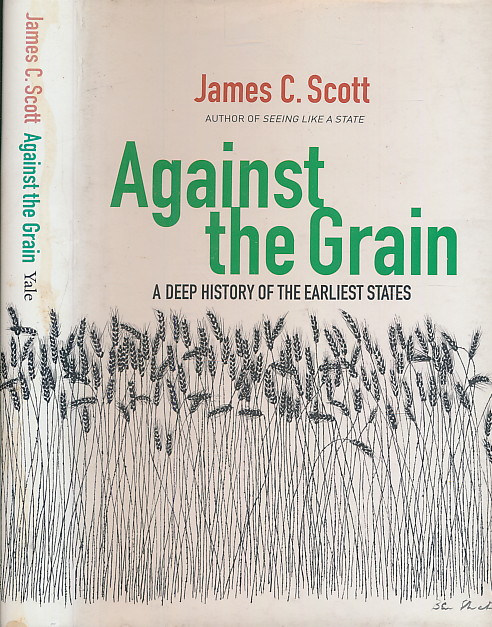
Against the Grain: A Deep History of the Earliest States
Why did humans abandon hunting and gathering for sedentary communities dependent on livestock and cereal grains, and governed by precursors of today’s states? Most people believe that plant and animal domestication allowed humans, finally, to settle down and form agricultural villages, towns, and states, which made possible civilization, law, public order, and a presumably secure way of living. But archaeological and historical evidence challenges this narrative. The first agrarian states, says James C. Scott, were born of accumulations of domestications: first fire, then plants, livestock, subjects of the state, captives, and finally women in the patriarchal family—all of which can be viewed as a way of gaining control over reproduction. Scott explores why we avoided sedentism and plow agriculture, the advantages of mobile subsistence, the unforeseeable disease epidemics arising from crowding plants, animals, and grain, and why all early states are based on millets and cereal grains and unfree labor. He also discusses the “barbarians” who long evaded state control, as a way of understanding continuing tension between states and nonsubject peoples.
Memory Culture: The Science of Observing, Remembering and Recalling
Reprint. Memory Culture: The Science of Observing, Remembering and Recalling is a book written by William Walker Atkinson, a renowned author and teacher in the field of personal development. The book is a comprehensive guide to understanding and improving one’s memory.The book begins by discussing the importance of memory and its role in our daily lives. It then delves into the science behind memory, explaining how the brain processes and stores information. Atkinson provides practical tips and techniques for improving memory, including exercises to strengthen the brain and enhance recall.The book also covers the art of observation, teaching readers how to pay attention to details and improve their powers of observation. Atkinson explains how observation is closely linked to memory, and how developing this skill can help improve one’s memory.Throughout the book, Atkinson emphasizes the importance of practice and repetition in developing a strong memory. He provides numerous exercises and activities to help readers strengthen their memory skills and improve their ability to recall information.Overall, Memory Culture: The Science of Observing, Remembering and Recalling is a valuable resource for anyone looking to improve their memory and enhance their ability to learn and remember new information. It is a must-read for students, professionals, and anyone interested in personal development.1903. Contents: The Subconscious Storehouse; Attention and Concentration; Acquiring Impressions; Eye Perception and Memory; Exercises in Eye Perception; Ear Perception and Memory; Association; Remembrance, Recollection and Recognition; The Cumulative System of Memory Culture; The Ten Question Thought System; Memory of Figures, Dates and Prices; Memory of Places, Faces; Names; and Artificial Systems.
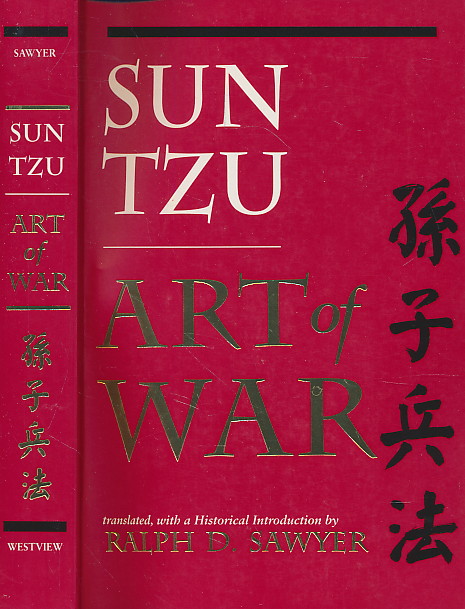
The Art of War
Translated by Ralph D. Sawyer.
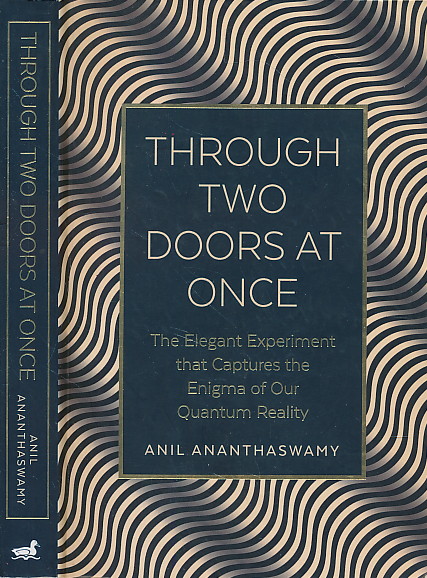
Through Two Doors at Once: The Elegant Experiment that Captures the Enigma of our Quantum Reality: The Enigmatic Story of our Quantum Reality
How can matter behave both like a particle and a wave? Does a particle exist before we look at it or does the very act of looking bring it into reality? Many of science’s greatest minds have grappled with these questions embodied by the simple yet elusive double-slit experiment. With his extraordinary gift for making the complicated comprehensible, Anil Ananthaswamy travels around the world and through history, down to the smallest scales of physical reality that we can fathom to provide the clearest, most accessible explanation yet of the amazing world of quantum mechanics. ***PRAISE FOR THROUGH TWO DOORS AT ONCE*** A Forbes Best Book of the Year A Kirkus Best Book of the Year A Smithsonian Favourite Book of the Year ‘An excellent addition to the ‘quantum physics for the rest of us’ shelf.’ Brian Clegg, author of The Quantum Age ‘Offers beginners the tools they need to seriously engage with the philosophical questions that likely drew them to quantum mechanics.’ Science ‘Treats a nineteenth-century light experiment as a sprawling intellectual adventure story… accessible and illuminating.’ Publishers Weekly, Top 10 Science Books of the Year ‘A fascinating read and a must for anyone who would like to find out the latest experimental advances made in this most fundamental of quantum experiments.’ Physics World
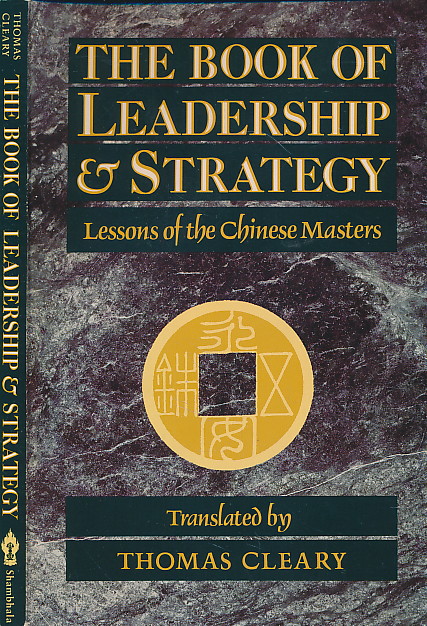
The Book of Leadership and Strategy: Lessons of the Chinese Masters
The subtle arts of management and leadership have been developed over thousands of years by the Chinese. The Book of Leadership and Strategy represents the Taoist culmination of this long tradition and is one of the most prestigious works of ancient Chinese thought. Collected here are insightful teachings on the challenges of leadership on all levels, from organizational management to political statecraft. The translator, Thomas Cleary, has chosen and arranged these teachings to emphasize the most valuable lessons of Taoist wisdom for modern Western readers. Like Cleary’s best-selling translation of The Art of War by Sun Tzu, this work will serve as an enlightening guide for people in business, politics, and government.
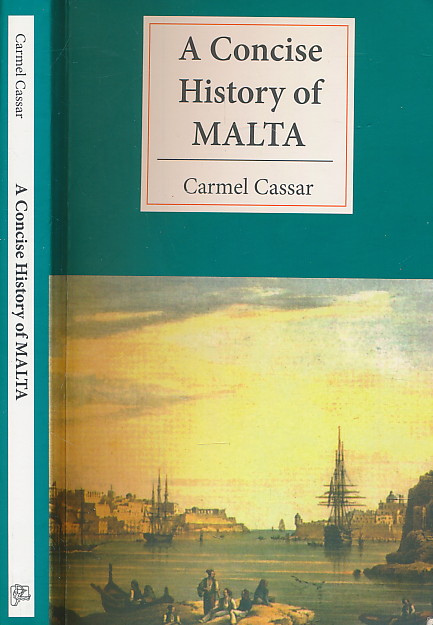
A Concise History of Malta
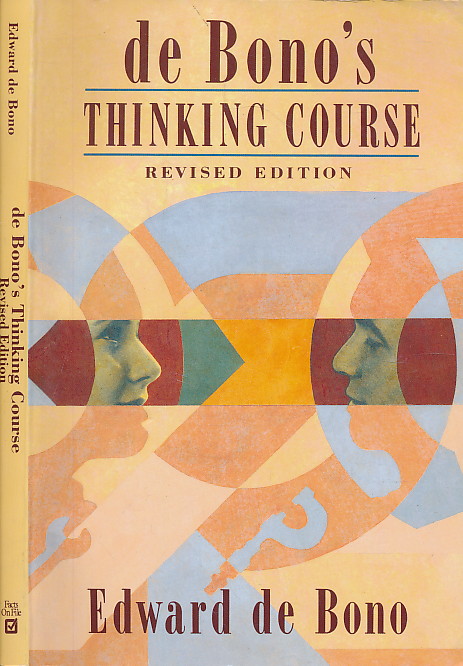
De Bono s Thinking Course
In this updated edition of his popular guide, Edward deBono teaches how to think more clearly, effectively, and broadly. Dr. deBono covers every important aspect of thinking–from perception and analysis, to creativity and decision-making. This edition includes a new chapter on critical thinking. 40 line drawings. Index. Appendices.
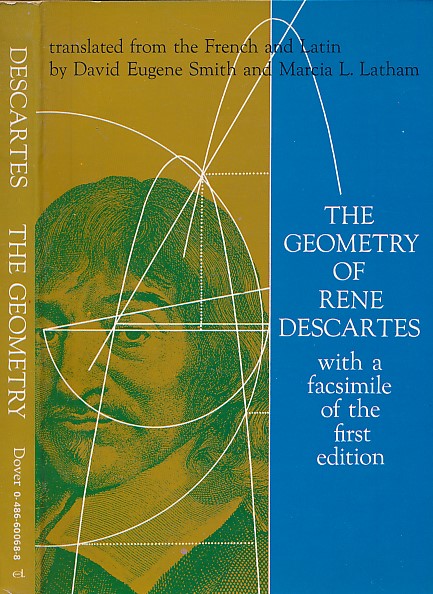
The Geometry of Rene Descartes
This is an unabridged republication of the definitive English translation of one of the very greatest classics of science. Originally published in 1637, it has been characterized as the greatest single step ever made in the progress of the exact science (John Stuart Mill); as a book which remade geometry and made modern geometry possible (Eric Temple Bell). It revolutionized the entire conception of the object of mathematical science (J. Hadamard).With this volume Descartes founded modern analytical geometry. Reducing geometry to algebra and analysis and, conversely, showing that analysis may be translated into geometry, it opened the way for modern mathematics. Descartes was the first to classify curves systematically and to demonstrate algebraic solution of geometric curves. His geometric interpretation of negative quantities led to later concepts of continuity and the theory of function. The third book contains important contributions to the theory of equations.This edition contains the entire definitive Smith-Latham translation of Descartes’ three Problems the Construction of which Requires Only Straight Lines and Circles ; On the Nature of Curved Lines ; and On the Construction of Solid and Supersolid Problems . Interleaved page by page with the translation is a complete facsimile of the 1637 French text, together with all Descartes’ original illustrations; 248 footnotes explain the text and add further bibliography.
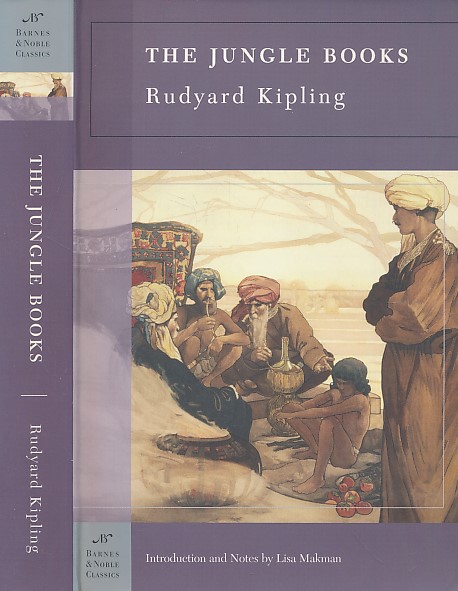
The Jungle Books
The Jungle Books can be regarded as classic stories told by an adult to children. But they also constitute a complex literary work of art in which the whole of Kipling’s philosophy of life is expressed in miniature. They are best known for the ‘Mowgli’ stories; the tale of a baby abandoned and brought up by wolves, educated in the ways and secrets of the jungle by Kaa the python, Baloo the bear, and Bagheera the black panther. The stories, a mixture of fantasy, myth, and magic, are underpinned by Kipling’s abiding preoccupation with the theme of self-discovery, and the nature of the ‘Law’.
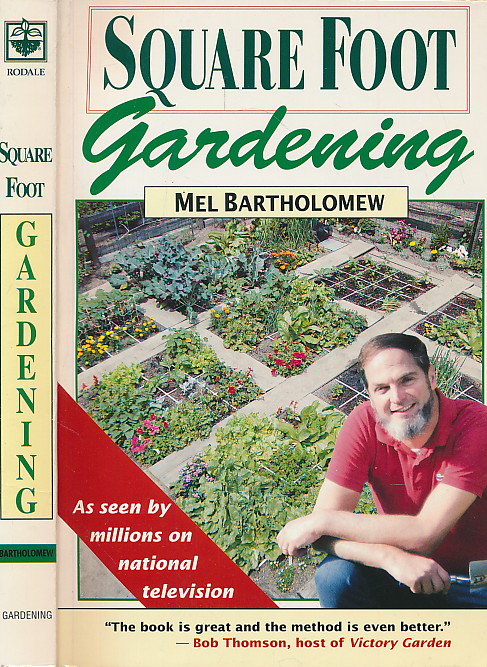
Square Foot Gardening Paperback
Twice as much in half the space! * A complete garden book for both the beginner and the expert * A new way to garden with 80 percent less space and work * The companion book to the nationally acclaimed television series * Over 900,000 copies in print Square Foot Gardening presents a new way to garden in less space with less work. * Grow a perfect garden in only 10 minutes a day. * Harvest the biggest tomatoes. * Enjoy spectacular flowers every day. * Ideal for beginners from 4 to 94. * Simple, easy, attractive and rewarding gardens.
The Art of War
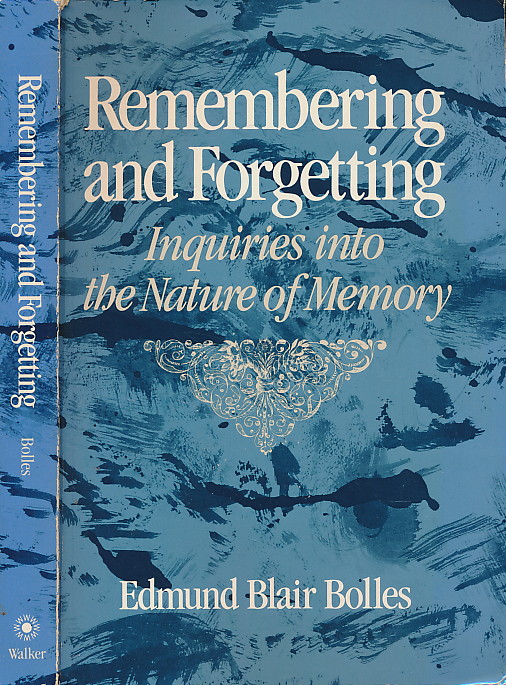
Remembering and Forgetting: An Inquiry into the Nature of Memory
The author’s hypothesis is that remembering is a creative, constructive process. There is no storehouse of information about the past anywhere in our brain. This book provides a thorough psychological and neurological account of why, what and how we remember as well as forget.
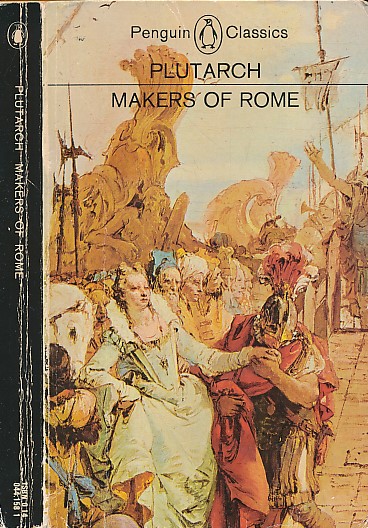
Makers of Rome
Nine biographies that illuminate the careers, personalities and military campaigns of some of Rome’s greatest statesmen The lives of the statesmen featured in this collection span the earliest days of the Republic to the establishment of the Empire. Selected from Plutarch’s Roman Lives , they include prominent figures who achieved fame for their pivotal roles in Roman history, such as soldierly Marcellus, eloquent Cato and cautious Fabius. Here too are vivid portraits of ambitious, hot-tempered Coriolanus; objective, principled Brutus and open-hearted Mark Anthony, who would later be brought to life by Shakespeare. In recounting the lives of these great leaders, Plutarch also explores the problems of statecraft and power and illustrates the Roman people’s genius for political compromise, which led to their mastery of the ancient world. For more than seventy years, Penguin has been the leading publisher of classic literature in the English-speaking world. With more than 1,700 titles, Penguin Classics represents a global bookshelf of the best works throughout history and across genres and disciplines. Readers trust the series to provide authoritative texts enhanced by introductions and notes by distinguished scholars and contemporary authors, as well as up-to-date translations by award-winning translators.
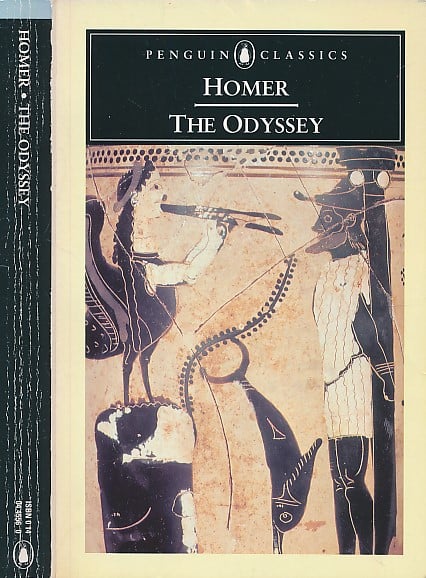
The Odyssey
If the Iliad is the world’s greatest war epic, then the Odyssey is literature’s grandest evocation of everyman’s journey though life. Odysseus’ reliance on his wit and wiliness for survival in his encounters with divine and natural forces, during his ten-year voyage home to Ithaca after the Trojan War, is at once a timeless human story and an individual test of moral endurance. In the myths and legends that are retold here, Fagles has captured the energy and poetry of Homer’s original in a bold, contemporary idiom, and given us an Odyssey to read aloud, to savor, and to treasure for its sheer lyrical mastery.
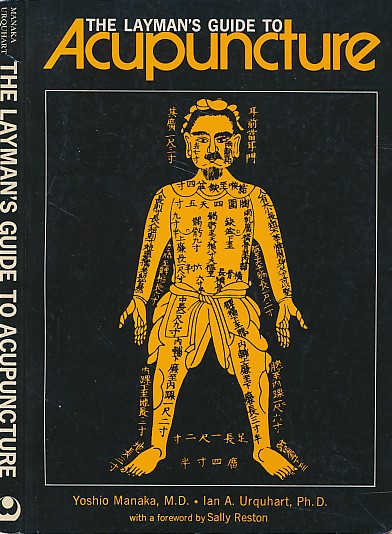
The Layman’s Guide to Acupuncture
Acupuncture can seem mysterious, even daunting. This illustrated guidebook introduces readers to the theory and practice of acupuncture and acupressure, as well as related treatment methods. The book also explores the ancient sources of Chinese medicine, the energy theory that is the foundation of acupuncture and the martial arts, stimulating acupuncture points with heat and electricity, and using acupressure points for self-defense.
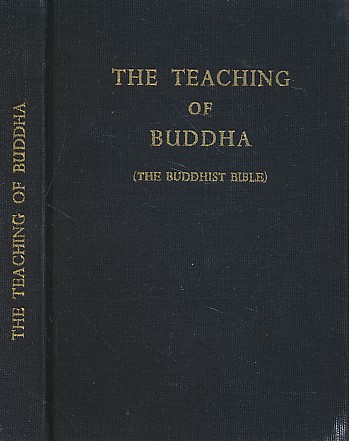
The Teaching of Buddha
The Teaching of Buddha is a collection of writings on the essence of Buddhism, selected and edited from the vast Buddhist canon, presented in a concise, easy-to-read, and nonsectarian format. It also includes a brief history of Buddhism, a listing of the source texts, a glossary of Sanskrit terms, and an index.
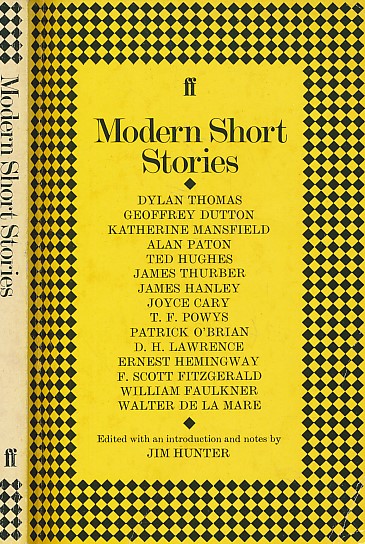
Modern Short Stories
Dylan Thomas – The Peaches Geoffrey Dutton – The Wedge-Tailed Eagle Katherine Mansfield – Her First Ball Alan Paton – Ha’penny Ted Hughes – The Rain Horse James Thurber – The Secret Life of Wlater Mitty James Hanley – The Road Joyce Cary – Growing Up T. F. Powys – Lie Thee Down, Oddity! Patrick O’Brian – Samphire D. H. Lawrence – Tickets, Please Ernest Hemingway – Indian Camp F. Scott Fitzgerald – The Ice Palace William Faulkner – Go Down, Moses Walter de la Mare – The Wharf
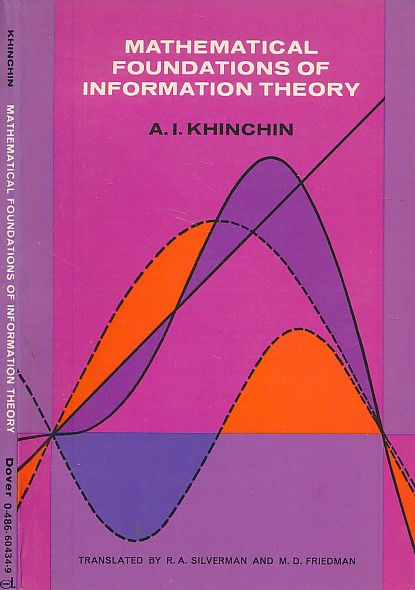
Mathematical Foundations of Information Theory
The first comprehensive introduction to information theory, this text explores the work begun by Shannon and continued by McMillan, Feinstein, and Khinchin. Its rigorous treatment addresses the entropy concept in probability theory and fundamental theorems as well as ergodic sources, the martingale concept, anticipation and memory, and other subjects. 1957 edition.