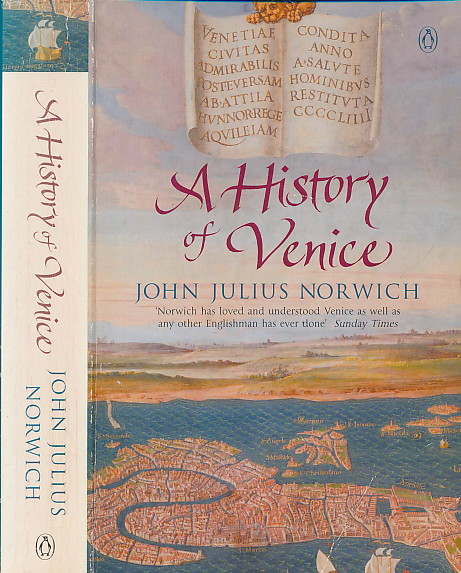
John Julius Norwich’s dazzling history of Venice from its origins to its eighteenth century fall. ‘Lord Norwich has loved and understood Venice as well as any other Englishman has ever done. He has put readers of his generation more in his debt than any other English writer’ – Peter Levi, The Sunday Times.
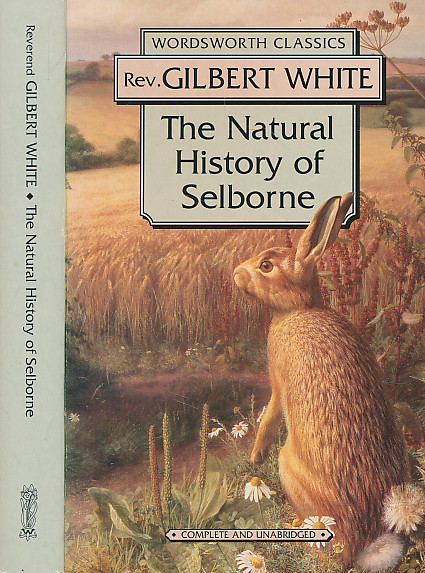
Illustrated by Edmund H. New. This work evokes and chronicles a long-lost world of rustic quiet, prior to the advent of mechanization, communication and supply equipment. The author recorded the flora, fauna and climate of the village of Selborne in a way which portrays its serene and tranquil life.
This Book forms the fifth of the Core Books on Tantra by the Author and is for the serious reader and practitioner of Tantra.
Sir Frederick William Dampier Deakin DSO (3 July 1913 – 22 January 2005) also known as F. W. Deakin, was a British historian, World War II veteran, literary assistant to Winston Churchill and the first warden of St Antony’s College, Oxford. In 1941 he was seconded to Special Operations, War Office, in 1941. On 28 May 1943 he has parachuted into highlands of Montenegro as representative of the British GHQ in the Middle East to the central command of the Yugoslav Partisans, who were led by Josip Broz Tito. Deakin’s mission, codenamed Typical, joined Tito as the Partisans were being hunted through the gorges of the Tara River between the triple chains of mountain massifs of Mount Durmitor and Ljubišnja and canyons ravines of the region by German and Italian forces during Operation Schwarz. Just below the summit of Mount Ozren, the Partisans were trapped by German aerial bombardment and forced to take cover among birch groves. In one attack, a cluster of bombs fell among them, killing Deakin’s radio operator, Bill Stuart, Tito’s Alsatian dog ‘Luks’, and wounding both Tito and Deakin. The Operation Typical group were disbanded at the end of September 1943 and absorbed into the mission of Sir Fitzroy Maclean (aka Macmis). Before the Second Session of AVNOJ, in Jajce (1943) the (by parachutes) and hung the English mission, William Deakin stayed with the Partisans in Petrovo Polje, today’s municipality of Kneževo. This field is located on a plateau between Vrbanja river and Ilomska. Deakin’s impressive reporting on the situation from on the ground is considered to have had a decisive impact on British policy towards the support of resistance movements in Yugoslavia (although the significant role of intelligence decrypts was not revealed until the 1970s, see Yugoslavia and the Allies). He was assigned the role of Literary Assistant to Sir Winston Churchill during the years 1936–40, and the period 1945–55. He was described by Churchill’s biographer, Sir Martin Gilbert, as being at the centre of the web of all Churchill’s literary efforts. Wikipedia
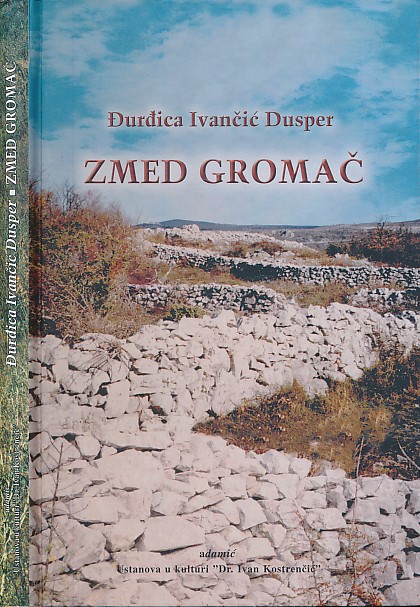
Autorica u uvodu ističe da je ova, uz njene prethodne knjige Pod murvicun, Suhore i Besedar, … skroman prilog vrednovanju i očuvanju crkveniške prošloste, njezinen prepoznavanju i, kadej moguće, očuvanju. Vaten je morda malo nostalgiji za ten čaj bilo, čega više bi i ča više nikad neće bit. Knjiga sadržu ukupno 15 priča iz prošlosti Crikvenice pisanih crikveničkim čakavskim idiomom: Dubračina, Pod veli kamik, Gromače, Guc, Bremena i počivala, Murva, Naši stari meštri, Bit će plača i nevolje ljute…, Balustrada, Remo kanpanat va rusku crikvu, Crkveničani i Titanik, Crkveničan Kejp-Hornovac, Ako trebe plavat – i ti smo, Ta mića bela balotica, Olujno kršćenje Vala Na kraju je priložen popis korištene literature.
Mad bad and dangerous to known’Byron is often cast as the anti-hero of romantic literature. This selection ranges from the exuberant sexual enery of Don Juan to the wistful When We Two Parted.
Moore’s Theory of Sense-Data The Difference between Sensing and Observing The Problem of Perception The Causal Theory of Perception Seeking, Scrutinizing, and Seeing
Barfield draws on sources from mythology, philosophy, history, literature, theology, and science to chronicle the evolution of human thought from Moses and Aristotle to Galileo and Keats. Saving the Appearances is about the world as we see it and the world as it is; it is about God, human nature, and consciousness. The best known of numerous books by the British sage whom C.S. Lewis called the wisest and best of my unofficial teachers, it draws on sources from mythology, philosophy, history, literature, theology, and science to chronicle the evolution of human thought from Moses and Aristotle to Galileo and Keats. Barfield urges his readers to do away with the assumption that the relationship between people and their environment is static. He dares us to end our exploitation of the natural world and to acknowledge, even revel in, our participation in the diurnal creative process.
The Psychological Commentaries on the teaching of Gurdjieff and Ouspensky by Maurice Nicoll are the best, most in depth and easiest to understand books on the subject of Gurdjieff’s and Ouspensky’s teachings. Everyone interested in Gurdjieff’s and Ouspensky’s teachings should read all five volumes. Regardless of what spiritual path a person is on, the psychological commentaries can be a big help because they detail on a day-to-day basis the obstacles the false personality creates and how to conquer and remove those obstacles. Very few books have ever been written that go into great detail exposing the tricks the imaginary I uses to prevent people from succeeding in their spiritual goals. The psychological commentaries do just that. The Psychological Commentaries is the classic work on the fundamental ideas of Gurdjieff and Ouspensky, expounded by one of their foremost students.
Texts: Nada Beroš, Tihomir Milovac & Katy Deepwell. Design Sanja Bachrach Kristofic. Bilingual edition: croatian and english Korice poflekane. Knjižni blok uredan.
Tvrdi povez u platnu, hrbat nedostaje. Godišta nisu kompletna. Knjižni blok uredan.
Nedostaje hrbat. Trošno od listanja.
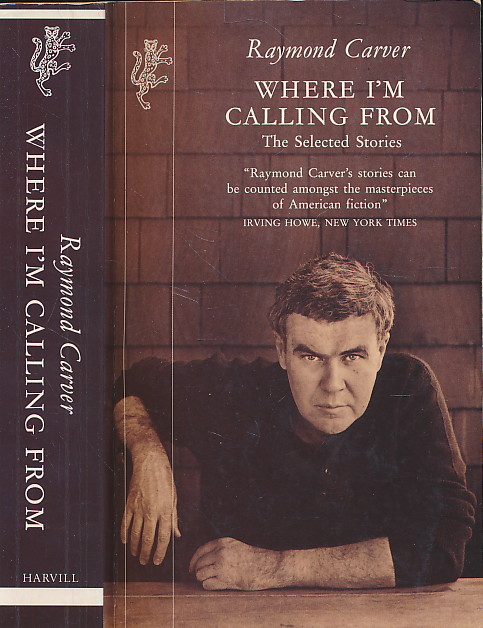
Shortly before he died, America’s laureate of the dispossessed made his own selection from his short stories, revised the texts and published them in this authorative edition. The stories in Where I’m Calling From are selected from the full range of the author’s work including Furious Seasons, Will You Please Be Quiet, Please?, What We Talk about When We Talk about Love, and Cathedral and include all seven stories from his last collection, Elephant.
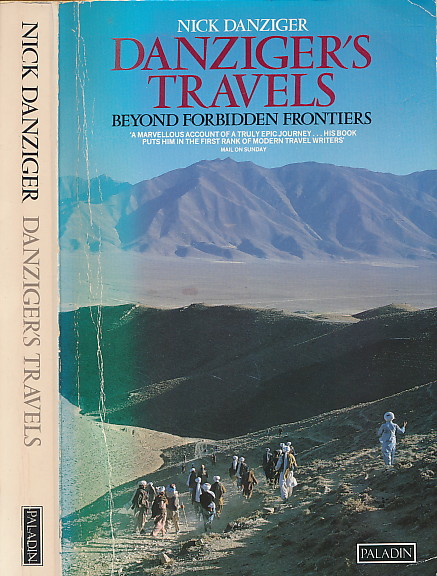
This account describes the author’s adventures during an 18-month journey beyond forbidden frontiers in Asia. With minimal equipment and disguised as an itinerant Muslim, he hitch-hiked and walked through southern Turkey, and the Iran of the Ayatollahs, entering Afghanistan illegally in the wake of a convoy of Chinese weapons and then spent months dodging Russian helicopter gunships with the rebel guerillas. He was the first foreigner to cross from Pakistan into the closed western province of China since the revolution on 1949.
Pjesme iz borbe i izgradnje. Priredio i objavio Simo Kljajić, novinar iz Gospića.
Iz sadržaja: O Aleksandru Puškinu Izabrane pjesme Epigrami Pjesničke pripovijesti Boris Godunov Kapetanova kćerka
This book deals with the historical development of the Albanian language from prehistoric times to our days. The main focus of the book is the reconstruction of Proto-Albanian, the analysis of its relations to its ancestor, Indo-European, and its further change leading to Albanian in its present form. The volume contains a detailed description of historical phonetics and morphology of Albanian. The reader will also find important data on the Albanian vocabulary in its historical development. Together with the author’s Albanian Etymological Dictionary, the present book makes a powerful research tool important for Albanologists, Balkanologists and historical linguists.

The magnum opus of acclaimed espionage novelist Littell is a mesmerizing, dazzlingly plotted epic that tells the life and death struggle of two generations of CIA operatives during a long Cold War. Christopher Lehmann-Haupt of The New York Times called it a perfect little gem, the best Cold War thriller I’ve read in years, and the praise kept coming with critics hailing Littell as the American Le Carré (New York Times) and raving that his books were as good as thriller writing gets (The Washington Post). For his fourteenth novel, Robert Littell creates an engrossing, multigenerational, wickedly nostalgic yet utterly candid saga, bringing to life through a host of characters-historical and imagined-the over 40 years of the CIA-the Company to insiders. At the heart of the novel is a stunningly conceived mole hunt involving such rivals and allies as the MI6, KGB, and Mossad. Racing across a canvas that spans the legendary Berlin Base in the 1950s-the front line of the simmering Cold War-to the Soviet invasion of Hungary, the Bay of Pigs, the Afghan war, the Gorbachev putsch, and other major theatres of operation for the CIA, The Company tells a thrilling story of agents imprisoned in double lives, fighting an enemy that was amoral, elusive, formidable. Littell tells it like it was: CIA agents, fighting not only the good fight, but sometimes the bad one as well. Littell also brilliantly lays bare the warring within the Company to add another dimension to the spy vs. spy game: the battles between the counterintelligence agents in Washington, like the utterly obsessive real-life mole hunter James Angleton, and the covert action boys in the field, like The Company’s Harvey Torriti-the Sorcerer-a brilliant and brash rule breaker and dirty tricks expert who fights fire with fire, and his Apprentice, Jack McAuliffe, recruited fresh out of Yale, who learns tradecraft and the hard truths of life in the field. As this dazzling anatomy of the CIA unfolds, nothing less than the world’s future in the second half of the twentieth century is at stake. At once a celebration of a long Cold War well fought, an elegy for the end of an era, and a reckoning for a profession in which moral ambiguity created a wilderness of mirrors, The Company is the Cold War’s devastating truth, its entertaining tale, its last word.

Kundalini yoga or the yoga of awareness helps humans in speaking the truth, being compassionate towards others, following principles and values and helping others heal. The Serpent Power: 1 by John George Woodroffe focusses on how Kundalini yoga originated and what constitutes its beliefs and theories. The idealistic and mythological aspects of this yoga, along with its abstruse framework are explained and discussed in this book.Kunda meaning a bowl; kundali meaning a curved rope or ring ties with the concept of a snake or serpent that is coiled. The core of our saintly energy is located around the base of our spine. Through the seven chakras or steps of yoga, we are able to channel this energy into performing something good and beneficial. Kundalini yoga enhances loyalty, influence and rational power. Humans can realise the full extent of their creativity through this type of yoga.In The Serpent Power: 1, John George Woodroffe aimed at making readers worldwide understand the powerful nature of this yoga and how it could benefit everyone. He illustrated the various chakras and mantras that are attached with this particular yoga. The serpent power is basically the power that is released in the process of performing this yoga. This serpent power is then used to bring out the best in us and allow us to help others willingly and passionately. Sir John George Woodroffe or Arthur Avalon was often called a British Orientalist as he tried to introduce Hindu philosophies in the West. After completing his Bachelor of Civil Law, he came to India to become Tagore Law Professor. He served as a judge in the High Court for 18 years, before becoming the Chief Justice of the Calcutta High Court. He moved back to England to become a Reader in Indian Law at Oxford. He was fascinated by Hindu Tantra. More than twenty Sanskrit texts have been translated into English by him. He translated the Mahanirva?atantra?. He wrote several books like Hymns to the Goddess, The World as Power, The Garland of Letters, Is India Civilized? Essays on Indian Culture, Introduction to the Tantra Sastra etc.
A Record of Meetings: A Record of Some of Meetings Held by P.D. Ouspensky between 1930 and 1947. Pyotr Demianovich Ouspenskii (known in English as Peter D. Ouspensky, ???? ?????´????? ????´?????; was a Russian mathematician and esotericist known for his expositions of the early work of the Greek-Armenian teacher of esoteric doctrine George Gurdjieff, whom he met in Moscow in 1915. He was associated with the ideas and practices originating with Gurdjieff from then on. He shared the (Gurdjieff) system for 25 years in England and the United States, having separated from Gurdjieff in 1924 personally, for reasons he explains in the last chapter of his book In Search of the Miraculous. All in all, Ouspensky studied the Gurdjieff system directly under Gurdjieff’s own supervision for a period of ten years, from 1915 to 1924. His book In Search of the Miraculous is a recounting of what he learned from Gurdjieff during those years. While lecturing in London in 1924, he announced that he would continue independently the way he had begun in 1921. Some, including his close pupil Rodney Collin, say that he finally gave up the system in 1947, just before his death, but his own recorded words on the subject (A Record of Meetings, published posthumously) do not clearly endorse this judgement, nor does Ouspensky’s emphasis on you must make a new beginning after confessing I’ve left the system.