Some people appear more gifted than others. NLP, one of the fastest growing developments in applied psychology, describes in simple terms what they do differently, and enables you to learn these patterns of excellence. This approach gives the practical skills used by outstanding communicators. Excellent communication is the basis of creating excellent results. NLP skills are proving invaluable for personal development and professional excellence in counselling, education and business. Introducing NLP includes: – How to create rapport with others – Influencing skills – Understanding and using body language – How to think about and achieve the results you want – Effective meetings, negotiations and selling
Poe’s poems have been memorized and recited by millions. Among his best-loved works are The Raven with its hypnotic chant of nevermore, and the sensuous and lyrical Annabel Lee. This collection includes all of Poe’s most popular rhymes.
Because we need to know how clearly about our social thinking and how to resist the allure of self-deception, everyone skeptical about or confused by the findings of the social sciences will appreciate Antony Flew’s crisp analysis of the methodological flaws and systematic misunderstandings corrupting their content and application. Thinking About Social Thinking seeks to establish what can and cannot be learned from such studies, indicating where good work has been ignored, or much-needed work has yet to be done. Flew’s clear and incisive arguments are illustrated with abundant examples and references — many entertaining, others surprising. Flew issues a refreshing, impassioned warning against the perils of complacent, muddled thinking and false but comfortable conclusions.
This book is intended to outline for the beginner the ramifications of the science of ‘Cybernetics’. It is a science concerned with all matters of control and communication, and tothis extent trespasses across what we have come to think of as the established sciences. The book covers both the pure theory of Cybernetics – mathematical, statistical and logical – and its application, which affects everything human beings do, especially how they learn, how they make decisions, how they plan and how they solve problems, in such fields as Engineering, Management and Education.
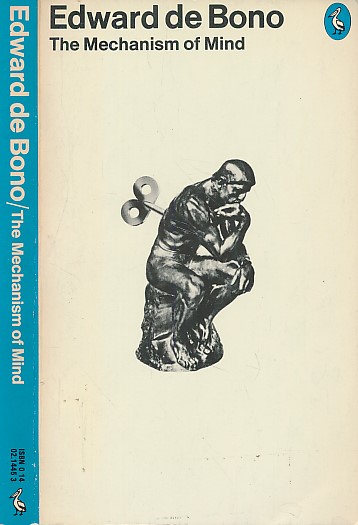
The book The Mechanism of Mind by Edward de Bono details the underpinning model of the mind that leads to the many thinking skills developed by its author, including lateral thinking.
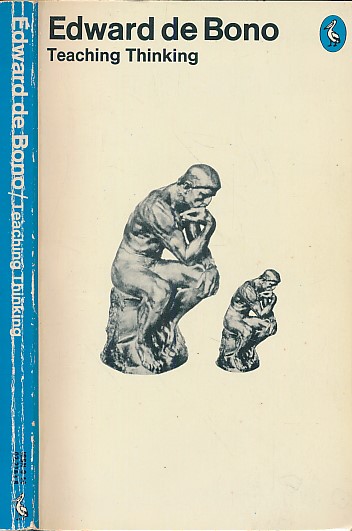
Is thinking a matter of intelligence or a skill that can be taught deliberately? Can thinking be taught directly as a curriculum subject in schools?
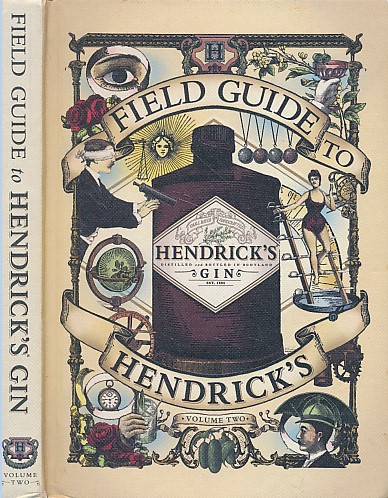
Hendrick’s. It’s not for everyone The Inner Workings of Hendrick’s A Poetry Intermission The Connoisseur’s Gin tasting Terminology A curated collection of Delectable Libations and Concoctions Pertinent Barware and Glassware The Pianocktail Unusual Places to enjoy your Hendrick’s Gin Odd Bar Customs from the world over Useless Uses to which the Hendrick’s Bottle has been put The Anatomy of a Croquet Match The Unusual Times
A huddled editorial team that prepares a newspaper destined, more than for information, for blackmail, for the mud machine, for poor services for its publisher. A paranoid editor who, wandering around a hallucinated Milan (or hallucinated for a normal Milan), reconstructs the story of fifty years against the backdrop of a sulphurous plane built around the putrefied corpse of a pseudo Mussolini. And in the shadows Gladio, the P2, the assassination of Pope Luciani, the coup d’état of Junio Valerio Borghese, the CIA, the red terrorists manipulated by the confidential affairs offices, twenty years of massacres and misdirections, a set of facts inexplicable that seem invented until a BBC broadcast proves that they are true, or at least that they are now confessed by their authors. And then a corpse suddenly enters the scene in the narrowest and most infamous street in Milan. A slender love story between two protagonists who are losers by nature, a failed ghost writer and a disturbing girl who dropped out of university to help her family and specialized in gossip about affectionate friendships, but still cries over the second movement of the Seventh by Beethoven. A perfect manual for bad journalism that the reader gradually doesn’t know if invented or simply taken live. A story that takes place in 1992 in which many mysteries and madnesses of the following twenty years are foreshadowed, just as the two protagonists think that the nightmare is over. A bitter and grotesque story that takes place in Europe from the end of the war to the present day.
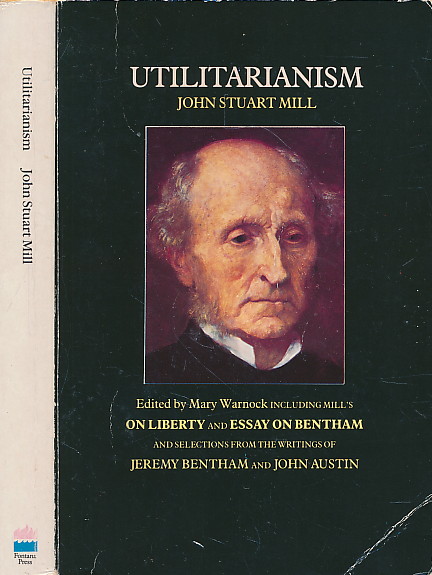
by John Stuart Mill (Författare), Jeremy Bentham (Författare), John Austin (Författare), Mary Warnock (Redaktör) British philosopher John Stuart Mill approached ethical theory with a scientist’s eye in his contributions to utilitarianism. Building upon the premise set forth by Jeremy Bentham, Mill subjected his own work to the scientific method and deep, incisive inquiry. Mill formulated utilitarianism on the greatest-happiness principle. Under this principle, it is ethical only to act in such a way that will deliver the greatest amount of happiness to the greatest amount of people. The work outlines how Mill defines and orders higher and lower forms of happiness as well as stressing the importance of holding an objective perspective when determining the ethical status of an event. A must-read for anyone with an interest in ethical inquiry. synopsis may belong to another edition of this title.
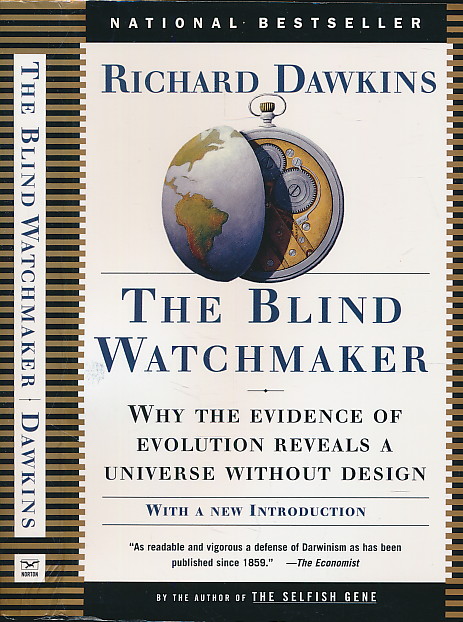
Richard Dawkins’s classic remains the definitive argument for our modern understanding of evolution. The Blind Watchmaker is the seminal text for understanding evolution today. In the eighteenth century, theologian William Paley developed a famous metaphor for creationism: that of the skilled watchmaker. In The Blind Watchmaker, Richard Dawkins crafts an elegant riposte to show that the complex process of Darwinian natural selection is unconscious and automatic. If natural selection can be said to play the role of a watchmaker in nature, it is a blind one—working without foresight or purpose. In an eloquent, uniquely persuasive account of the theory of natural selection, Dawkins illustrates how simple organisms slowly change over time to create a world of enormous complexity, diversity, and beauty.
A landmark of Enlightenment thought, Hume’s An Enquiry Concerning Human Understanding is accompanied here by two shorter works that shed light on it: A Letter from a Gentleman to His Friend in Edinburgh, Hume’s response to those accusing him of atheism, of advocating extreme skepticism, and of undermining the foundations of morality. In his concise Introduction, Eric Steinberg explores the conditions that led Hume to write the Enquiry and the work’s important relationship to Book I of Hume’s A Treatise of Human Nature.

Ovaj turistički vodič pomoći će vam da što bolje iskoristite svoj boravaku Irskoj. U njemu ćete pronaći stručne preporuke i praktične informacije. Poglavlje ‘Upoznavanje Irske’ predstavlja grofovije i smješta Irsku u povijesni i kulturni kontekst. Sedam poglavlja o grofovijama, kao i poglavlje ‘Dublin dio po dio’, donose opise svih važnih mjesta za obilazak zajedno s kartama, fotografijama i ilustracijama. Popis preporučenih hotela i restorana nalazi se u poglavlju ‘Što putnik treba znati’, a u ‘Vodiču za preživljavanje’ pronaći ćete različite savjete – od toga kako telefonirati do toga kako putovati po Republici Irskoj i Sjevernoj Irskoj. U uvodu su opisani krajolik, povijest i osobitosti svake pojedine grofovije. Prikazan je njihov razvoj tijekom stoljeća i ono što danas nude posjetiteljima. Uz Dublin, Irska je podijeljena na osam regija. Svakoj je posvećeno zasebno poglavlje. Najzanimljiviji gradovi i mjesta obilaska brojem su označeni na Regionalnoj karti. Radi lakšeg pavezivanja, mjesta za razgledavanje u svakom su području označena brojem i naznačena na karti područja. Svaku irsku regiju lako ćete pronaći na karti prema njezinoj boji koju možete otkriti s unutarnje strane prednjeg ovitka knjige. Regionanna karta prikazuje mrežu cesta i nudi ilustriran pregled cijele regije. Sva zanimljiva mjesta za razgledavanje posebno su numerirana, a tu su i korisni savjeti o tome kako određeno područje proputovati automobilom ili vlakom. Svi važniji gradovi i mjesta za razgledavanje posebno su opisani. Navedeni su redoslijedom koji prati brojeve na Regionalnoj karti. Kod opisa svakog mjesta ili rada nalaze se detaljne informacaje o važnim građevinama i ostalim mjestima za razgledavanje. Središte Dublina podijeljeno je u tri područja za razgledavanje. Svakome je posvećeno jedno poglavlje na čijem se početku nalazi popis opisanih mjesta za razgledavanje. Korak dalje opisuje predgrađa i grofoviju Dublin. Mjesta su označena brojem i jasno naznačena na Karti područa. Sva mjesta za razgledavanje u Dublinu su posebno opisana. Navedene su adrese, telefonski brojevi, informacije o radnom vremenu i cijenama ulaznica. Glavne irske znamenitosti prikazane su na dvije ili više stranica. Povijesne su zgrade prikazane u presjeku kako bi se otkrila njihova unutrašnjost. Najzanimljivija mjesta ili gradovi prikazane su iz ptičje perspektive, a mjesta za razgledavanje posebno su izdvojena i opisana. Glavni savjetnici: Lisa Gerard-Sharp i Tim Perry.
This text provides a single-volume illustrated work of reference on the subject of whisky. It gives information on what whiskies to drink country by country, covering the best products of the major distilleries and the exciting output of the independents.
Pan Study Aids : The Complete Guide to Exam Success.

Imagination is an outstanding contribution to a notoriously elusive and confusing subject. It skillfully interrelates problems in philosophy, the history of ideas and literary theory and criticism, tracing the evolution of the concept of imagination from Hume and Kant in the eighteenth century to Ryle, Sartre and Wittgenstein in the twentieth. She strongly belies that the cultivation of imagination should be the chief aim of education and one of her objectives in writing the book has been to put forward reasons why this is so. Purely philosophical treatment of the concept is shown to be related to its use in the work of Coleridge and Wordsworth, who she considers to be the creators of a new kind of awareness with more than literary implications. The purpose of her historical account is to suggest that the role of imagination in our perception and thought is more pervasive than may at first sight appear, and that the thread she traces is an important link joining apparently different areas of our experience. She argues that imagination is an essential element in both our awareness of the world and our attaching of value to it.
The Dragon variation of the Sicilian defence is a devastating weapon in the hands of a well-prepared player. Previous books on the Dragon have emphasized the need to memorize reams of theoretical variations, but instead, in this book, the author suggests a commonsense approach which will cut out much of the need for rote learning. He pinpoints the most critical lines and shows that the Black, contrary to popular belief, actually has quite a wide choice against most systems.
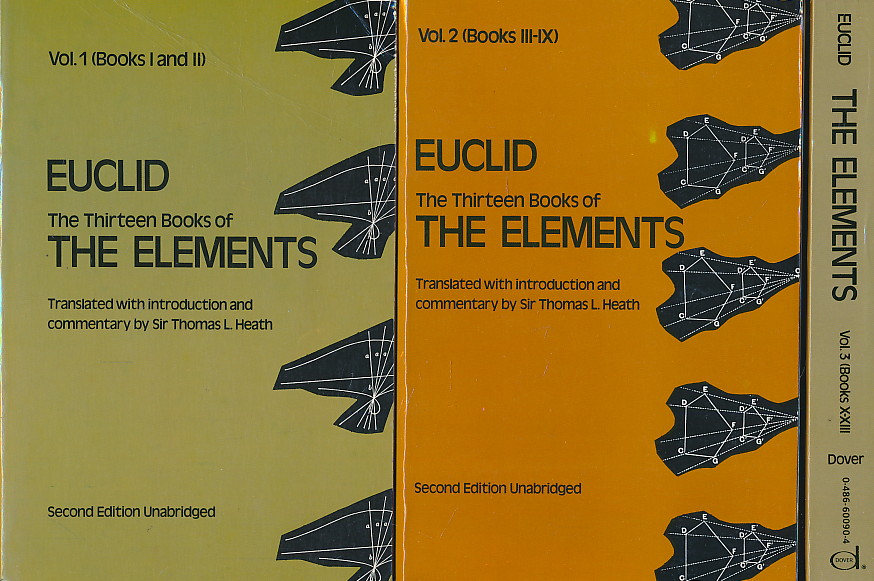
by Euclid of Alexandria) Heath, Thomas J. (editor/trans) This is the definitive edition of one of the very greatest classics of all time—the full Euclid, not an abridgement. Utilizing the text established by Heiberg, Sir Thomas Heath encompasses almost 2500 years of mathematical and historical study upon Euclid. This unabridged republication of the original enlarged edition contains the complete English text of all 13 books of the Elements, plus a critical apparatus which analyzes each definition, postulate, and proposition in great detail. It covers textual and linguistic matters; mathematical anayses of Euclid’s ideas; classical, medieval, Renaissance, modern commentators; refutations, supports, extrapolations, reinterpretations, and historical notes, all given with extensive quotes. The textbook that shall really replace Euclid has not yet been written and probably never will be, Encyclopaedia Britannica.
Best introduction in English to a great Japanese game. Detailed instructions provide valuable information on basic patterns, strategy, tactics, and analyzed games. Used as text by generations of Americans and Japanese as well. 72 diagrams. …clearly written diagrammed primer… — New Yorker Edward Lasker (December 3, 1885 – March 25, 1981) was a German-American chess and Go player. He was awarded the title of International Master of chess by FIDE. Lasker was an engineer by profession, and an author of books on Go, chess and checkers. Born in Germany, he emigrated to the United States in 1914. He was distantly related to Chess World Champion Emanuel Lasker.
Recenzenti: prof. dr Dubravka Stojanović, prof. dr Florian Bieber, prof. dr Ivo Goldstein Grupa autora koju čine historičari i drugi relevantni eksperti iz svih zemalja – nasljednica Jugoslavije svojim je radovima svestrano obuhvatila političke, ekonomske, kulturne, diplomatske, medijske, umjetničke i druge društvene tokove, koji sklapaju izvanredno zanimljiv mozaik državno-društvenog entiteta u nestajanju. Takođe i s uvidom u razloge i odgovornost za brutalni raspad, na svaki način jedinstvene zemlje koja i 30 godina nakon što je prestala postojati još uvijek intrigira. Uredništvo: Latinka Perović Husnija Kamberović Nenad Makuljević Božo Repe Tvrtko Jakovina Šerbo Rastoder
The oldest and most influential book ever written on architecture, this volume describes the classic principles of symmetry, harmony, and proportion and the ancients’ methods, materials, and aesthetics. Marcus Vitruvius Pollio, a Roman architect and engineer flourishing in the first century B.C., was the author of the oldest and most influential work on architecture in existence. For hundreds of years, the specific instructions he gave in his Ten Books on Architecture were followed faithfully, and major buildings in all parts of the world reveal the widespread influence of his precepts. According to the Encyclopedia Britannica, he was the chief authority studied by architects, and in every point his precepts were accepted as final. Bramante, Michelangelo, Palladio, Vignola, and earlier were careful students of the work of Vitruvius. His book is thus one of those rare works that have been supremely important in the creation of the greatest art masterpieces. Vitruvius describes the classic principles of symmetry, harmony, and proportion in architecture; the design of the treasury, prison, senate house, baths, forum, and temples; the construction of the theater: its site, foundations, and acoustics; the proper style and proportion for private dwellings; the differences between the Ionic, Doric, and Corinthian styles; methods of giving durability and beauty to polished finishings; and many other topics that help us understand the methods and beliefs of the Roman architect. It is a direct, authoritative, and detailed introduction to the ancients’ methods of construction, the materials of the architect, and the prevailing aesthetic beliefs of the times; but it is also a work of art. Vitruvius wrote in such a fascinating manner and digressed from his subject so often (as, for instance, when he wrote about the winds, Archimedes in his bath, and why authors should receive awards and honors at least as often as athletes) that his book has had a continuing appeal to the general reader for many centuries. Besides being an instructive treatise on nearly everything connected with Roman and Greek architecture, it is an entertaining description of some aspects of the life and beliefs of the times. This edition is the standard English translation, prepared over a period of several years by Professor M. H. Morgan of Harvard University.
Isaac and Thea were once close, but they’ve grown apart. Thea works tirelessly, convinced she can prove everyone around her wrong – convinced she can prove that time travel is possible. But when one of her attempts goes wrong, she finds herself picking up the phone and calling her old friend. Isaac is in New York – it’s the middle of the night, but when he sees who’s calling him, he cannot ignore his phone. At Thea’s request, he travels home, determined to help her in her hour of need. But neither of them are prepared for what they will discover when he gets there.
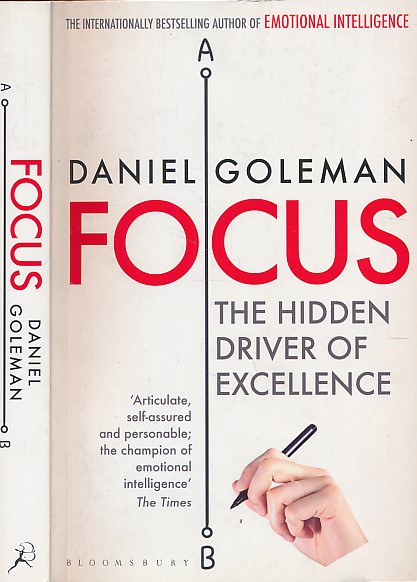
Bestselling author Daniel Goleman returns with a groundbreaking look at today’s scarcest resource and the secret to high performance and fulfillment: attention For more than two decades, psychologist and journalist Daniel Goleman has been scouting the leading edge of the human sciences for what’s new, surprising, and important. In Focus, he delves into the science of attention in all its varieties, presenting a long overdue discussion of this little-noticed and under-rated mental asset that matters enormously for how we navigate life. Attention works much like a muscle: use it poorly and it can wither; work it well and it grows. In an era of unstoppable distractions, Goleman persuasively argues that now more than ever we must learn to sharpen focus if we are to contend with, let alone thrive, in a complex world. Goleman boils down attention research into a threesome: inner, other, and outer focus. A well-lived life demands we be nimble at each. Goleman shows why high-achievers need all three kinds of focus, as demonstrated by rich case studies from fields as diverse as competitive sports, education, the arts, and business. Those who excel rely on what he calls Smart Practices such as mindfulness meditation, focused preparation and recovery, positive emotions and connections, and mental prosthetics that help them improve habits, add new skills, and sustain excellence. Combining cutting-edge research with practical findings, Focus reveals what distinguishes experts from amateurs and stars from average performers. Ultimately, Focus calls upon readers not only to pay attention to what matters most to them personally, but also to turn their attention to the pressing problems of the wider world, to the powerless and the poor, and to the future, not just to the seductively simple demands of here-and-now.
Uredio Dragutin Tadijanović.