Exclusion and Embrace
€10,00
Na zalihi
| Težina | 533 g |
|---|---|
| Format | 15 × 23 cm |
| Autor | |
| Izdavač | |
| Mjesto izdanja | Nashville |
| Godina | 1996 |
| Broj stranica | 336 |
| Uvez | Meki |
| Stanje knjige | Vrlo dobro |
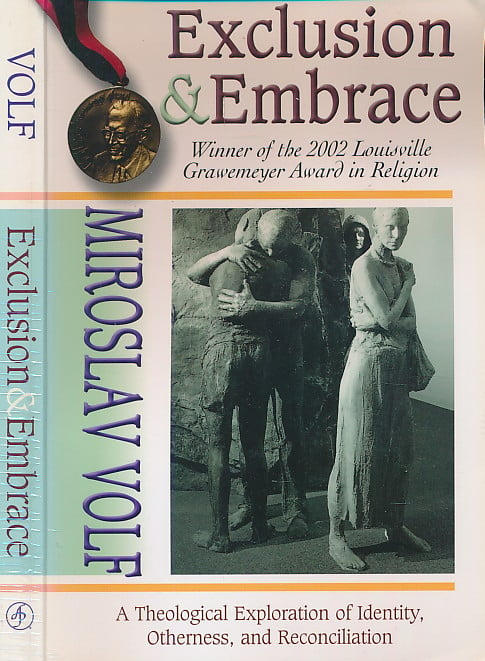
Miroslav Volf is a professor at Yale University and the director of the Yale Center for Faith and Culture. Volf was born and raised in the former Yugoslavia, a center of rising ethnic violence in the last 20 years. Volf’s most noted work, “Exclusion and Embrace: A Theological Exploration of Identity, Otherness and Reconciliation”, confronts this impulse and action of violence not only as theological response but as a practical alternative. As the title indicates, the book centers itself on a thesis which presents exclusion (and identification of the “other”) as the root of conflict and sin and embrace as the metaphorical model of reconciliation and harmonious life. At the root of Volf’s message about human beings and relationship is the concept of identity: It may not be too much to claim that the future of our world will depend on how we deal with identity and difference.[1] Exclusion and Embrace articulates the details of offence as “exclusion”, which occurs when we objectify people, removing them from ourselves as wholly other. Volf contrasts that to the activity (metaphorically) of “embrace”, in which we make space for others within ourselves. …the will to give ourselves to others and “welcome” them, to readjust our identities to make space for them, is prior to any judgment about others, except that of identifying them in their humanity. The will to embrace precedes any “truth” about others and any construction of their “justice.”[2] The author’s description of exclusion are no less poignant, bringing us to a practical understanding of how separating ourselves from others in rejection does violence to both the individual and social fabric with which we are connected. Exclusion is barbarity within civilization, evil among the good, crime against the other right within the walls of the self.[3] Exclusion takes place when the violence of expulsion, assimilation, or subjugation and the indifference of abandonment replace the dynamics of taking in and keeping out as well as the mutuality of giving and receiving.[4] Volf does more than just explore the concepts of identity and exclusion. He offers a real solution in the concept of the embrace. Embrace here is used as a metaphor to the multi-step process of welcoming, opening, receiving, loving and releasing others in a relational offering that demands nothing but hopes for real love. In fact, one of Volf’s most brilliant points is the recognition that part of true embrace and love (relationally) is that we accept and embrace others even when we don’t understand them, and possibly even when they have hurt us. It is this risking to expose one’s self to such vulnerability (with no assurances) that Volf prises and sees intuitively as the kind of necessity (beyond contracts and other such “assurances”) in true trusting relationships. Finding a singular quote for all of these great concepts would be difficult, but these two captures some of these notions: The answer, I hope, would be that at the core of the Christian faith lies the persuasion that the “others” need not be perceived as innocent in order to be loved, but ought to be embraced even when they are perceived as wrongdoers.[5] Without the framework of embrace, the ability-not-to-understand is sterile; but without the ability-not-to-understand a genuine embrace is impossible.[6] I could extend my citings to literally dozens of excellent quotations from this book. It is very well thought, and very well written. One of the strengths of this book will be to the academic world, since it uses the guided logic of philosophical arguments much more than the dogmatic points from a single doctrinal view to make its presentation. I enjoyed Volf’s logical tiers of arguments he used to build his thesis, even if I didn’t agree with every single point.